6.2 Essential Amino Acids
Proteins are composed of any of 20 amino acids, 10 of
which are considered essential because they have to be obtained in
your diet. The body cannot synthesize its necessary proteins if these
10 amino acids do not show up in adequate amounts in your diet:
isoleucine, leucine, lysine, methionine, phenylalanine, threonine,
tryptophan, and valine, as well as arginine (for infants) and
histidine (for infants) (from Human Anatomy &
Physiology, by Elaine Marieb and Katja Hoehn).
Note
Exercise Physiology, by William McArdle et al.,
lists only eight amino acids as “essential,” and points out that
infants cannot synthesize histidine and children have “a reduced
capability for synthesizing arginine.”
The rest of the 20 amino acids are: alanine, asparagine,
aspartic acid, cysteine, glycine, glutamic acid, glutamine, proline,
serine, and tyrosine.
6.3 Eating Protein
When you eat protein-containing foods such as meats, fish, eggs,
cheese, nuts, and plant foods, as we mentioned, proteases and other
enzymes split up the big block of Legos into their separate amino
acids, which can then be absorbed in the small intestine and released
to the liver and bloodstream.
The body can do a number of things with these amino acids,
depending on your physical needs:
The cells can take them up and use them as raw ingredients
for proteins.The liver can make glucose out of them for energy purposes,
in a process called gluconeogenesis.They can also be stored, after conversion by the liver to
glucose or lipids, as glycogen (i.e., muscle fuel) or fat.
Note
Yes, both excess carbs and excess protein in the
diet can be stored as excess fat.
Proteins that are already in the cells (not coming in as part of
your food) are constantly being degraded or split up into their
constituent amino acids and resynthesized into new proteins the body
needs. It’s a very complicated and ingenious metabolic process by
which the liver finds so many different uses for proteins and amino
acids, but one of the important elements of the sequence is that when
the liver has to metabolize amino acids (in order to make glucose out
of them, for example), the organ breaks down the amino acids into
ammonia, which is converted to urea and excreted out via the kidneys
in the urine.
Note
Ammonia is toxic when it builds up in the
blood, which makes the excretion of urea throughout the day so
important. The rate at which this conversion takes place in the
liver is limited, which is why the body cannot tolerate unlimited
amounts of protein, as in “rabbit starvation
syndrome.”18
Cells can take up the amino acids for their own use, such as new
protein synthesis by muscle cells.
Note
An iPhone and Android app exists for amino acid
aficionados, appropriately called Amino Acid
Reference.
If you aim for optimal health, you need to get all of the
essential amino acids in high enough quantities from your diet. Meat
and fish eaters have an easier time of it than vegetarians, for
instance, because these meat constituents are generally complete
proteins—they have all of the essential amino acids in greater than
trace amounts. Eggs are a great source of essential amino acids for
vegetarians (eat copious amounts of pastured eggs), as is the
occasional whey protein shake .
To show you how to analyze food for its protein quality, we’ll
do a quick check of lamb, salmon, and bananas with NutritionData. This
searchable web database for nutrition information has a good section
on its result pages for protein. Figure 7 shows the page for a small
slab of cooked lamb, which the site gives a good protein score
(anything over 100 is a complete protein).
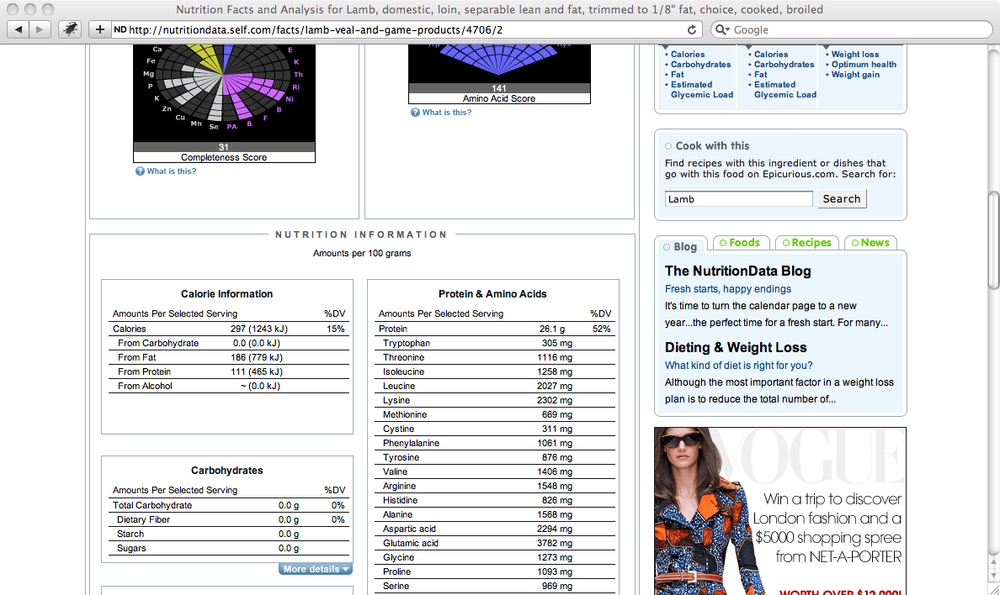
Figure 7. Lamb gets a good protein score
Many of the amino acids are in lamb in a quantity in excess of a
gram, and the four ounce piece of meat has 26 grams of protein, a bit
less than a quarter of what a training athlete would need in a day.
Salmon is also an excellent source of amino
acids, as Figure 8 shows. A six
ounce filet has about 40 grams of protein, with more than 3 grams of
the important muscle-building amino acid leucine.
It also has more than 300 mg of tryptophan, an
important biochemical precursor in the synthesis of the
neurotransmitter serotonin, as well as the hormone melatonin.
Note
Tryptophan in food may help make you sleepy before
bedtime, because serotonin has a calming effect, and melatonin is a
hormone that plays a role in sleep regulation.
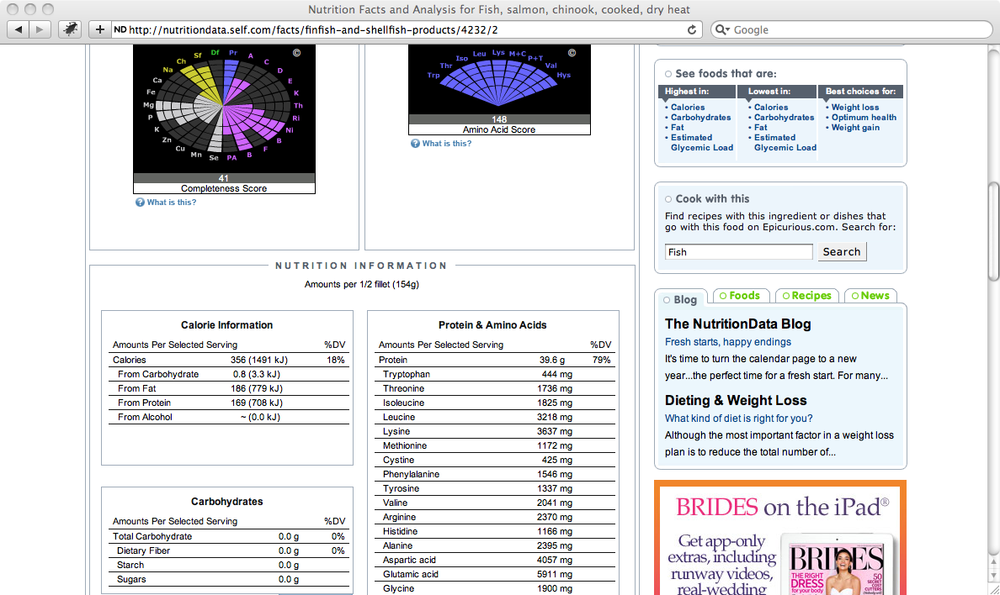
Figure 8. A salmon filet cleans up with essential amino acids
Note
The absorption during digestion of amino acids is
quite slow—anywhere from 3 to around 10 grams per hour (that’s only
12 to 40 calories per hour), depending on how much you weigh and
whether the protein has a fast (whey protein) or slower (raw eggs)
absorption rate—compared with fats (about 14 grams per hour) and
carbs (60 to 100 grams per hour, in terms of a glucose drink). So,
if you eat 40 grams of protein, your body may take about eight hours
to absorb and utilize the amino acids.
Just for the sake of comparison, let’s check out the amino acid
content of a starch: bananas. A banana actually contains all the amino
acids, but in very small amounts: less than 100 mg each (a large
banana, after all, provides just 1.5 grams of protein). As shown in
Figure 9, though,
the banana scores more than 30 grams of carbs, including over 6 grams
of glucose and fructose, and even a little maltose.
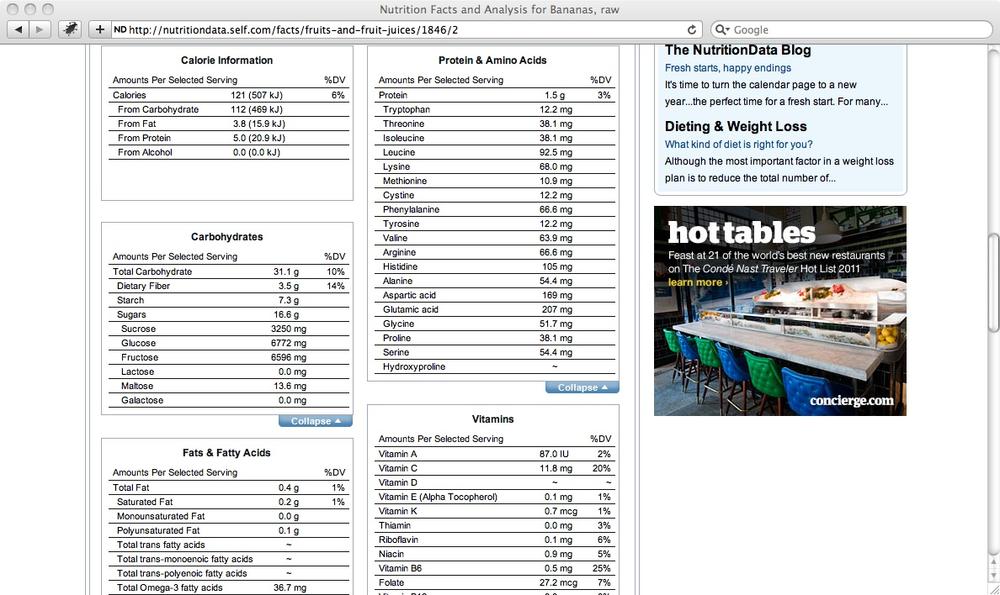
Figure 9. A large banana chalks up the carbs on NutritionData
Note
A medium-sized sweet potato has 1/10th the glucose
and fructose of a large banana. A banana is a good source of
potassium, however, so that’s the trade-off.