2.2 RDAs
The US public health authorities also publish Recommended
Dietary Allowances (RDAs) for each macronutrient (such as the RDA for
carbohydrates—130 grams per day for adults).
You’re probably familiar with the RDAs for vitamins and
minerals. They are essentially a suggested “minimal amount for
health.” For example, the RDA for carbs is based on the brain’s need
for glucose.
Note
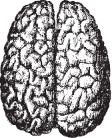
Your brain accounts for around 5 percent of your
body weight, but grabs about 20 percent of your calories—mainly
glucose, but also ketones, a byproduct of metabolizing fats for
energy. That’s a very impressive, “greedy” detail of our metabolism;
if you take in 3,200 calories per day, your brain is getting about
640 calories.
Now we’re going to move into a discussion about each of the
three macronutrients.
Food molecules are like Legos. They are
small molecules bonded or stuck together to make more complex ones.
Starch, for example, is a big polymer or chain
containing many monomers, which are glucose or
sugar molecules. When you eat and digest these substances, the
digestive enzymes split apart the connections between the pieces and
separate them so that they can be absorbed into the body through the
small intestine.
The small intestine cannot absorb whole protein, carb polymer,
and fat molecules; they all have to be split up by digestive enzymes
first, so the substances you are actually absorbing are glucose and
other sugar monomers, amino acids (from proteins), and fatty acids
(from triglycerides, the storage form of fat).
Carbs are polymers of glucose molecules. Proteins are made up of
an often-complex configuration of amino acids. Fats, when you eat them
in food, are composed of a glycerol molecule attached to three
fatty acids in an “E” shape. These are the original Lego
structures.
What about Coffee?
If you’re like me, coffee is almost a major macronutrient for
you. But can you stay fit drinking a lot of coffee? It depends what
you define as a lot. A moderate amount—a couple
of cups or a to-go mug early in the day—is probably harmless. In
fact, many studies say it’s good for you.

Coffee is metabolized very quickly and obviously is
stimulatory for the central nervous system. Caffeine is actually
considered a kind of supplement for athletes. A strong cup
of coffee or tea is a suitable supplement before a sprint, a
weightlifting session, or even a longer event. Caffeine mobilizes
free fatty acids and acts as a central nervous system
stimulant.
People who drink coffee seem to have “reductions in the risk
of several chronic diseases,” according to “Coffee and Health: A
Review of Recent Human Research,” a 2006 article in
Critical Reviews in Food Science and Nutrition.
Coffee actually contains some micronutrients in small amounts, such
as the all-important mineral magnesium.
Coffee’s downsides? The obvious jitteriness you get from too
much caffeine and too little kicking up of the heels.
Coffee also decreases the heart rate (in my own experience, my
resting heart rate (RHR) might go from 52 to 46 or lower after a few
cups of joe) and increases blood pressure—so if you’ve got a little
hypertension, coffee might not be a great thing.
Coffee is also very addictive (with its own withdrawal
symptoms—people talk about headaches, but I haven’t experienced them
because I haven’t withdrawn yet), like that other bean, chocolate.
Coffee will really mess with your sleep, and people differ in their
sensitivity to it. Try drinking a big mug after 3:00 PM and see what
it does to your sleep waves on a Zeo chart; you might have less REM
or deep sleep, or you might simply have less sleep.
Given the number of studies they’ve conducted on coffee and
caffeine, “the most popular drug in the world,” it seems like
researchers have had plenty of opportunities to find something
really bad about it, and so far they haven’t. As long as they don’t,
I’m going to continue to enjoy my morning dark roast.
We’ll start our more specific introduction to food chemistry
with carbs.