Preparing the hospital bag
With
each pregnancy I’ve streamlined the task of packing my hospital bag.
For the last two pregnancies I created a list of items I’d need to pack
into my hospital bag at the last minute. There were a number of things I
wanted to pack that I was still using regularly and needed to have
available. To make sure they weren’t forgotten in the last-minute
packing, I found it helpful to have a descriptive list of these items so
they could be packed easily once labour started. While I managed my
labour, my husband was able to go around ticking off the items on the
list while putting them in my hospital bag.
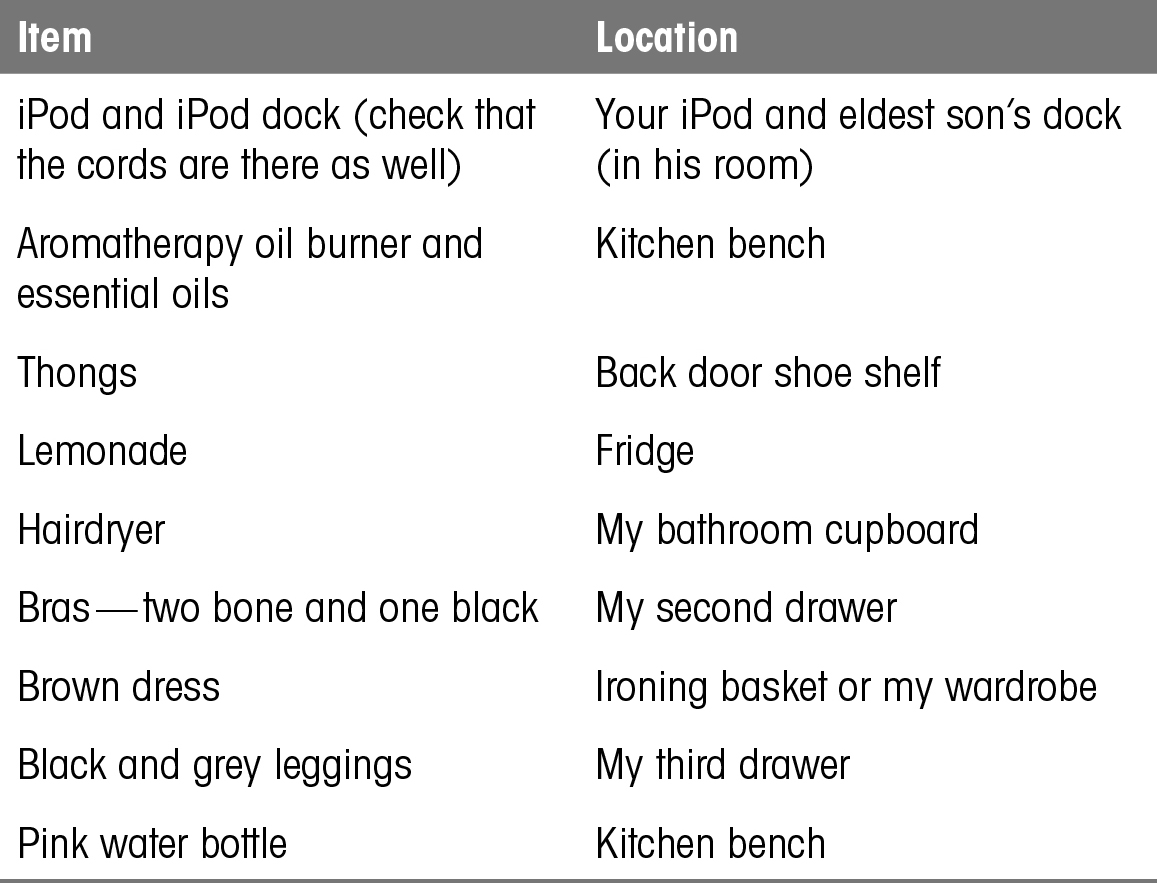
My checklist for our fifth baby is shown in table 1 (overleaf).
Small gifts for the kids
We
have a tradition that the second time the kids come to visit their new
sibling in hospital we give them a small gift on behalf of the new baby.
We leave it until the second visit as we want the first one to be
solely about introducing them to the special addition to the family.
When
the baby is born, it’s an exciting time for a family. There are many
presents and much attention for the new baby. The small gift is a way of
diffusing some of the envy that may result when the other children,
mainly the toddler or preschooler, see this. We’ve always chosen gifts
that can entertain the kids while they visit the baby and me in hospital
— for example, a book, a story CD, playing cards or an activity or
puzzle book.
Table 1: hospital bag packing checklist
When baby comes home
We’re
considerably blessed to have five healthy and beautiful children. I’ve
learned an enormous amount with each child and gained more confidence in
myself as a mother along the way. Some of the things I know now I wish
I’d known when I had my first and second babies. Each baby has their own
personality and I found there’s always a period of adjustment for the
whole family, but particularly for Mum. It can take some time to get
back into the swing of things and work out new ways of managing family
life with a larger brood. Preparing for this and discussing it with the
kids before the baby comes along can help set up the right expectations
of what life will be like with a newborn.
However, even when I’m prepared I find I still need specific strategies during this wonderful but exhausting time.
Entertaining the toddler while breastfeeding
The
age gap between each of our children and the next one is roughly the
same (about two and a half years). This has meant we’ve always had a
newborn and a toddler at the one time. In the early weeks, when the
newborn is breastfeeding frequently, I’ve found it helpful to be
prepared in terms of entertainment for the toddler. While you’re sitting
and feeding the baby the house can be a potential danger zone if a
toddler is unoccupied for too long.
I
had a special box for my toddler when the baby was born. It only came
out when I fed the baby, and went back in the cupboard after feeding
finished. I rotated small toys and art activities — bouncy ball,
write-and-wipe boards, stickers, puzzles and so on.
I found a few low-key ways to keep my toddler entertained while I fed the baby:
• Prepare a children’s playlist on the iPod.
All my children have loved listening to story CDs (audio books). The
iPod made organising this even easier. I’d import a number of my
toddler’s favourite stories and make a playlist. We have a connection
from our stereo into which I plugged the iPod. If the stories had an
associated book, I could have it ready for them to look at while they
listened.
• Read a story. As I’d have to sit still for more than 10 seconds, it was the perfect opportunity to enjoy a story together.
• Tell a story.
As we were not always at home when I needed to feed the baby, I found
making up my own story to tell the toddler was a simple way of amusing
them that required no preparation. I liked to make the central character
of the story the toddler themselves! I even turned the story into a
learning opportunity by adding a moral to it — for example, two toddlers
having difficulty sharing a toy, but finally working out a solution.
• Pack a snack box.
I prepared a snack box and water bottle for my toddler and preschooler
as part of my daily school lunchbox routine. We walked to school each
morning and when we returned the baby generally needed to be fed. My
toddler could access their snack box and independently have their
morning tea at the same time as the baby.
• Play verbal games.
There were a number of verbal games I’d play with the toddler. The
bonus of these games was they could be played anywhere and didn’t
require any preparation.
⇒ ‘I Spy’. We played a modified version — for example, ‘I spy something red in this room’.
⇒ Singing nursery rhymes. We would sing nursery rhymes requiring participation — for example, saying the animals in ‘Old MacDonald Had a Farm’.
⇒ Word-association game.
I’d say one word and ask the toddler to say what they thought of — for
example, if I said ‘big’ they might say ‘small’; I’d say ‘yellow’ and
they might say ‘blue’.
Don’t
be too proud to take help. Too many people make their new parenting
experience so much more stressful than it need be by trying to be
superwomen and cope alone. It’s not natural — humans have always raised
infants in groups — and it’s so difficult if you have no network of
support, community and communication.
Helping out with the school kids
Transferring babies from
car to cot or cot to car often, and the constant running around with a
newborn, is not ideal for baby and is also pretty tiring for Mum. With
my last two babies I was lucky enough to have great friends who brought
my kids home from school on particular nights of the week. This made
such a difference to my days and to how frazzled I’d feel at the end of
them.
If
someone offers to drop your kids home for you, take them up on it! If
you have other school families close by, try organising mutually
beneficial arrangements with them. For example, you could help them out
in some way before baby comes (build up credits) and they can help you
out after baby is born. Or, you can arrange to alternate the days that
each parent does the pick-up from school. I find people are incredibly
generous. Most people won’t even expect you to do anything for them and
are more than happy to help out. They just may not think or know about
offering assistance.
Writing a public ‘to-do’ list
I
love lists and can have many different ones going at any time — for
example, one for the blog, one for daily life and one for jobs I want my
husband to do. I wouldn’t necessarily want everyone to see these lists;
they just might reveal too many of my idiosyncrasies! However, whenever
I had a newborn I did find it invaluable to have a separate list of
tasks I wanted to complete around the house that I was happy for others
to see. This list was filled with very simple things such as:
• clean the windows
• mop the floors
• mend the boys’ jeans
• hand wash the woollens
• fold the washing.
I had a spot near our
kitchen where I kept this list, and it served two purposes: it reminded
me of what I needed to do, and it let others know how they could help.
‘Things
to do’ lists — I love them! We all know that we get baby brain and
easily forget things, so for me everything goes on a list, even the
simple things like returning phone calls. The best part is crossing
things off the list, which is a big achievement when you have a newborn.
Sheena Hickman, mum of two
This didn’t mean I
waved the list in front of every visitor I had in the house. I could
never do that! It was meant for those wonderful family members and close
friends who popped in to visit us and see the baby, but wanted to help
us out too. If I was breastfeeding the baby and they asked me what they
could do to help, I could tell them where my ‘to do’ list was and they
could decide for themselves whether they were up for any of those tasks.
The list also had the added bonus of letting my husband know which
tasks were important to me.
It
took me until baby number three to work out the ‘right’ time for my
husband to take time off work to help with the new baby. My mum lives in
the country so she came and stayed with us for a couple of weeks each
time one of our children was born. After baby number two I realised
there’s no point having two extra adults in the house. For subsequent
babies, my husband took a couple of days off around the birth time, then
went back to work and took a longer leave period later in the year.
Learn
to say ‘no’ to some visitors in the first couple of weeks (this may be
something your husband has to enforce or a sign on the door asking
people to come back another time). This is a really special time for
both Mum and Dad as usually Dad has taken some precious time off work to
spend with you both and it’s important to connect as a new family
first.
Simone Anderson, mum of one
My
experience has been that the toughest part of the first year with a
baby is the period from four to six months. By the four-month mark, the
effect of continuous broken and limited sleep starts to take its toll on
me. The natural adrenalin that you have after the birth of the baby has
also worn off. Combine this with the baby’s day catnapping starting to
kick in and I found this was when I really needed extra support.
For
the last three babies, my husband had two weeks off somewhere between
the four- to six-month mark and it was fantastic. I could take time to
rest more and recharge myself, and the baby didn’t have to get dragged
around so much either!