Your baby may not show any signs of teething or,
indeed, teeth themselves, until well into her first year of life. Some
babies, however, begin teething as early as three months, so it makes
sense to be prepared.
Signs of teething
Irritability and fussiness as her gums become sore and painful; the first tooth is often the worst
Drooling
A rash on her chin, mainly due to the drooling
Gnawing, gumming, and biting everything she puts in her mouth
Rubbing her cheeks and pulling her ears—the pain travels to the ear area and around the jaw
Mild diarrhea—this
is a contentious one, since some professionals think this symptom is
not linked, but a good Australian study recently found that slightly
looser bowel movements are a common symptomA slightly raised temperature—while
a high fever is not a sign of teething and should be treated with
caution, a low-grade fever can result from teething in some little ones;
again, some doctors disagree, but parents report that it’s very common
Poor sleep
A runny nose, as the ear, nose, and throat area become a little inflamed
What to do
It’s all in the genes
The process of
teething often follows hereditary patterns, so if you or your partner
teethed early or late, your baby may follow the same pattern.
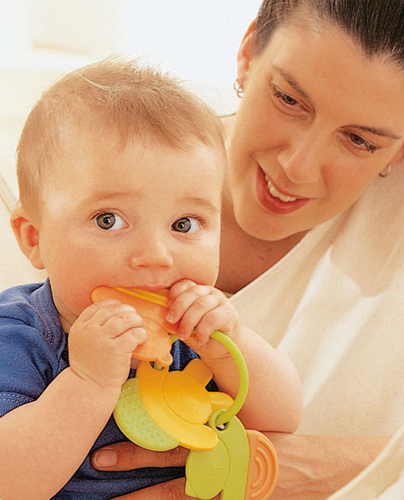
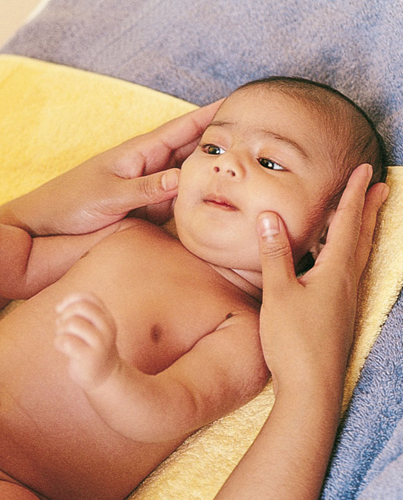
Offer your baby a cool teething ring (not one made of PVC) to gnaw on, and rub her gums with a clean finger
Look for a gentle teething gel to rub into her gums—many contain benzocaine, a local anesthetic; you may also consider giving acetaminophen for pain relief
Homeopathic teething remedies
can be found in most large supermarkets and pharmacies, and usually
contain the remedy Chamomilla, which is traditionally used to ease your
baby’s symptoms—check with your pediatrician before using