Transporting your Baby
There are literally
hundreds of products on the market for getting your baby from A to B,
and some of them are extortionately expensive. Try to remember that
almost everything your baby needs for getting around will need to be
replaced in a few short months, as he outgrows them. So go for
functional and safe, rather than top of the line.
Car seats
You may wish to consider a travel system,
which allows you to transfer your baby from car to stroller/carriage
base without removing her from her seat; if so, your car seat will be
part of the package
Look for a seat with a removable, washable cover
Babies will need a rear-facing seat until they are at least one year old and weigh at least 20 pounds (9 kg)
Make sure your car seat meets the latest government safety standards
Choose a seat with a five-point harness, for safety
LATCH (Lower Anchors and Tethers for Children)
is an attachment system that eliminates the need to use seat belts to
secure car safety seats. Vehicles with the LATCH system have anchors
located in the back seat. LATCH-ready car seats have attachments that
fasten to these anchors. Nearly all passenger vehicles and all car
safety seats made on or after September 1, 2002, come with LATCH.
However, unless both your vehicle and the car safety seat have this
anchor system, you will still need to use seat belts to install the car
safety seat
Strollers
Specialty strollers,
such as joggers and foldable, umbrella types, are popular—but the
latter is really only appropriate for short trips, and definitely only
after the age of six monthsLook for a carriage-style stroller that converts to an upright stroller when your baby is old enough to sit
Look for a stroller that can face toward you as well as outward
Make sure it fits in the family car when folded, and is light enough to carry
Choose a stroller that is easy to fold—holding a baby in one arm and trying to collapse a stroller with the other can be tricky
Consider the terrain you’ll be treading—if you are a country mom, you may need something that can cope with rougher surfaces
Make sure your stroller is designed to fit through standard doorways
Test-drive your stroller before you buy
Good suspension and large wheels will give baby a more comfortable ride
Slings
Slings keep your hands free, so you can keep baby close while doing chores at home, or go out without needing a big piece of equipment
Make sure your partner comes along to try out the sling
If you plan to have several wearers, choose a wrap-style carrier—this style is usually one-size-fits-all
To protect your back and shoulders, look for wide straps and padding
Look for a sling that will allow your baby to face in or out
Breast- and Bottle-feeding
It goes without saying that
you are unlikely to need much more than a comfortable place to sit if
you are breastfeeding; however, you may find there are a few items that
make the process easier. Bottle-feeders need very specific equipment,
which must be kept clean at all times.
Breastfeeding equipment
Expression technique
Most women find it
easier to express milk in a quiet, relaxing place. Others find they need
to be near their babies for the let-down reflex to kick in. You could
try expressing from one breast, while feeding your baby from the
other—although this may require supreme juggling skills and manual
dexterity.
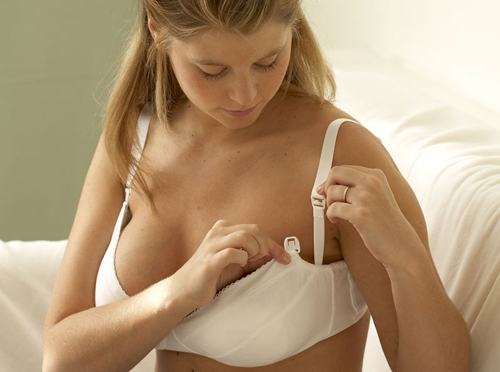
3–4 good-quality nursing bras, professionally fitted, if possible; fastenings should be easy to open with one hand
Breast pads to deal with leaking breasts
Breast shells (optional) to catch drips and keep your nipples dry
A breast shield, for sore nipples
Nipple cream
to relieve sore, cracked nipples—choose one that does not contain
peanut oil, which is linked with allergies in children, and that can be
ingested safely by your baby; organic is best
If you plan to express, you’ll also need:
A pump (hand-held electric, battery-operated, or manual); electric pumps can often be rented
2–4 feeding bottles to store your expressed milk
A dishwasher and/or brush to clean the pump, bottles, and nipples
Specialized plastic bags or bottles for freezing your milk
A special nursing pillow to make the experience more comfortable
Bottle-feeding equipment
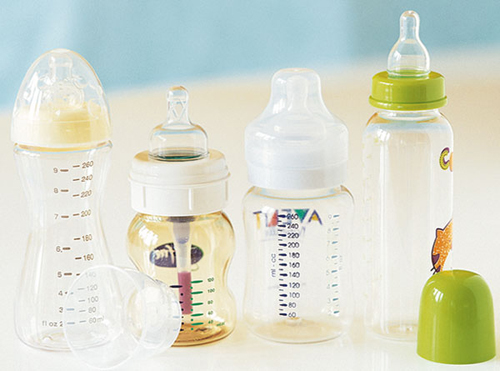
Bottle choices
There are a variety
of different bottles available, including anti-colic and disposable
bottles, and a choice between glass and plastic; investigate the options
and choose the one that is best for your baby and your lifestyle.
6–8 bottles—smaller
bottles are more suitable for newborns and babies who do not consume
much milk at a sitting; you can progress to bigger bottles as your baby
grows and requires larger quantities6–8 caps and nipples—these
should be slow-flowing for new babies; silicone nipples are more
durable, whereas latex ones are closer to the feeling of a real
breast—choose from a traditional bell shape or an “orthodontic” nipple,
which manufacturers claim resembles a breastCleaning equipment—if
you have chlorinated tap water, it’s OK to use a dishwasher or
hand-wash; otherwise, place all parts in boiling water for 5 to 10
minutes
A nylon bottle brush
A tea kettle—you’ll need a regular source of boiled water available, sometimes almost instantly