French and Italian Meringue
There are two general forms
of meringues: those in which the sugar is directly added as the egg whites are
whisked (French Meringue), and those in which the sugar is dissolved before the egg
whites are whisked (Swiss and Italian Meringue—we’ll cover Italian here, but they’re
similar). The French version tends to be drier (sugar is hydroscopic, sucking the
moisture out of the whites—this is why it increases viscosity) and also grittier;
the Italian version has a smoother, almost creamy texture.
French Meringue
In a clean bowl, whisk 3 egg whites to soft peak stage.
Add ¾ cup (150g) of sugar—preferably super-fine sugar—one tablespoon at a time,
while continuously whisking. If using regular sugar, you’ll need to whisk longer to
make sure the sugar is entirely dissolved. To check, roll a little bit of the meringue
between two fingers (it shouldn’t feel gritty).
Italian Meringue
Create a simple syrup by heating in a saucepan ½ cup (100g) sugar and ¼ cup (60g)
water to 240°F / 115°C. Set aside.
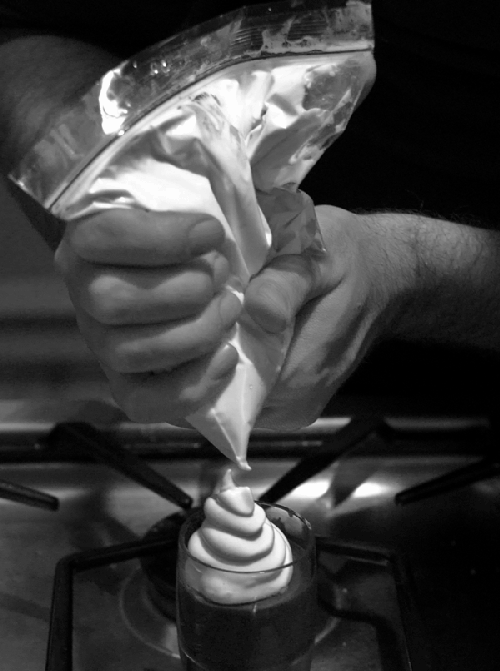
In a clean bowl, whisk 3 egg whites to soft peak stage. Slowly pour in sugar syrup
while whisking continuously.
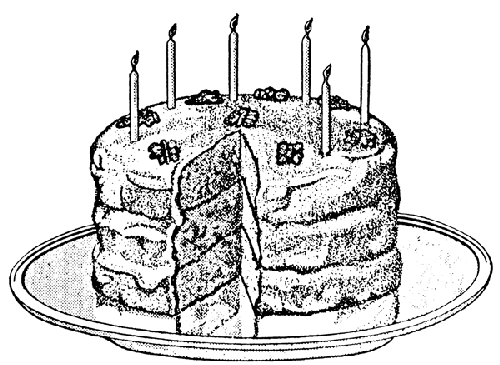
Optimal Cake-Cutting Algorithm for N People[4]If you grew up with a brother or sister, you’re undoubtedly familiar with the There is a solution, but it’s a bit more involved. Here’s the algorithm for Only one person actually does any cake-cutting, and that person can either be a
One of the nice things about this protocol (a protocol is similar to an algorithm, If someone is being greedy and wants a too-big piece, they’ll end up getting the
|
[4] Technically, a suboptimal pie-cutting
protocol