Of all the buildings in Berlin, the Parliamentary
Building is probably one of the most symbolic. The mighty structure,
erected in 1884–94 by Paul Wallot as the proud manifestation of the
power of the German Reich, was destroyed by arson in 1933 and bombed
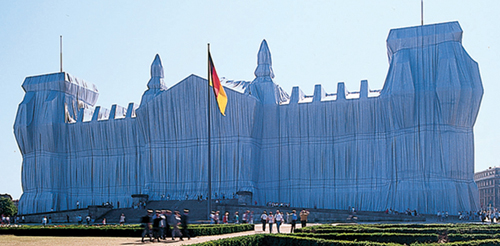
during World War II. In 1996, the artist Christo wrapped up the
Reichstag and, in 1994–9, the British architect Sir Norman Foster
transformed it into one of the most modern parliamentary buildings in
the world. Today it is the official seat of the Bundestag, the German
parliament.
When the Reichstag went up
in flames on 27 February 1933, the Dutch Communist van der Lubbe was
arrested and charged with arson. It is, however, much more likely that
the Nazis had started the fire themselves. Adolf Hitler used the
Reichstag fire as a pretext to get the “Enabling Act” passed by
parliament. This allowed him to dispose of all his opponents, marking
the beginning of a 12-year reign of terror. |

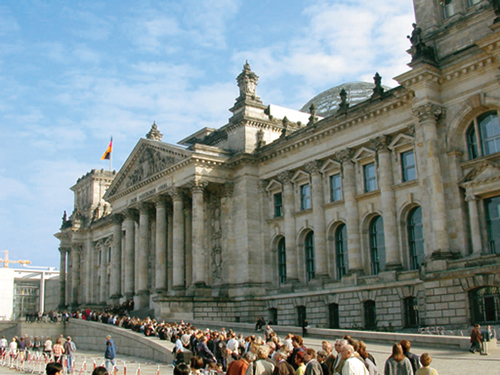
Main entrance of the Reichstag
If a meal at the Käfer restaurant exceeds your budget, many stalls in the vicinity of the Reichstag sell hot dogs. |
|
Large numbers of visitors
come to see the Reichstag cupola. It is best to avoid weekends or to
start queuing half an hour before the opening time. Tuesday is the
quietest day. |
|
Top 10 Sights
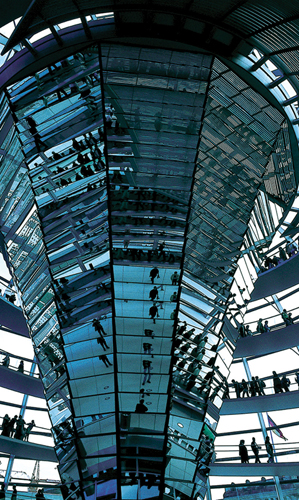
The Cupola
The
new Reichstag cupola by Sir Norman Foster affords breathtaking views of
Berlin. It is open at the top to air the building and – a touch of
irony here – to allow for the dissemination of debates throughout the
country. A ramp winds its way up to the top.

Plenary Hall
The
newly designed plenary hall is the seat of the Deutscher Bundestag, the
German parliament, which has convened here again since 20 April 1999.
Technologically, the hall is one of the most advanced in the world. The
federal eagle caused a row: considered too “fat”, it had to be slimmed
down.
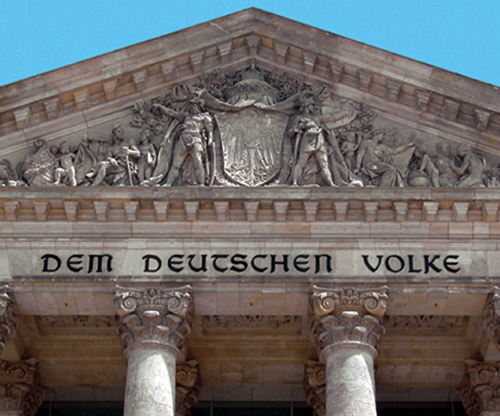
Portico “Dem deutschen Volke”
The dedication “To the German People” was designed in 1916, against the will of Wilhelm II.

Restored Façade
Despite extensive renovations, small bullet holes from World War II are still visible in the building’s façade.

Restaurant Käfer
This
luxury restaurant next to the cupola on the Reichstag’s roof offers an
excellent view of the historical centre of Unter den Linden. It is very
popular and you may well have to wait for a seat .
Installation “Der Bevölkerung”
Hans Haacke’s work of art “To the People” is a counterpoint to the portico inscription opposite.
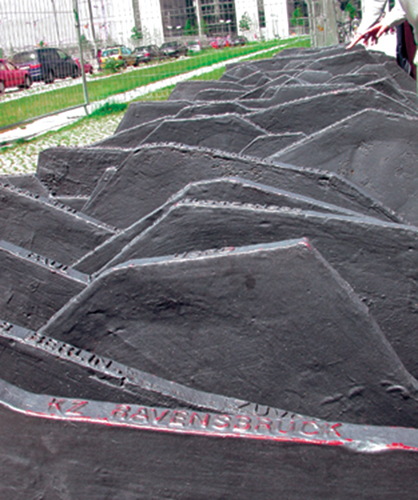
Memorial by Dieter Appelt
Unveiled in
1992, the memorial commemorates 97 Social Democratic and Communist
Reichstag delegates who were murdered under the Third Reich.

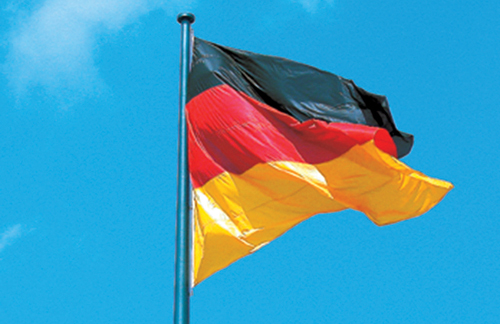
The German Flag
The
giant German flag was first raised on the occasion of the official
national celebrations of German reunification on 3 October 1990.

Platz der Republik
Celebrations
often take place on the lawn in front of the Reichstag, most recently
in 1996, when the building was wrapped up by Christo.

Memorial for Victims of the Wall
Opposite
the southern side of the Reichstag, a memorial recalls the Berlin Wall,
which ran only a few steps away from this spot. One of the crosses
commemorates Chris Gueffroy: shot in February 1989 when trying to
escape, he was one of more than 100 people who died at the Wall.