Myths and misconceptions Is it true that…
A good night’s sleep An impossible achievement?
Go to any parent-and-baby
group and the most common topic of conversation is sleep—usually the
lack of it. There is no doubt that the amount of sleep you get takes a
dive once your baby is born. You’ll be up in the night to offer feedings
or comfort, and you may wake up to her every snuffle even when she
remains blissfully asleep.
In her first few days,
your focus will probably be on developing your confidence with your new
baby, and her sleep won’t be in any sort of routine. However, bright
daylight and plenty of things to look at in the daytime, combined with
less excitement, dimmer lights, and plenty of calming cuddles in the
evening will gradually get her into a day-and-night pattern that suits
family life.
When your baby is a few
weeks old, you may be ready to tackle her sleep patterns. At first you
can expect her to need more than 16 hours sleep per day, with up to four
naps and a longer sleep during the night. By three months old she’ll
want about 13 hours’ sleep, which includes three naps per day, reducing
to two naps by about six months of age. This pattern of reducing need
for sleep will continue; at one year old she’ll average just under 12
hours and will need only one nap.
Read the signs
Learn
your baby’s ways of showing she is tired—maybe pulling at her ear,
twirling her hair, or rubbing her face. Settle her to sleep as soon as
you notice these signs, before she is overtired (when getting to sleep
is harder).Get the light right
Try for
dim light and low noise where your baby sleeps. Bright light and a lot
of activity will keep her awake. No noise at all, however, can be a
problem, as she’s more likely to be woken later when the silence is
broken by other family members getting ready for bed.Routine, routine, routine
Follow
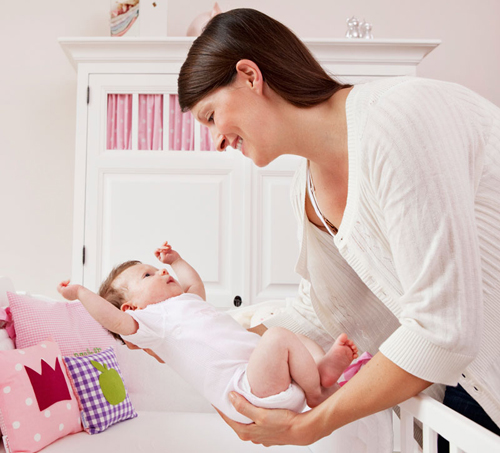
the same pattern every night; for example, bathe then feed her before
sharing a story and putting her in her crib. Always putting her to sleep
in the same place will help her link this place with sleep time.Repeat yourself
Work
out a simple bedtime message, such as “night-night, sleep well” and
repeat this each time you put your baby down. This is another cue to
tell her that it is time to sleep.Touch
Your
baby may be soothed by gentle patting or stroking as she lies in her
crib. Even a calm hand placed on her head or body reassures her that
she’s safe and can sleep.Keep it the same
A
regular bedtime routine, at the same time every night and with calming
routines, can help your baby learn the difference between night and day
so she’ll know it’s time for sleep.

Co-sleeping Safe for baby?
Many experts recommend
that your baby sleep in your room with you for the first six months. You
might want to co-sleep: to share your bed with your baby. The debate
about the benefits versus dangers of this method rages among parents and
professionals with pros and cons on each side. Some research suggests
that you should not co-sleep with a baby of less than three months
A quiet night
Co-sleeping can result in your baby waking less often and going back to sleep more quickly, so there may be extra rest for you.
Laid-back night feeds
It’s
certainly easier to breastfeed if you are simply turning over in bed to
do so, rather than getting up to your baby. You’re likely to breastfeed
for longer if you co-sleep.Sleeping
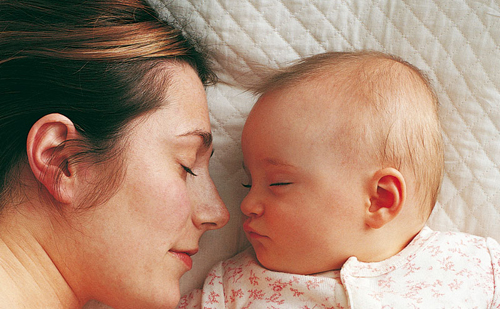
together means more time nestled up with your baby feeling close.
However, it’s the love and attention you give her when she’s awake that
creates the strong attachment between you, so she’ll still develop her
sense of security whether she sleeps snug in her crib or cozy in bed
with you.You, your partner, and your baby
Having your
baby in your bed can be an effective, if unintended, contraceptive by
making sex an impossibility. Sometime or other you’re going to want your
physical intimacy back, and a baby in bed doesn’t allow for a sex life.Co-sleeping safety
Some experts state it is never safe, while others offer safety guidance.
Don’t co-sleep if:
You smoke, even if you don’t smoke in bed.
You have any alcohol or drugs in your system.
You are very tired or have a sleep disorder.
Your baby was premature or weighed less than (51/2 lbs (2.5 kg) at birth or is under three months.
You’re sleeping on a sofa, armchair, or waterbed.
Other children share the bed with you, too.
Bonding
Babies who co-sleep
have been shown to sleep better and breastfeed more. You’ll appreciate
the time together to reconnect with your child if you’re out at work all
day.
Keep it safe
If you have doubts
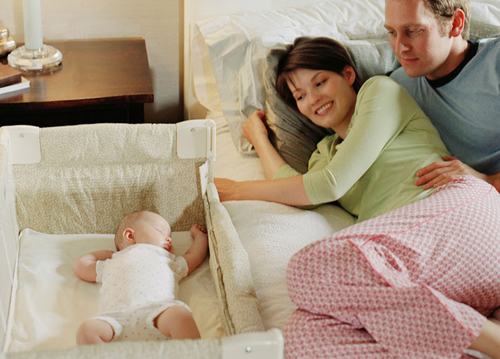
about co-sleeping, another option is a specifically designed bassinet
that attaches to the side of the bed, or a regular bassinet elsewhere in
your room.