Bottles and nipples Getting ready to bottle-feed your baby
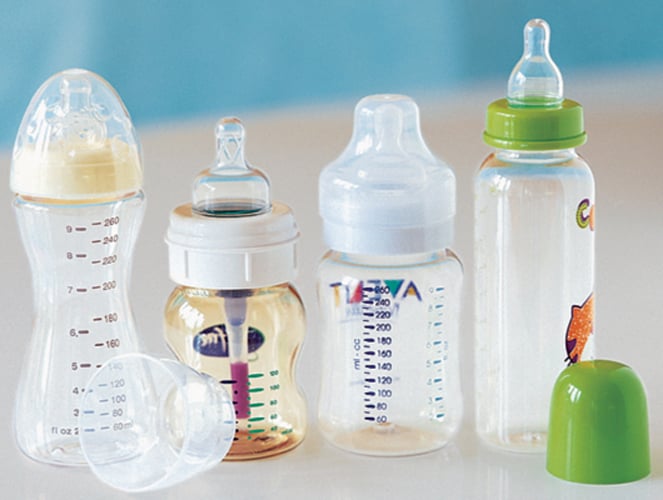
There are a variety of bottles and nipples available in different styles.
You will need between four
and six bottles and nipples. As well as larger bottles measuring 8fl oz
(250ml), you may also want a couple of smaller bottles of 4 fl oz (125
ml). Nipples come with different sized holes to make the flow of milk
faster or slower to suit your baby’s needs. Some nipples are therefore
recommended for newborns and some for hungrier older babies.
Sterilizing equipment
Before using new bottles
and nipples, and each time you use them, wash and sterilize them. Wash
in warm, soapy water with a bottle brush, and rinse thoroughly.
Sterilizing methods include:
Keeping bottles clean:
Whichever method you choose, it is important to sterilize bottles and nipples to keep them germ-free.
Electric steam sterilizing, which takes about 10 minutes, plus the time it takes for equipment to cool.
Microwave steamers, which take around 5 minutes. The equipment remains sterile for up to 3 hours if the lid is left on.
Equipment
can be sterilized by boiling, which takes around 10 minutes. The pan
must not be used for another purpose and you may find that nipples wear
out more quickly.Cold
water sterilizing tablets can be used either in a special sterilizer,
or in a suitable clean container with a lid. This takes around 30
minutes and the equipment can be left in the solution for up to 24
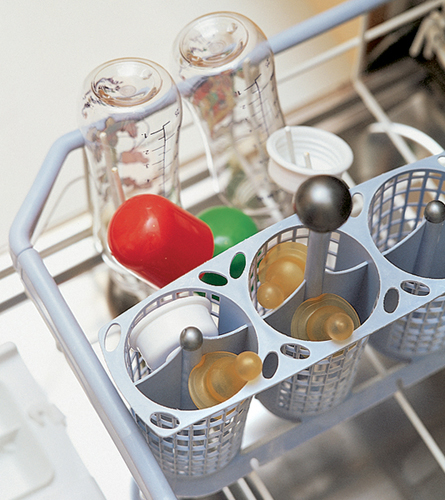
hours; the solution needs to be changed each day.Dishwashers set on a high temperature are adequate for washing bottles after an initial sterilization after purchase.
Taking a break Sharing bottle-feeding with your partner
One of the major plus points of bottle-feeding is that anyone can feed your baby, allowing you to have some time off and rest.
Getting your partner involved in feeding is a great way to help him bond with and feel close to your baby.
Sharing feedings gives you a break and you can take it in turns to do night feedings.
If
you are switching from breast- to bottle-feeding, it may be easier to
get someone else to give your baby the bottle, since your baby may
reject the bottle from you, wanting to be breast-fed instead.
Avoiding tummy upsets The importance of hygiene while bottle-feeding
Small babies
are more susceptible to gastro-intestinal infections so it’s important
to observe strict hygiene while bottle-feeding.
One of the most
important aspects while bottle-feeding is to ensure that all the
equipment involved in the bottle-feeding process is sterilized properly
and spotlessly clean with no trace of old milk. This means sterilizing
the bottles, nipples, and lids
. If your baby doesn’t finish a feeding, don’t be tempted to give
it to him later to finish since germs that are present in the baby’s
mouth may have transferred to the bottle and can then breed in the milk.
When you are traveling or out for the day, you need to be careful
transporting feedings. Ready-made formula is probably the safest way to
feed your baby on the move, or adding formula to the water when you need
it. Changes in water in different regions sometimes cause tummy upsets
in bottle-fed babies.
NOTE
Once you decide how to feed your baby don’t look back. Be confident in your ability to choose what is right for you both
NOTE
Your baby’s nutritional needs constantly change. No sooner are you sure of their requirements than they grow and change
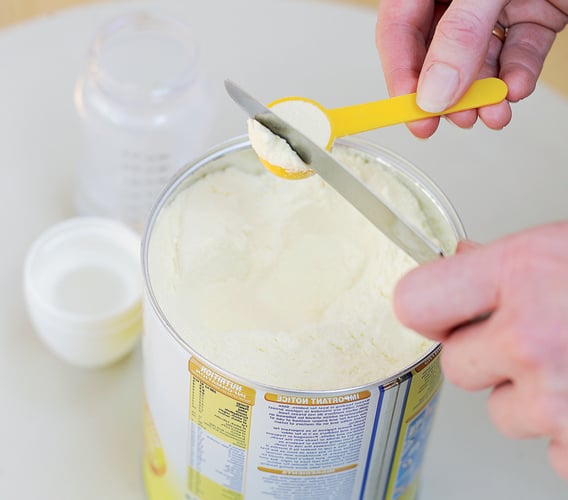
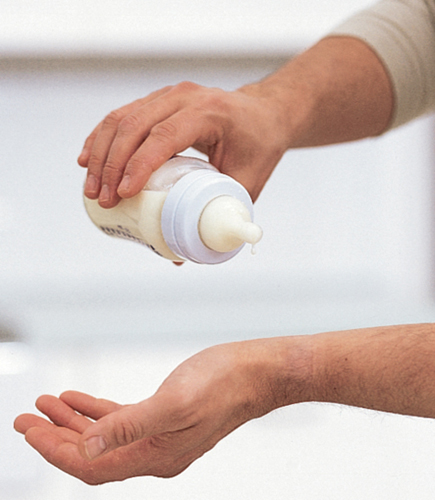
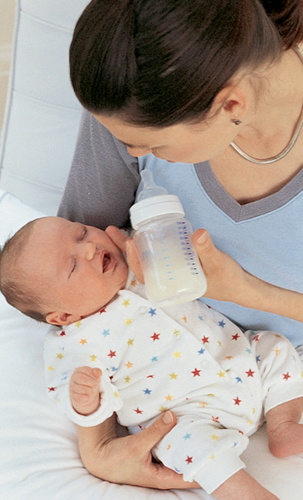
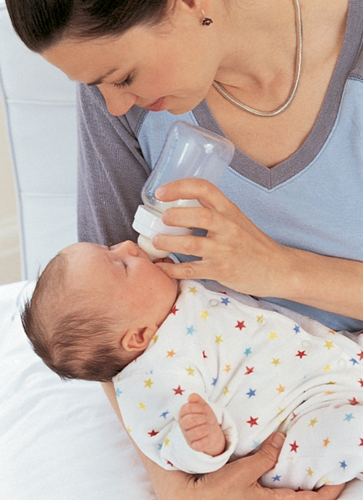
How to bottle-feed Preparing and giving feedings
Bottle-feeding, using
formula or expressed breast milk, can seem daunting at first, but
becomes easier once you get into a routine.