Probably one of the most distinct aspects of
eldercare is that you’ll have to handle an increasing number of
health-related situations. These events can be quite stressful, so
you’ll want to do everything you can to plan your schedule so that they
go as smoothly as possible.
Making Doctor Appointments
You can develop a real
ally by getting to know the people in your elder’s doctors’ offices who
handle the appointment scheduling. Help them to help you by
Letting them know that you need to be included in any appointment changes because you’re the one who’ll be bringing your elder
Giving them your phone numbers so they can reach you with a minimum of effort
Telling them if a particular time of day is more difficult for your elder

If your elder
has decreased mobility, transporting him to and from the doctor—and on
errands—can require added time, energy, and patience. You can purchase
an accessory to make getting into and out of the car easier for both of
you. The accessory can be as simple and inexpensive as a seat cushion
that swivels or as sophisticated as a factory-installed seat designed
for the mobility impaired. With the growing population of senior
citizens, new and more innovative products are becoming available all
the time.
note
The |
Tracking Medications
The elder for whom
you’re the caregiver is likely taking multiple medications. The
instructions for taking them may be quite complicated. You’ll want to
know the answers to all of the following questions:
How many of the pills should the patient take?
note
General
Motors offers the Sit-and-Lift Power Seat, a remote-control–operated
fully motorized rotating lift-and-lower passenger seat, as a
dealer-installed accessory on several of its minivan models. Suggested
retail: $4,590.00. Website: www.gmmobility.com.Must they be taken with food? If so, is the frequency such that your elder will be eating at the right time?
Must the pills be taken with water, or is another liquid okay?
What are the likely side effects? Which ones require you to notify the doctor?
Will there be any adverse reactions with other medications the elder is taking?
Can the elder drink alcohol while on this medication? (If no, let the doctor know if this restriction will cause a conflict.)
Should the elder curtail any activities while on the medication, such as driving, being in the sun, or eating certain foods?
What should the elder do if he misses a dose: skip it or double up?
Is there an alternative way to take the medicine if the elder has trouble swallowing it?
tip
The www.epill.com
website, which specializes in the sale of medication reminder devices,
features a medication reminder product selector. You indicate whether
your elderHas normal hearing or is hearing impaired
Takes medication once, a few, or many times a day
Then the selector indicates which products will meet your elder’s needs.
Is there anything else the doctor thinks you should know about the medication?
When you
understand the intricacies of the medication regimen, you may find it
helpful to create a visual schematic of it along the lines of the one
illustrated in Table 1.
For the medication plan in the illustration, we needed a chart two days
long to cover all of the combinations because Med C is taken only every
other day. Your chart may be even more complex if your elder is taking
any medications that alternate between a higher and lower dosage or that
cannot be taken in combination with others.
| Medication | Med A | Med B | Med C | Med D | Med E |
|---|---|---|---|---|---|
| Instructions | With water only | With food | With liquid | 2 hours after eating | Before bed |
| Dosage | Twice a day | Twice a day | Every other day | Once a day | Once a day |
| Day 1 | |||||
| Before breakfast | X | ||||
| With breakfast | X | ||||
| Mid-morning | X | X | |||
| Mid-evening with snack | X | ||||
| Bedtime | X | X | |||
| Day 2 | |||||
| With breakfast | X | ||||
| Mid-morning | X | X | |||
| Mid-evening with snack | X | ||||
| Bedtime | X | X |
Next, you’ll need to
ensure that your elder is taking the medications according to the
schedule. If your elder is still living by himself and handling his own
medications, you’ll want to be confident that he’s remembering to take
the medications at the right time—and that he’s not forgetting when he’s
already taken the medicine and double-dosing. You can purchase
medication reminders and timers for just about every situation from a
simple alarm that reminds the patient it’s time for medication to a
computerized dispenser that releases only the proper pills at the
prescribed times. You can even subscribe to services that will phone you
automatically if the elder doesn’t take the pills out of the dispenser.
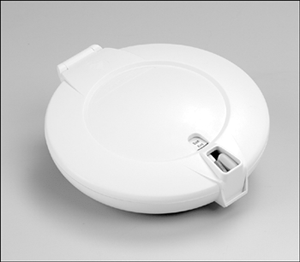
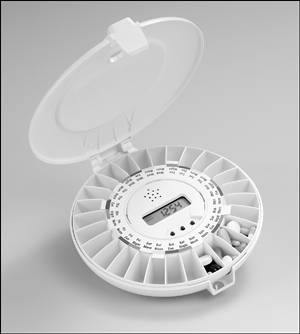
Figures 1, 2, and 3 show a range of the timers that you can buy.
Figure 1. You can set this pill case (shown here from both the front and back) to ring or vibrate up to five times a day.
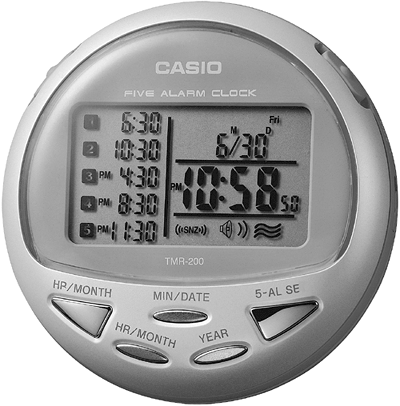
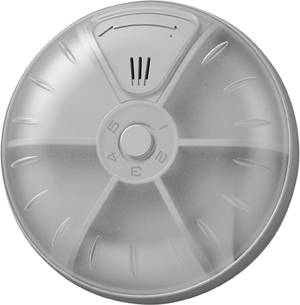
Figure 2. The alarm clock in the top of this bottle reminds the patient
when to take the medication; the voice recorder in the bottom can be
used for special instructions, such as “take with a full glass of
water.”
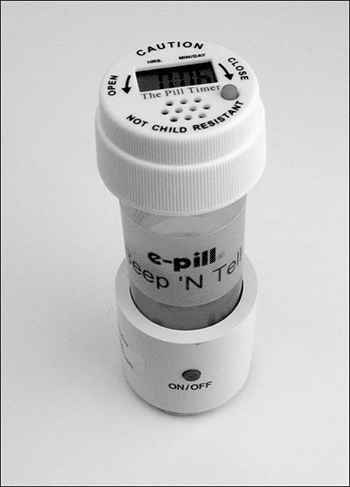
Figure 3. When it’s time to take medication, this device sounds an alarm
and rotates into position dispensing the appropriate pills only.
note
The Casio TMR200-2, shown in Figure 12.1, |
note
The Beep ‘N Tell Medication Reminder pill vial, shown in Figure 12.2, |
Another scheduling
aspect of a prescription medication regimen is making sure that the
patient always has a supply of the medications. You can keep track of
the refill schedule by making the following entries in your planner as
soon as you have the prescription filled for the first time:
A reminder one
week before the medication will run out to order a refill, together with
another reminder the day before it will run outA
reminder two weeks before the last prescribed refill will run out to
contact the doctor for a new prescription—and to schedule an appointment
if necessary—together with a backup reminder one week before the
prescription will expire.
note
The Med-Time Personal Medication System, shown in Figure 12.3, |
caution
If you use a
mail-order prescription service, you still need to put reminders in
your schedule so that you’re alerted if the delivery has been delayed or
misdirected.
Submitting Insurance Claims
Filing health insurance
claims can eat up a lot of your precious time unless you invest the time
upfront to create a smooth-flowing tracking system. Your goal here
should be to decipher the system once and record step-by-step
instructions for yourself so that you won’t have to repeat your efforts
every time you’re faced with a new claim. One way to develop your
procedures is to track one claim from start to finish, writing lots of
notes to yourself as you go, as follows:
Find
out what insurance coverage your elder has in place. Chances are, he’ll
have a primary policy and a secondary policy. Check what the coverages
are. If you’re having trouble figuring out the coverages, start by
asking your elder’s doctors’ office staff and pharmacist. If you’re
still not clear, call the insurance carrier. Don’t hesitate to call back
if you’re still confused; maybe you’ll get a different representative
who will explain the system more clearly. Set aside several hours for
this process.If
you need to file with subsequent carriers after you receive a response,
repeat steps 5 and 6. Save yourself the aggravation of having to
decipher the calculations each time by making your own set of
instructions with notes such as “Line 8 on the statement from Company A
is 80% of the amount allowed, which is shown on Line 3. Enter the amount
from Line 8 on Line 12b of the claim form for Company B.”After the claim has gone through all of the insurance channels, pay the balance due, if any.
caution
Some older people
get nervous about having outstanding medical bills, but it’s important
that you not pay until you have the absolute bottom-line figure because
it’s too hard to try to get money back that you’ve overpaid.
Preparing for Emergencies
When a person’s
health is in decline, emergency medical situations are inevitable.
Emergencies, by definition, require immediate attention and a departure
from whatever you had scheduled. You can minimize the disruption to your
schedule—and reduce your stress—by preparing as much as you can in
advance. You should
Have emergency phone numbers—doctor, ambulance, hospital, family, neighbor—in your individual planner and with you at all times
Make sure several people have access to your elder by giving house keys to trusted and caring neighbors
Keep
an up-to-date list of all of your elder’s medications with you and
posted on your elder’s refrigerator so you can tell emergency personnel
where to find itHave
on file with your elder’s doctors and hospital whatever legal documents
are appropriate to your situation—durable powers of attorney, living
wills, and the likeKnow what your options are for home-care providers if they are needed
Take time now to schedule these preparations into your planner and actually make the preparations as soon as you can.