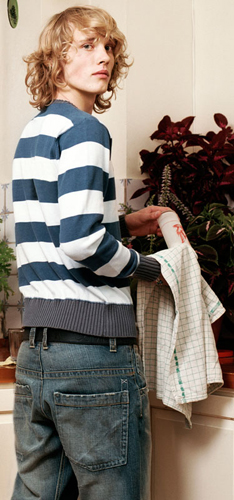
Lesbian and gay adolescents
The process of
forming a sexual identity is begun at conception, but gay and lesbian
adolescents generally do not identify themselves privately until they
are about 15, and publicly until 16 years old.
At first they just feel different from their same-sex peers. Then, when
puberty is established, they find that they are attracted to same-sex
peers, with all the confusion and upset that comes with such a
realization. At some point after this, they will reveal their feelings
to chosen family and friends.
Parents may react
with initial shock and denial, and a sense of loss of an expected future
of traditional marriage and family. To move beyond this requires
courage, honesty, love, and a desire to maintain close family bonds.
Remember that gay relationships can be just as rewarding as heterosexual
ones. Although your child may never get married in the traditional
sense to a partner of the opposite sex, same-sex couples can still be a
family and have children, either via adoption or donation (for
lesbians). As a parent, it is likely that you had an idea that your son
was different in some way. Think about the anguish he may have been
through and the courage it has taken for him to come out. Keep your
communication going whatever your sense of personal hurt. Adolescence is
hard enough: Being gay will inevitably present extra challenges for
him. What he needs is your support and acceptance, in whatever identity
he chooses.
NOTE
Our identity is formed by our sense of personal uniqueness and the recognition we get from people who matter
Forming an identity Development in the teen years
The physical,
psychological, moral, and social developmental advances in teenagers
allow and shape the mixture of personality characteristics, beliefs, and
values that makes up identity.
Crisis or development?
The belief that this
process is a “crisis” is not really accurate, but there is no doubt that
adolescents go through stages of identity development. Teenagers may
experiment with different possible identities: the practical joker at
home, the quiet studious pupil at school, the day-dreaming delivery boy.
He gradually settles for a good fit between his future career, his
ideological values (whether they be political, religious, or
philosophical), and his sexual role. This process can go on well into
adulthood, and although some adolescents seem to simply take on the
roles and values of their parents, others are still changing and
developing in their twenties.
Peer influence
The influence of friends is a
crucial part of this process. Learning to make close friendships and
romantic/sexual relationships helps to define and reflect who they are.
Teens typically go for good looks and nice clothes, but they also admire
a good person. All those hours on the telephone or online with friends
they have only just left at school are for exploring what others are
like and, therefore, what they themselves are like. So give them time
and space to experiment with who they are.
The role of parents
Despite the influence
of friends, the parents’ role in this process is actually very
important. It is the bedrock upon which a healthy self-image and
identity is formed. Parents should expect age-appropriate behavior and
place reasonable limits on their teenagers, but be open to reasonable
change. This will encourage healthy identity and self-esteem.
For example, enforce a
curfew… within reason: Parents who allow the occasional, negotiated
late night over the weekend are likely to produce a responsible young
adult. On the other hand, families with lax rules and an indulgent style
tend to produce children with irresponsible and immature attitudes.
Authoritarian families produce dependency in their offspring that can be
the precursor of psychological difficulties and disorders underpinned
by poor self-esteem.
The influence of peers is important for identity, so give your child time and space to develop friendships.

Discovering attractive and unattractive traits in others helps your teen to discover something about herself.

Set boundaries but be prepared to compromise if your child shows you can trust her.
Idealism and realism Gaining values and beliefs
Before he had the
capacity to think maturely about responsibilities and obligations, your
teenager probably thought of right and wrong as the difference between
avoiding punishments and getting rewards. As he gets older he starts to
question society’s values, and may decide that in his view they are
morally questionable. He also begins to consider the impact of his own
behavior on others. He may feel very strongly about globalization,
stem-cell research, or intensive farming, and consider his own values
morally superior. He will often feel very strongly about issues of
justice and injustice and be critical of his parents’ apparent
“hypocrisy.”
Still a child?
On the other hand,
he may not help with the recycling or treat his younger sister with much
humanity, and you may think that, far from being a principled young
man, he is in fact just a self-centered and confused child. Actually, he
may be both. In this time of growth and change in his knowledge about
himself and the world, he may express clear moral judgments about some
things and yet be very focused on his own personal goals in other
situations.
There is no harm in
gently pointing out that charity begins at home while engaging in an
ideological debate about the third world. But there is no need to crush
his new-found values in the process of insisting on family rules and
beliefs.
Avoiding hypocrisy
As ever, parents who set a
good example by treating each other and family members justly and who
approach their role in their communities responsibly, will stand a
better chance of seeing this behavior in their children. Unfortunately,
moral development in adolescence has a particularly sensitive nose for
hypocrisy. Parents need to be able to justify their decisions rationally
and be able to be challenged on their own values and identity.
Emerging morals
As they grow, teenagers
are likely to start to question society’s values and develop strong
opinions on the various controversial issues they read about in the
news.

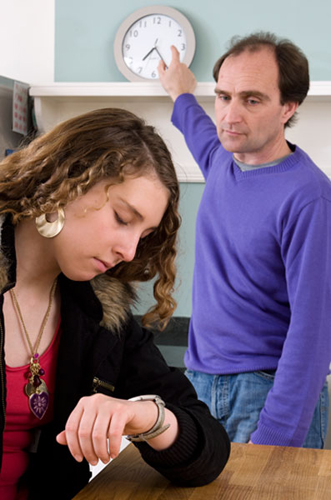
Do I have to clean up?
While your child may
be very vocal about global issues, he might not care much about family
values or helping with chores. Do encourage him to develop values that
reflect both of these areas.