This area did not begin to develop until the
1870s, when the 9th Avenue El went up, making it possible to commute to
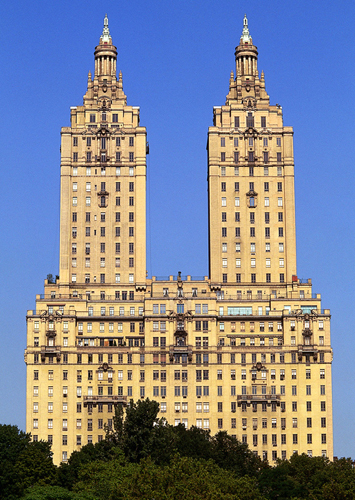
midtown. When the Dakota, New York’s first luxury apartment building,
was completed in 1884, it was followed by others on Central Park West
and Broadway, while side streets were filled with handsome brownstones.
The West Side remains a desirable neighborhood with a reputation for
attracting intellectuals, and much of the city’s best residential
architecture. The creation of Lincoln Center in the 1950s was a great
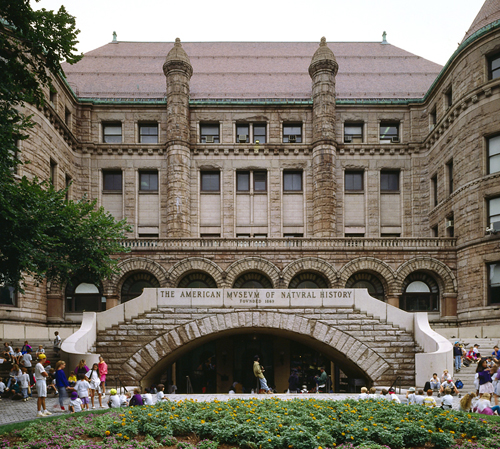
boost, and the American Museum of Natural History is also a draw.
Upper West Side ArchitectureThe Upper West Side’s side streets are lined with |
Apartment buildings
Sights
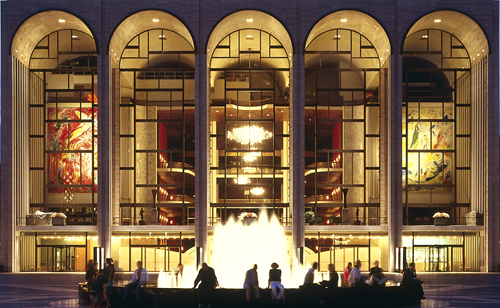
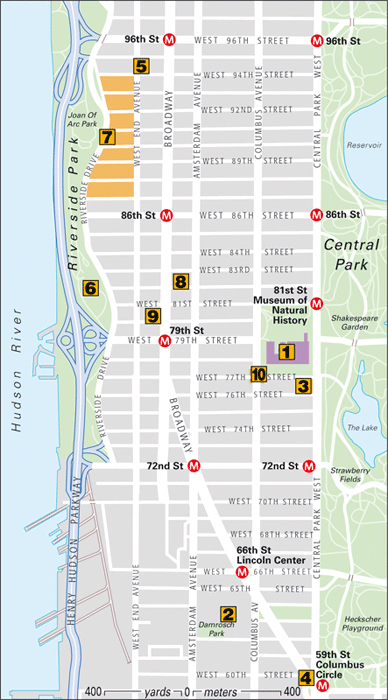
Lincoln Center for the Performing Arts
Built
on 15 acres during the 1950s, transforming slums into a giant cultural
complex, the Lincoln Center houses an array of venues: the Metropolitan
Opera; the New York City Opera and Ballet; the New York Philharmonic;
the Lincoln Center and Walter Reade theaters; Avery Fisher and Alice Tully HallColumbus to Amsterdam Aves, between 62nd & 66th Sts
Tours twice daily
Admission charge

Lincoln Center for the Performing Arts
New-York Historical Society
New
York’s oldest museum, founded in 1804, has organized much of its vast
collection into the 4th floor Henry Luce III Center, which displays
40,000 objects divided into areas such as paintings, sculpture,
furniture, silver, tools, and, notably, Tiffany lamps. Other galleries
are used for changing exhibits. The society also maintains a research
library.2 West 77th St at Central Park West
Open 10am–6pm Tue–Sat (to 8pm Fri), 11am–5:45pm Sun; Library 10am–5pm Tue–Sat (Tue–Fri in summer)
Admission charge
Columbus Circle
One
of the largest building projects in New York’s history is transforming
this neglected urban plaza into an important public site. The
redevelopment has attracted national and international businesses, such
as giant media company Time Warner, which now has its headquarters in an
80-storey skyscraper. The building contains shops, entertainment,
restaurants, and the Mandarin Oriental hotel. It is also the new home of
Jazz at Lincoln Center, the world’s first performing arts facility
dedicated to jazz. Other structures around Columbus Circle include
Hearst House, Trump International Hotel, and the Maine Monument.Columbus Circle
Pomander Walk
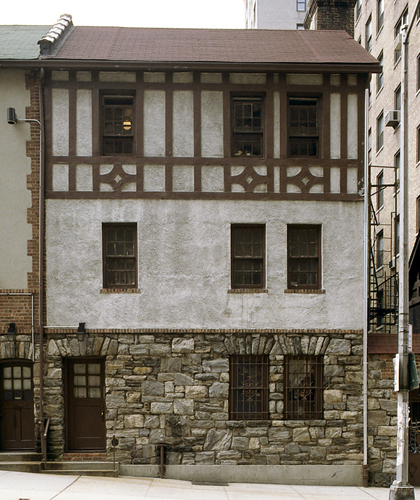
This
double row of small brick and stucco, timbered, Tudoresque townhouses,
hidden on a private street, is one of the many delightful surprises to
be discovered in Manhattan. The developer, a restaurateur named Thomas
Healy, took his inspiration in 1921 from the sets used for a popular
play by Lewis Parker called Pomander Walk,
hoping to recreate the village atmosphere depicted in the play. Gloria
Swanson, Rosalind Russell, and Humphrey Bogart are among the players who
have lived here.261–7 West 94th St, between Broadway & West End Ave

House façade, Pomander Walk
Riverside Park
Another
example of the landscape genius of Frederick Law Olmsted, a woodsy,
hilly band of green planned in 1873, following curving Riverside Drive
for 70 blocks and hiding the abandoned railroad tracks below.
Playgrounds, sports fields, a promenade, and monuments were added later.
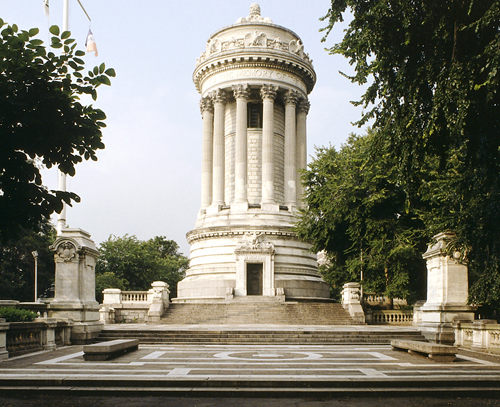
The impressive 1902 marble Soldiers’ and Sailors’ Monument at 89th
Street, a memorial to those who died in the Civil War, was modeled after
the Monument of Lysicrates in Athens.Riverside Drive, 72nd to 155th Sts
Open 6am–1am daily
Free

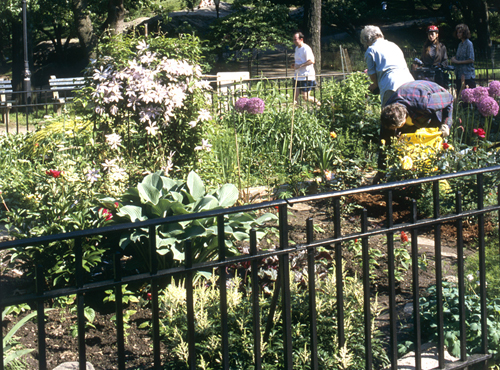
Riverside Park Gardens

Soldiers’ and Sailors’ Monument
Riverside Drive/West End Historic District
A
walk through this historic area showcases the late 19th-century
townhouses that characterize the Upper West Side. West 88th Street is a
good example. The earliest houses, Nos. 267–71, were built in 1884. Nos.
302–38, dating from the early 1890s, have stepped gables and Roman
brick, while Nos. 315–23, built around 1896, have bow fronts in brown or
white stone. The Yeshiva Ketana School, at 346 West 89th Street, begun
in 1901 by Herts and Tallant, occupies one of the few surviving mansions
that once lined Riverside Drive.Between Riverside Drive & West End Ave, 85th & 95th Sts
Children’s Museum of Manhattan
Founded
in 1973, in a former school building, this is a museum dedicated to the
principle that children learn best through self-discovery. It uses a
variety of participatory activities and fantasy world environments to
engage its young visitors in learning that is fun. The Tisch Building,
as the museum is known, has been renovated in a $6.5 million expansion
headed by the museum chairman, Laurie Tisch Sussman. The museum’s many
activities include exhibits to intrigue older children, while Playworks
and Adventures with Dora and Diego provide distraction for newborns to
four year olds .212 West 83rd St at Broadway
Open 10am–5pm Tue–Sun
Admission charge
Zabar’s
A
monument to New York’s mania for finding the best foods and a landmark
since 1934, this always-crowded market sells smoked salmon, sturgeon,
and other Jewish delicacies, wonderful bread, desserts, coffee, and
cheeses, and big selections of oils, vinegars, olives, and gourmet gift
baskets. The second floor is filled with cooking equipment, and the
adjacent coffee counter at the 80th Street corner offers delicious baked
goods, sandwiches, coffees and smoothie drinks.2245 Broadway at 80th St
Green Flea Market/77th Street Flea Market
Flea
market junkies throng this school yard every Sunday, hoping for finds
from among the piles of vintage clothing, crafts, books, jewelry,
prints, and all manner of memorabilia. Less glamorous, new merchandise,
from socks to T-shirts, is also sold here. On a good day as many as 300
booths crowd the premises. A weekly green market shares the same space.I.S.44, 77th St at Columbus Ave