Berlin’s East and South are
remarkably different in character. Friedrichshain, Lichtenberg and
Hohenschönhausen in the east are densely built-up, former working-class
areas, while green Treptow and idyllic Köpenick in the far southeast
seem like independent villages. The tenement blocks of East Berlin were
steeped in history during World War II and later under the East German
regime. Historic Köpenick and Großer Müggelsee, meanwhile, are popular
daytrip destinations.
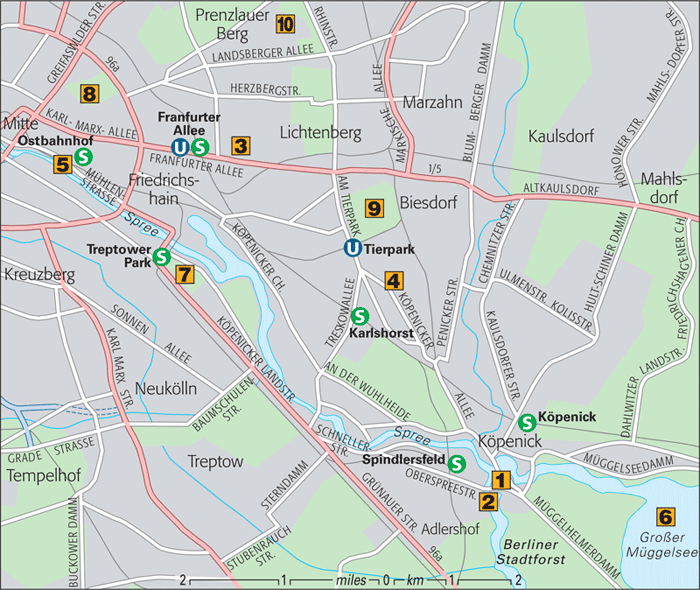
Top 10 Sights
Köpenicker Altstadt
Köpenick
is a small, quiet, self-absorbed world. This island community has a
venerable history: as early as the 9th century, people had settled on
Schlossinsel. The former fishing village stayed independent until 1920,
and its coat of arms still features two fish, as do many of the house
façades. The Old Town, on the banks of the Dahme River, is still
characterized by cobbled streets and low fishermen’s huts from the 18th
and 19th centuries, taking the visitor back in time. Schüßlerplatz,
Grünstraße and Alter Markt, too, still have some older buildings. Old
Köpenick became famous on 16 October 1906. Wilhelm Voigt, a homeless man
dressed up as a captain, commanded a troop of soldiers, marched into
the town hall, arrested the mayor and confiscated the municipal coffers.
Today the “Hauptmann von Köpenick” (Captain of Köpenick) is
commemorated by a statue in front of the Rathaus (town hall). The vast
red-brick structure, dating from 1901–4, is a typical example of Gothic
brick architecture from Brandenburg province.Rathaus: Alt-Köpenick 21
8am–6pm Mon–Fri, 10am–6pm Sat & Sun
030 90 29 70

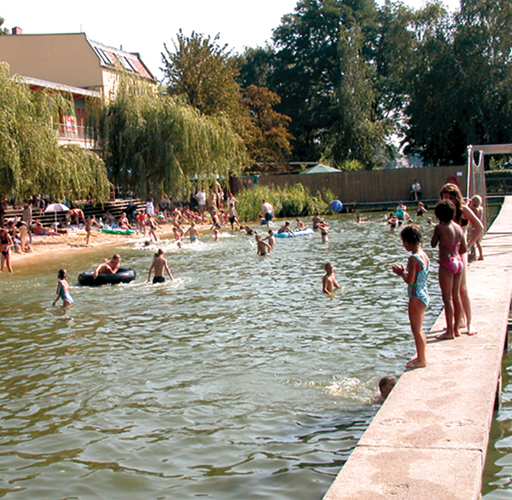
Pool in Köpenicker Altstadt
Köpenicker Schloss
The
Köpenick palace, which is situated on Schlossinsel (palace island) in
the south of the district, was built in 1677–81 to plans by the Dutch
architect Rutger van Langervelt for Frederick, heir to the throne and
future King Frederick I. In the 17th century, the charming Baroque
palace was extended by Johann Arnold Nering and others. Today it houses
part of the collections of the Berliner Kunstgewerbemuseum (arts and crafts museum).Schlossinsel
10am–6pm Tue–Sun
030 266 2951
Admission charge
Gedenkstätte Normannenstraße
The
former headquarters of the much-feared “Stasi”, East Germany’s secret
police, is now a memorial, commemorating the thousands of victims of the
East German regime and of Erich Mielke, the minister in charge of the
secret police. Visitors can see his offices, the canteen and various
pieces of spying equipment, revealing the methods used by the Socialist
big-brother regime.Ruschestr. 103, Haus 1
11am–6pm Mon–Fri; 2–6pm Sat, Sun
030 553 68 54
Admission charge
Deutsch-Russisches Museum
World
War II ended here on 8 May 1945, when Germany signed its unconditional
surrender. Documents, uniforms and photographs, displayed in the former
officers’ casino, relate the story of the war.Zwieseler Str. 4
10am–6pm Tue–Sun
030 50 15 08 10
East Side Gallery
A
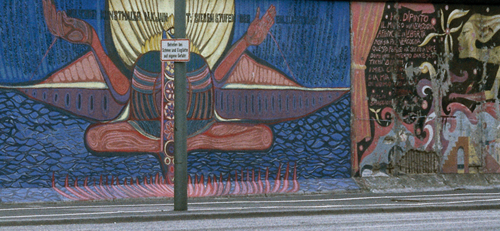
fragment of the Berlin Wall, 1.3 km (1,422 yards) long, was left
standing next to the Spree River. In 1990, 118 artists from around the
world painted colourful images onto the grey concrete wall, making it a
unique work of art. Particularly famous is a picture by the Russian
artist Dmitri Vrubel, showing Leonid Brezhnev and the East German leader
Erich Honecker, exchanging fraternal Socialist kisses. Much has faded
due to exhaust fumes, but it is now being restored.At Mühlenstr./ Oberbaumbrücke

East Side Gallery
Großer Müggelsee
Großer
Müggelsee, known as Berlin’s “bathtub”, is the largest of the city’s
lakes, covering an area of 766 hectares (1,892 acres). Müggelsee is not
as popular as Großer Wannsee, its West Berlin counterpart, mainly
because it is located so far away from the centre of town, in the
southeast corner of the city. The lake is known for the beer gardens on
its south side, which can be reached by boat from Friedrichshagen. All
around the lake there are excellent paths for walking and cycling. You
can also swim in the lake, for example at the beach resort of Rahnsdorf.Treptow-Köpenick district
Treptower Park
Treptower
Park, established in the 19th century as a recreation area for Berlin’s
working-class communities, is today best known for the giant
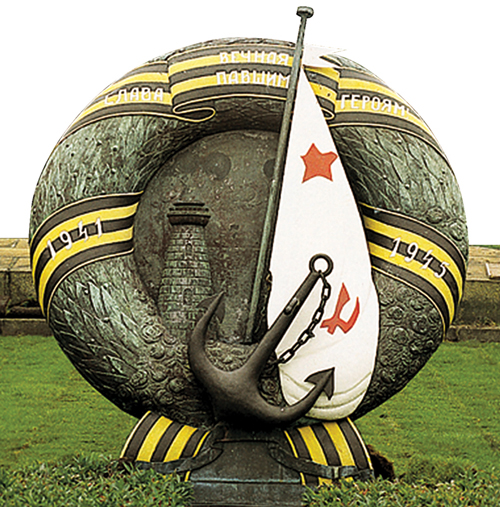
Sowjetisches Ehrenmal (Soviet Memorial). In April 1945, 5,000 Red Army
soldiers, who died during the liberation of Berlin, were buried here.
Beyond the mass graves rises a 12-m (39-ft) bronze statue of a Russian
soldier, holding a child in one arm and a sword in the other, which he
has used to destroy a swastika.Alt-Treptow

Memorial in Treptower Park
Volkspark Friedrichshain
Berlin’s
oldest landscaped gardens, the people’s park, was designed by Joseph
Peter Lenné in 1840. Today it provides an oasis of tranquillity in the
middle of the densely built-up district of Friedrichshain. World War II
has left its traces here, too. Kleiner and Großer Bunkerberg – two heaps
of rubble (the latter nicknamed “Mount Rubble”) reaching a height of 78
m (256 ft) – were piled up here after the war. Less traumatic is the
Märchenbrunnen, a charming Neo-Baroque fairytale fountain created by
Ludwig Hoffmann. It is decorated with 106 richly ornamented figures from
popular fairy tales.Am Friedrichshain
Tierpark Friedrichsfelde
Located
in the historic parklands around Friedrichsfelde Palace, Europe’s
largest zoological garden boasts spacious enclosures and is home to
several rare species. Particularly worth a visit are the lions and
Siberian tigers, which are kept in rocky outdoor enclosures. The park is
also known for its successful elephant breeding programme.
Friedrichsfelde Palace, erected in 1695, is situated in the middle of
this 160-hectare (400-acre) estate.Am Tierpark 125
Jan–Mar: 9am–4pm daily; Apr–Sep: 9am–6pm; Oct: 9am–5pm daily; Nov–Dec: 9am–4pm daily
030 51 53 10
Admission charge

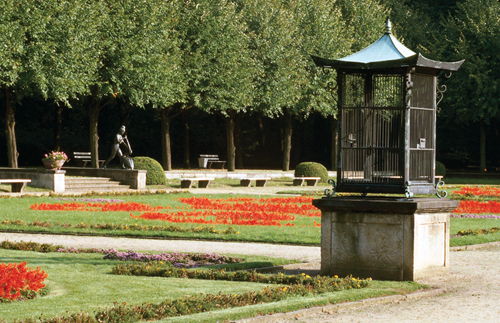
Aviary in Tierpark Friedrichsfelde
Gedenkstätte Hohenschönhausen
This
former secret police prison for “political” prisoners was in use until
1990. Before 1951, it served as a reception centre for the Red Army. On a
guided tour, you can visit the watchtowers and the cells – particularly
horrifying are the so-called “submarine cells”, rooms without windows
used for solitary confinement, where inmates were interrogated and
tortured.Genslerstr. 66
Guided tours 9am–4pm daily and by prior arrangement
030 98 60 82 30
Admission charge