Trastevere, which literally
means “across the Tiber”, is Rome’s left bank and Bohemian
neighbourhood. The former working-class ghetto has retained its medieval
character better than any other part of Rome, despite having become one
of the most restaurant- and nightlife-packed zones of the city. The
Borgo is Vatican turf, a largely uninspired grid of streets strung with
kitsch religious souvenir shops and bad, tourist-orientated restaurants.
Its medieval character was ruined when Mussolini laid out the grand Via
della Conciliazione leading to St Peter’s. North of the Borgo however
stretches Prati, developed in the 19th century and one of Rome’s most
genuine, non-touristy, middle-class neighbourhoods. Its widest
boulevards, Via Cola di Rienzo, Viale Giulio Cesare and Viale delle
Milizie, are where Romans shop for everything from sporting goods to CDs
to imported foods and the best fresh-baked calzone in town.
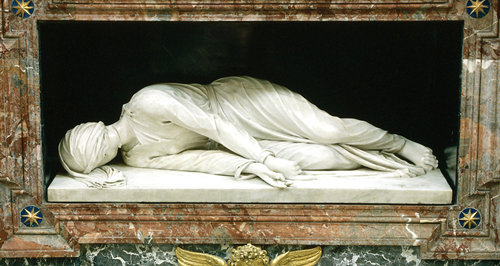
St CeciliaCecilia was a Roman patrician and secret |
Sights
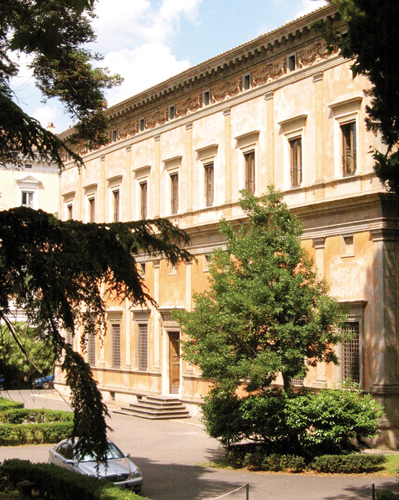
Villa Farnesina
Peruzzi’s
sumptuous villa (1508–11) was built for papal banker Agostino Chigi,
whose parties were legendary – he would toss silver platters into the
Tiber after each course. In a downstairs room, Peruzzi painted Chigi’s
horoscope on the ceiling, Sebastiano del Piombo painted scenes from
Ovid’s Metamorphoses, and Raphael painted the sensual Galatea. Peruzzi’s upstairs hall features a trompe-l’oeil
balustrade overlooking hills. The 1527 graffiti by Charles V’s troops
is now historic vandalism, protected under glass. The bedroom contains
Sodoma’s Wedding Night of Alexander the Great (1517) .Via della Lungara 230
Open 9am–1pm Mon–Sat & afternoons by appt
Adm €5

Santa Maria in Trastevere
Rome’s
oldest church dedicated to the Virgin was founded in 337 on the site
where a miraculous font of oil spouted the day Christ was born. The
miracle is depicted in the stupendous Life of the Virgin
mosaics (1291) by Pietro Cavallini, covering the lower half of the
apse. The current 12th-century church has 13th-century mosaics, 22
mismatched ancient columns and a Cosmatesque pavement. There’s also a
rare 7th-century panel painting of the Madonna della Clemenza in the chapel left of the altar .Piazza S Maria in Trastevere
Open 7:30am–8pm daily
Free

Mosaic, Santa Maria in Trastevere
Santa Cecilia in Trastevere
Built
atop the saint’s house, some of which is visible in the crypt
excavations. A Guido Reni painting of Cecilia’s decapitation sits off a
right-hand corridor of the nave. Under the apse’s glittering 9th-century
mosaics rests a baldacchino (1293) by
Arnolfo di Cambio and Carlo Maderno’s 1600 statue of the saint (he saw
her incorrupt body when her tomb was opened in 1599). Ring the bell on
the left aisle to see the top half of Pietro Cavallini’s Last Judgment (1289– 93), his only remaining fresco in Rome.Piazza di S Cecilia
Open 9:30am–1pm, 4–6:30pm daily (summer 4:15–6pm)
Adm €2.50 for crypt

St Cecilia statue, Santa Cecilia in Trastevere
Vatican Gardens
Typical
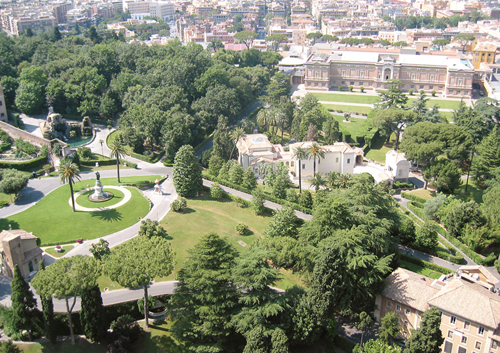
16th-century Italianate gardens of lawns, woods, grottoes and
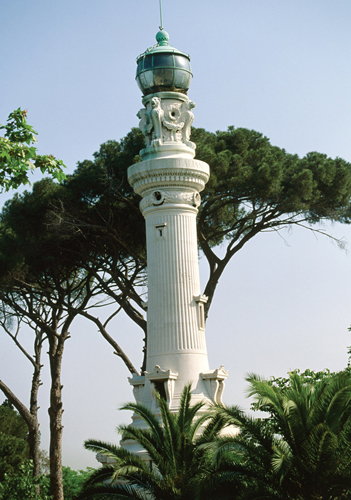
fountains. Structures include the first Vatican radio tower, designed by
Marconi in 1931, Pier Luigi Nervi’s shell-shaped audience hall (1971)
and the Mannerist Casina of Pius IV (1558–61), home to the Pontifical
Academy of Sciences.Viale Vaticano
Tours 11am Mon, Tue, Thu, Fri, Sat
(06 6988 4676 or www.vatican.va)
Adm €30.00
DA

Castel Sant’Angelo
Hadrian designed his massive circular tomb in 123–39. Aurelian fortified it in 271 as part of his city walls .
It was the papal castle for 1,000 years – a viaduct from the Vatican
let the popes scurry here in times of crisis. Gregory the Great named it
in 590 after a vision of St Michael announced the end of a plague from
its tower, commemorated by the bronze statue of a sword-bearing
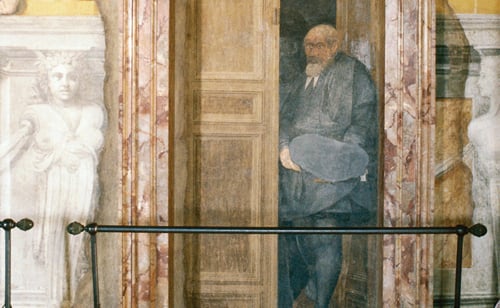
archangel. There are frescoed Renaissance papal apartments and a small
arms and armour collection (Etruscan through to the 1900s), plus
stunning panoramas from the ramparts.Lungotevere Castello 50
Open 9am–7:30pm Tue–Sun
Adm €5.00

Fresco, Castel Sant’Angelo

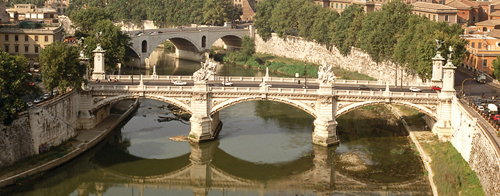
View of the Tiber from Castel Sant’Angelo
San Francesco a Ripa
Though
altered during the Renaissance and Baroque eras, the church was built
just 12 years after St Francis stayed at this hospice in 1219. Ask the
sacristan’s permission to visit the cell in which St Francis stayed,
bearing a copy of his portrait by Margaritone d’Arezzo. The last chapel
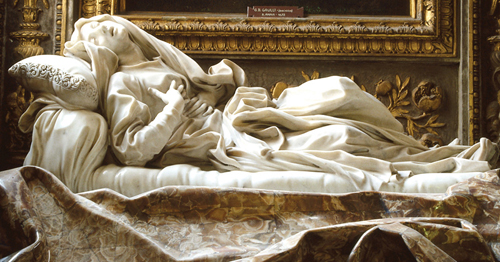
on the left houses Bernini’s Beata Ludovica Albertoni (1671– 4), in a state of religious ecstasy bordering scandalously on the sexual.Piazza di S Francesco d’Assisi
Open 7am–1pm, 4–7:30pm Mon–Sat, 4–7:30pm Sun
Free

Bernini sculpture, San Francesco a Ripa
Ponte Sant’Angelo
Hadrian
built this bridge in 133–4 to access his mausoleum, but only the three
central arches of that span remain. Clement VII had the statues of St
Peter (by Lorenzetto) and St Paul (by Paolo Taccone) installed in 1534.
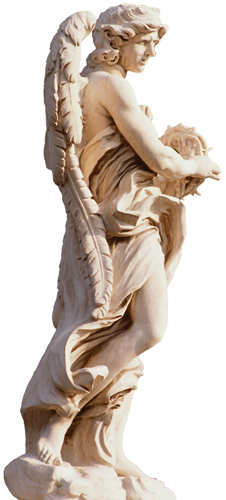
Clement IX hired Bernini in 1688 to design the statues of 10 angels
holding symbols of the Passion.

Statue, Ponte Sant’Angelo