Shopping Tips
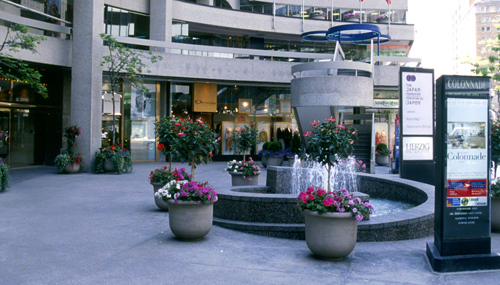
The Colonnade, Bloor Street West
Store Hours
Most
shops are open 10am to 6pm, Monday to Saturday (often later on
Thursday). Department stores and shops in malls and commercial districts
may keep longer hours, from 10am to 9pm, Monday to Saturday, and from
noon to 5pm on Sunday. Widely observed retail holidays are Christmas,
January 1, July 1, Labour Day, and Thanksgiving.Payment
MasterCard,
American Express, and Visa credit cards are widely accepted, Diner’s
Club and Discovery less so. Bank debit cards compatible with the
Interac, Plus, or Cirrus systems are also widely accepted. You will need
your PIN.Sales & Returns
Look
for end-of-season savings on merchandise. Excellent savings are to be
had on Boxing Day (December 26), when prices at many stores are reduced
dramatically. Discounted items (and sometimes even those at full price)
may not be returnable, or may be exchanged only, and within a certain
time period. Be sure to ask about the return policy before making a
purchase.Shopping Malls
The largest downtown mall is Eaton Centre. Other malls are Queen’s Quay Terminal, Hazelton Lanes, Manulife Centre, College Park, and the network of malls on the PATH system.
College Park
444 Yonge St
Music
Music giant HMV has a huge selection. For local flavor and good prices, visit Sam the Record Man
. Classical and jazz lovers should head to L’Atelier Grigorian. For vinyl, try Kops Records.L’Atelier Grigorian
70 Yorkville Ave
HMV
333 Yonge St
Kops Records
229 Queen St W
Books
Chapters,
Indigo, and BookCity have good selections and many locations. Other
excellent bookshops are Nicolas Hoare for architecture and art, Open Air
Books & Maps for maps and travel guides, Pages Books &
Magazines for contemporary literature, and Bakka-Phoenix Books for
science fiction.Bakka-Phoenix Books
598 Yonge St
Book City
501 Bloor St W
Chapters
110 Bloor St W
Indigo
55 Bloor St W
Nicolas Hoare
45 Front St E
Open Air Books & Maps
25 Toronto St
Pages Books & Magazines
256 Queen St W
Alcohol
Sales
of alcohol are restricted to LCBO (Liquor Control Board of Ontario)
outlets (wine, spirits, and beer), the Beer Store (beer and coolers),
and the Wine Rack (selected Ontario wines).1 800 668 5226
Wine Rack
905 564 6900
Convenience Stores
Small
shops selling cigarettes, toiletry necessities, cold drinks, snacks and
fresh produce, and lottery tickets are ubiquitous in Toronto. Many also
sell transit tickets.Tax Refunds
Books
and groceries are exempt from the 8 percent PST (provincial sales tax),
but most other items are subject to up to 15 percent sales tax .
International visitors who have spent over $200 are entitled to a
refund of the 7 percent GST (goods and services tax) within 60 days of
purchase, excluding GST levied on restaurant meals, drinks, tobacco, and
transport. Save your receipts.Visitor Rebate Program
1 800 668 4748
Accommodation & Dining Tips
Hotel Taxes
In
Ontario, accommodation is taxed with a 5 percent accommodation tax and a
7 percent GST (goods and services tax). An additional 3 percent
destination tax is also levied on hotel rooms in the City of Toronto.
You are entitled to a refund of the GST for hotel accommodation for
short stays.

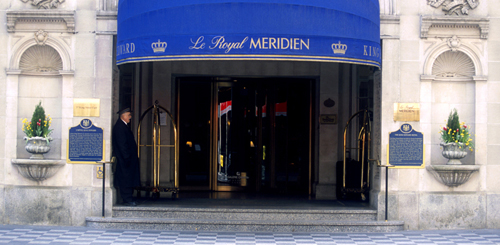
Entrance, Royal Meridien King Edward Hotel
Rooms
In
general, hotel rooms are well furnished and of a fairly good size. Most
have two double beds or one queen- or king-sized bed; standard
twin-bedded rooms may also be available. If you are sensitive to noise,
ask for a room away from the elevator and the ice and dispensing
machines; if sensitive to smoke, ask for a smoke-free room.Rack Rates
Hotel
rates vary according to the hotel category, and the time of week and
season. Peak rates are weekdays and from April to December. Rack rates,
the basic room rates, are the ones used in this book to provide a guide
price. It is almost always possible to get a better deal, especially if
you book online. And too, discounts are often available to members of
clubs such as automobile associations or the Elderhostel. When booking,
ask what special rates apply and make sure to bring proof of membership
with you.Concierges
Mid-
and large-size hotels have concierges on staff whose job it is to cater
to the needs and whims of the guests. They will procure tickets to
shows and sports games, make restaurant reservations, arrange
transportation, and offer helpful tips.Extra Costs
Parking
at downtown hotels is almost always extra, paid on a per-night basis.
Telephone calls made from your in-room phone can be expensive, as can
drinks and snacks consumed from the room’s minibar. Beware: These costs
can add up quickly, and will appear on your final room bill.Restaurant Reservations
Most
restaurants take reservations and it is a good idea to book a table at a
popular dining spot well in advance of your trip. Mention if you have
special needs or dietary requirements. It is considered good form to
cancel your reservation if your plans change.Tipping
Tips
and service charges are not usually added to dining bills. For service
at restaurants, cafés, and clubs, plan on tipping about 15 percent of
the pre-tax amount. An easy way of estimating the tip is to add up the
taxes on the bill. At bars, leave a dollar or two for the bartender. Tip
porters and bellhops at least $1 per bag or suitcase; cloakroom
attendants, $1 per garment; and chambermaids, a minimum of $1 to $2 per
day. A hotel doorman will also appreciate a dollar or two for his
services.Dress Codes
Jacket
and tie are almost never required in restaurants, though many diners
opt to wear them on a special evening out, especially to an upscale
place. Some clubs, however, may not allow you in if you are wearing
sneakers or jeans.Cellphones
At
most restaurants, it is considered uncourteous to leave your cellphone
turned on or to carry on cellphone conversations inside.Meal Times
Breakfast
is usually served in diners and coffee shops from about 6am to 10am.
Lunch is available from about 11:30am to 2pm, dinner between about 5pm
and 10pm. Many restaurants and pubs offer a late-night menu. Brunches
are often served on weekends only – and at some spots, on Sundays only –
usually from 11am–2pm or later.

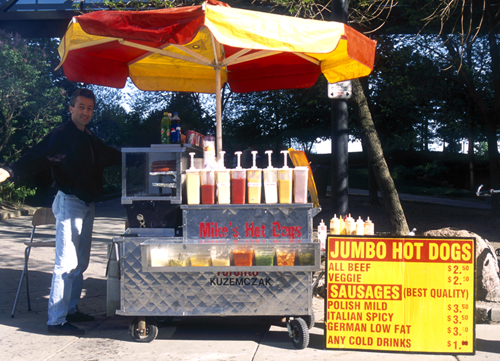
Hot dog cart