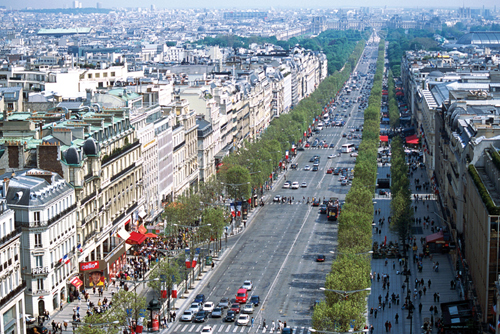
The Champs-Elysées is
undoubtedly the most famous street in Paris and the quarter which lies
around it is brimming with wealth and power. It is home to the president
of France, great haute couture fashion
houses, embassies and consulates, and the five-star hotels and fine
restaurants frequented by the French and foreign élite. The
Champs-Elysées itself runs from the place de la Concorde to the place
Charles de Gaulle, which is known as L’Etoile (the star) because of the
12 busy avenues that radiate out from it. It is the most stately stretch
of the so-called Triumphal Way, built by Napoleon, where Parisians
celebrate national events with parades or mourn at the funeral cortèges
of the great and good.
La MarseillaiseThe stirring French national anthem was written |
Sights
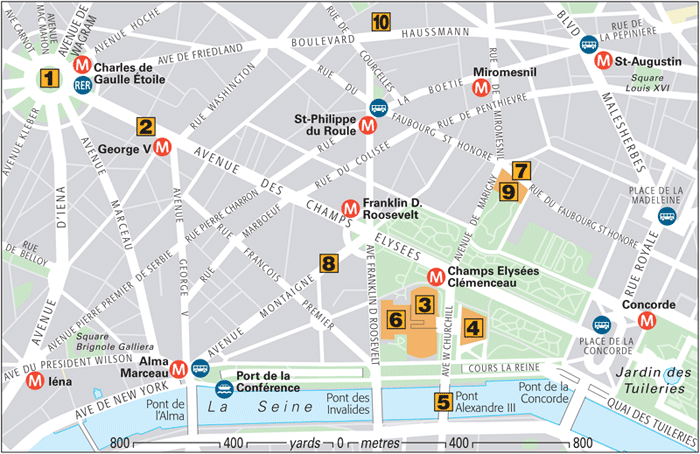
Avenue des Champs-Elysées
One
of the most famous avenues in the world came into being when the royal
gardener André Le Nôtre planted an arbour of trees beyond the border of
the Jardin des Tuileries
in 1667. First called the Grand Cours (Great Way), it was later renamed
the Champs-Elysées (Elysian Fields). In the mid-19th century the avenue
acquired pedestrian paths, fountains, gas lights and cafés, and became
the fashionable place for socializing and entertainment. Since the
funeral of Napoleon in 1840, this wide thoroughfare has also been the
route for state processions, victory parades and other city events. The
Rond Point des Champs-Elysées is the prettiest part, with chestnut trees
and flower beds. In recent years, formerly touristy parts have been
revamped and flagship stores of international brands have been welcomed
back. A walk along the avenue is still an essential Paris experience.

Avenue des Champs-Elysées
Grand Palais
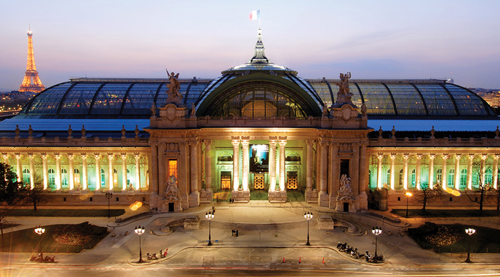
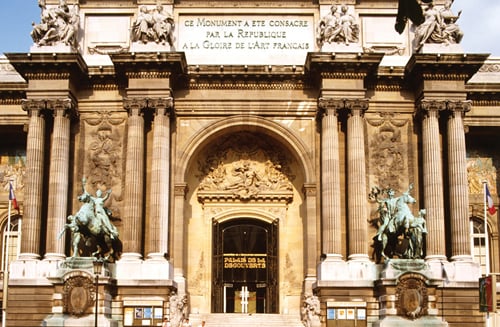
This immense belle époque
exhibition hall was built for the Universal Exhibition in 1900. Its
splendid glass roof is a landmark of the Champs-Elysées. The façade, the
work of three architects, is a mix of Art Nouveau ironwork, Classical
stone columns and a mosaic frieze, with bronze horses and chariots at
the four corners of the roof. The Galleries du Grand Palais host
temporary art exhibitions.3 ave du Général-Eisenhower, 75008
01 44 13 17 17
Open 10am–8pm Thu–Mon, 10am–10pm Wed (daily during exhibitions)
Closed 1 May, 25 Dec
Admission charge

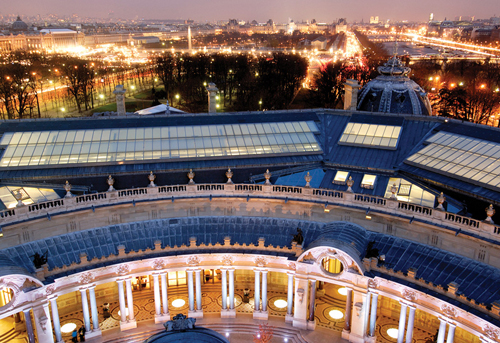
Petit Palais
The
“little palace” echoes its neighbour in style. Set around a
semi-circular courtyard, with Ionic columns and a dome, the building now
houses the Musée des Beaux-Arts de la Ville de Paris. This includes
medieval and Renaissance art, 18th-century furniture and a collection of
19th-century paintings.Ave Winston-Churchill, 75008
01 53 43 40 00
Open 10am–6pm Tue–Sun
Closed public hols

Pont Alexandre III
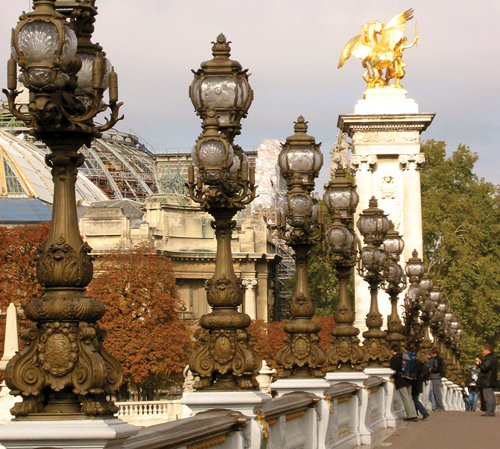
Built
for the 1900 Universal Exhibition to carry visitors over the Seine to
the Grand and Petit Palais, this bridge is a superb example of the steel
architecture and ornate Art Nouveau style popular at the time. Named
after Alexander III of Russia, who laid the foundation stone, its
decoration displays both Russian and French heraldry. The bridge creates
a splendid thoroughfare from the Champs-Elysées to the Invalides .

Pont Alexandre III
Palais de la Découverte
Set
in a wing of the Grand Palais, this museum showcasing scientific
discovery was created by a physicist for the World’s Fair of 1937. The
exhibits focus on invention and innovation in the sciences, from biology
to chemistry, to astronomy and physics, with interactive exhibits and
demonstrations (the magnetism show is especially spectacular). There is
also a planetarium, while the Planète Terre (Planet Earth) rooms examine
global warming.Ave Franklin-D-Roosevelt, 75008
Open 9:30am–6pm Tue–Sat, 10am–7pm Sun
Closed most public holidays
Admission charge

Rue du Faubourg-St-Honoré
Running
roughly parallel to the Champs-Elysées, this is Paris’s equivalent of
Fifth Avenue, Bond Street or Rodeo Drive. From Christian La Croix and
Versace to Gucci and Hermès, the shopfronts read like a Who’s Who
of fashion. Even if the prices may be out of reach, window-shopping is
fun. There are also elegant antiques and art galleries. Look out for
swallows that nest on many of the 19th-century façades.Avenue Montaigne
In
the 19th century the Avenue Montaigne was a nightlife hotspot.
Parisians danced the night away at the Mabille Dance Hall until it
closed in 1870 and Adolphe Sax made music with his newly invented
saxophone in the Winter Garden. Today this chic avenue is a rival to the
rue Faubourg-St-Honoré as the home to more haute couture
houses such as Christian Dior and Valentino. There are also luxury
hotels, top restaurants, popular cafés, and the Comédie des
Champs-Elysées and Théâtre des Champs-Elysées.Palais de l’Elysée
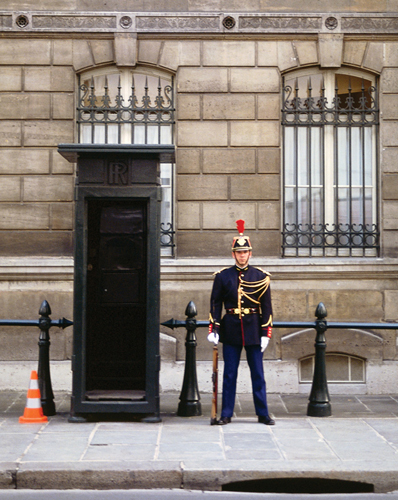
Built
in 1718, after the Revolution this elegant palace was turned into a
dance hall, then, in the 19th century, became the residence of
Napoleon’s sister Caroline Murat, followed by his wife Empress
Josephine. His nephew, Napoleon III, also lived here while plotting his
1851 coup. Since 1873 it has been home to the president of France. For
this reason, it is worth noting that the palace guards don’t like people
getting too close to the building .55 rue du Faubourg-St-Honoré, 75008
Closed to the public

Musée Jacquemart-André
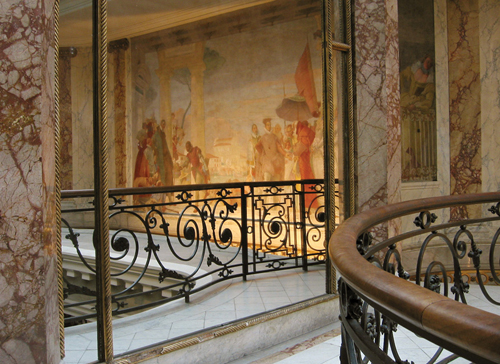
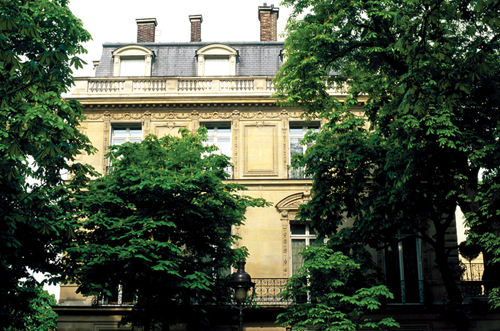
This
fine display of art and furniture, once belonging to avid art
collectors Edouard André and his wife Nélie Jacquemart, is housed in a
beautiful late 19th-century mansion. It is best known for its Italian
Renaissance art, including frescoes by Tiepolo and Paolo Uccello’s St George and the Dragon
(c.1435). The reception rooms feature the art of the 18th-century
“Ecole française”, with paintings by François Boucher and Jean-Honoré
Fragonard. Flemish masters are in the library.158 blvd Haussmann, 75008
01 45 62 11 59
Open 10am–6pm daily
Admission charge