Literary, legal and
scholarly, this is the brainy quarter of London. Dominated by two
towering institutions, the British Museum and London University, and
bolstered by the Inns of Court, it could hardly be otherwise. It is an
area of elegant squares and Georgian façades, of libraries, bookshops
and publishing houses. Most famously, the Bloomsbury Group, known for
novelist Virginia Woolf
lived here during the early decades of the 20th century. Fitzrovia’s
reputation as a raffish place was enhanced by the characters who drank
at the Fitzroy Tavern, such as the Welsh poet Dylan Thomas (1914–53) and
the painter Augustus John (1878–1961).
Bloomsbury ConnectionsMany Bloomsbury streets and squares are named |
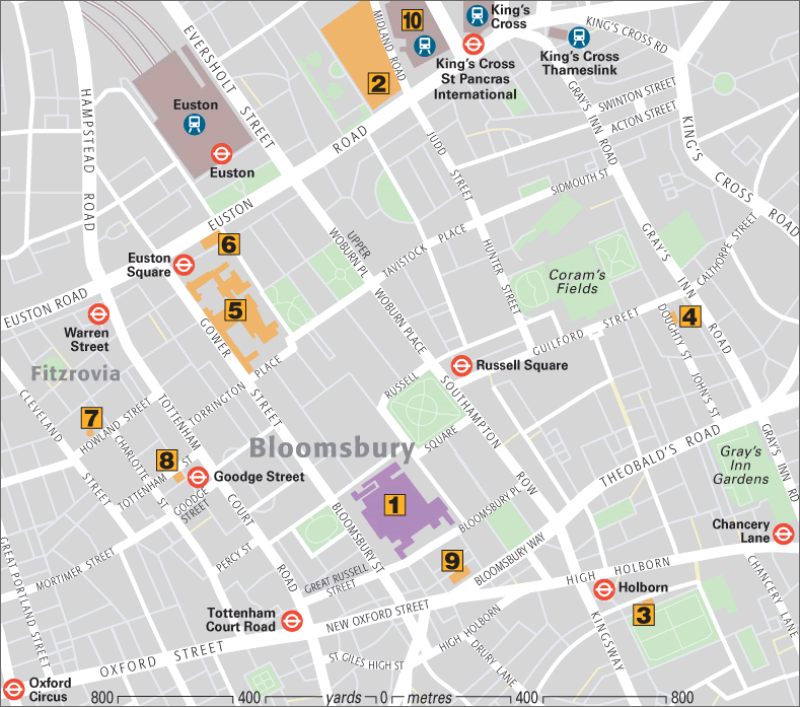
Sights
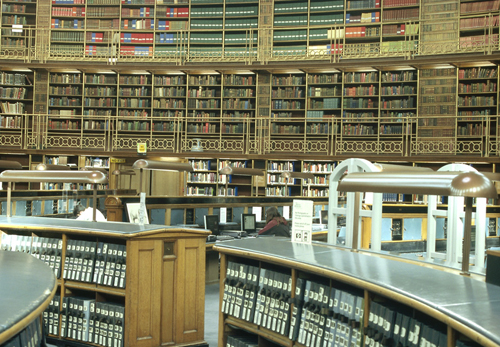
British Library
Located
in the heart of St Pancras, the British Library holds copies of
everything published in Britain, as well as many historical publications
from around the world. Members have free access to these, while
non-members can enjoy the magnificent space and the regular exhibitions
put on here. A dazzling, permanent display in the John Ritblatt Gallery
includes the earliest map of Britain (1250), a Gutenberg Bible (1455),
Shakespeare’s first folio (1623), Handel’s Messiah
(1741) and many breathtaking illuminated manuscripts. The glass walls
in the core of the building reveal the huge leather volumes from the
King’s Library, donated by George III. There are regular talks and
events, a café, restaurant and, of course, a well-stocked bookshop.96 Euston Road NW1
Open 9:30am–6pm Mon, Wed, Thu, Fri, 9:30–8pm Tue, 9:30am–5pm Sat, 11am–5pm Sun & public hols
Permanent exhibitions are free.

British Library
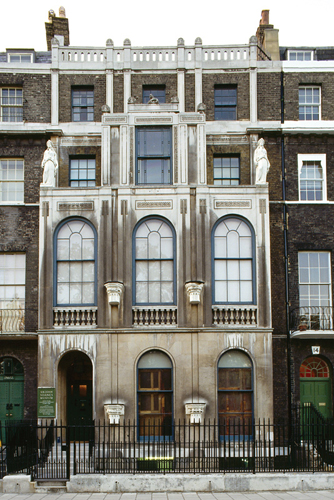
Sir John Soane’s Museum
A
particular pleasure of this unique museum is watching visitors’ faces
as they turn a corner and encounter yet another unexpected gem. Sir John
Soane, one of Britain’s leading 19th-century architects, crammed three
adjoining houses with antiques and treasures, displayed in the most
ingenious ways. The basement crypt, designed to resemble a Roman
catacomb, is particularly original. The Rake’s Progress (1753), a series of eight paintings by Hogarth, is another highlight.The
houses are on the northern side of Lincoln’s Inn Fields, the heart of
legal London, where gowned and bewigged lawyers roam. Lincoln’s Inn, on
the east side of the square, is one of the best preserved Inns of Court
in London, part of it dating from the 15th century.13 Lincoln’s Inn Fields WC2
Open 10am–5pm Tue–Sat, 6–9pm first Tue of month
Free

Sir John Soane’s Museum
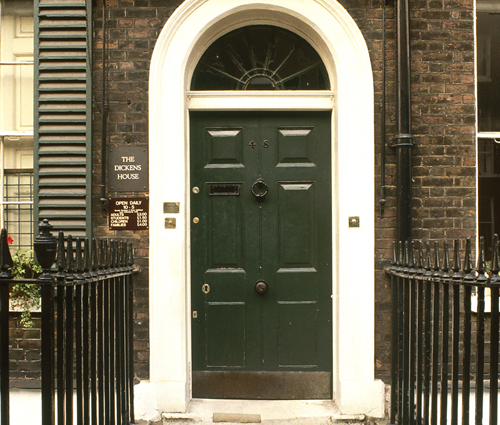
Charles Dickens Museum
Home to Charles Dickens from 1837–39, during which time he completed some of his best work (including The Pickwick Papers, Oliver Twist and Nicholas Nickleby),
this four-storey terraced house offers a fascinating glimpse into the
life and times of the great Victorian author and social reformer. Some
rooms have been laid out exactly as they were in Dickens’ time. Nearby
Doughty Mews provides another step back to Victorian times.48 Doughty Street WC1
Open 10am–5pm Mon–Sat, 11am–5pm Sun
Admission charge

University College London
Founded
in 1836, UCL is the oldest college of London University and owns
several fine academic collections. In the Petrie Museum is one of the
largest collections of Egyptian archaeology in the world. Etchings,
engravings and early English Mezzotints from the college’s art
collection are exhibited in the Strang Print Room. Check out
performances at the college’s Bloomsbury Theatre in Gordon Street.Gower Street WC1
Petrie Museum
open 1–5pm Tue–Fri, 10am–1pm Sat
Free
Bloomsbury Theatre
020 7388 8822
Wellcome Collection
The
medical collection of American businessman and philanthropist Sir Henry
Wellcome (1853–1936), who founded one of the world’s leading
pharmaceutical companies, explores the connections between medicine,
life and art. Exhibits include Charles Darwin’s walking stick and
Fakir’s sandals.183 Euston Road NW1
Open 10am–6pm Mon–Fri, 10am–4pm Sat
Free
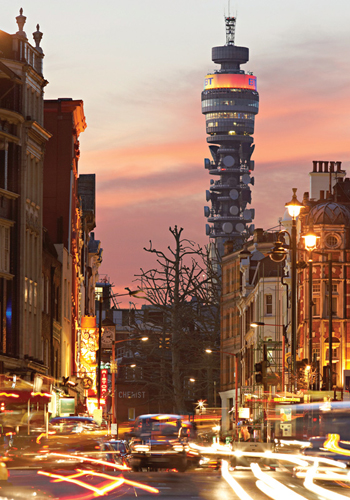
British Telecom Tower
At
190 m (620 ft), this was the tallest building in London when it opened
in 1965. Sadly, the revolving restaurant on top has been closed for
security reasons, but the Tower Tavern in Cleveland Street has a good
large-scale diagram explaining the tower’s constituent parts (as well as
hand-pulled beer).Map D2

Telecom Tower
Pollock’s Toy Museum and Shop
This
delightful child-sized museum is a treasure-trove of historic toys. The
shop below is crammed with old-fashioned playthings including Victorian
toy theatre sheets, originally published by Benjamin Pollock.1 Scala Street W1
Open 10am–5pm Mon–Sat
Admission charge
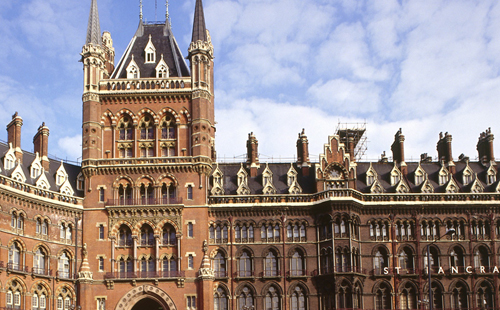
St Pancras International Station
One
of the glories of Victorian Gothic architecture, this railway terminus
was designed in 1874 by Sir George Gilbert Scott. Most of the frontage
is in fact the Midland Grand Hotel. The Eurostar International Terminal
moved here from Waterloo Station during 2007, when the Channel Rail
Tunnel Link was completed.Euston Road NW1

Façade, St Pancras International Station

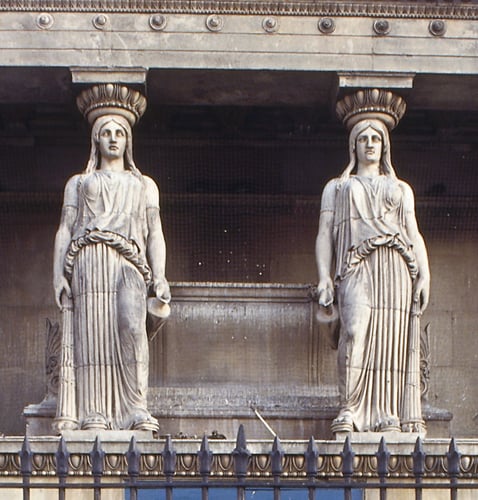
Carved figures, St Pancras Parish Church