These two quarters were once
the province of the rich and the royal. Adjoining the Tuileries Gardens
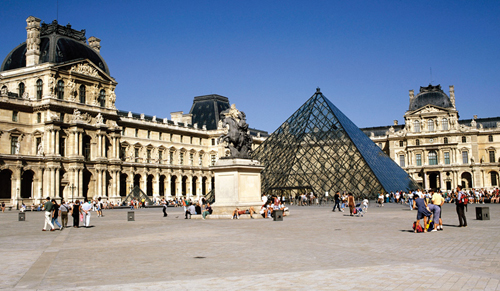
is the largest museum in the world, the Louvre, while the grand opera
house gives the second quarter its name. The Place de la Concorde is one
of the most historic sites in the city.
Sights
Rue de Rivoli
Commissioned
by Napoleon and named after his victory over the Austrians at Rivoli in
1797, this grand street links the Louvre with the Champs-Elysées.
It was intended as a backdrop for victory marches but was not finished
until the 1850s, long after the emperor’s death. Along one side,
railings replaced the old Tuileries walls, opening up the view, while
opposite, Neo-Classical apartments sit atop the long arcades. These are
now filled with a mix of shops, selling luxury goods or tourist
souvenirs.Place de la Concorde
This
historic octagonal square, covering more than 8 ha (20 acres), is
bounded by the Tuileries Gardens on one side and marks the starting
point of the Champs-Elysées on the other. It was built between 1755–75
to designs by architect Jacques-Ange Gabriel as the grand setting for a
statue of Louis XV, but by 1792 it had become the place de la Révolution
and its central monument was the guillotine. Louis XVI,
Marie-Antoinette and more than 1,000 others were executed here .
In 1795, in the spirit of reconciliation, it received its present name.
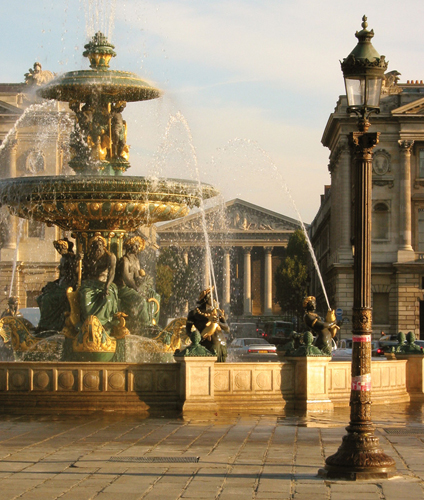
The central obelisk, 23 m (75 ft) tall and covered in hieroglyphics, is
from a 3,300-year-old Luxor temple, and was a gift from Egypt, erected
in 1833. Two fountains and eight statues representing French cities were
also added. On the north side of the square are the mansions Hôtel de
la Marine and Hôtel Crillon, also by Gabriel.

Jardin des Tuileries
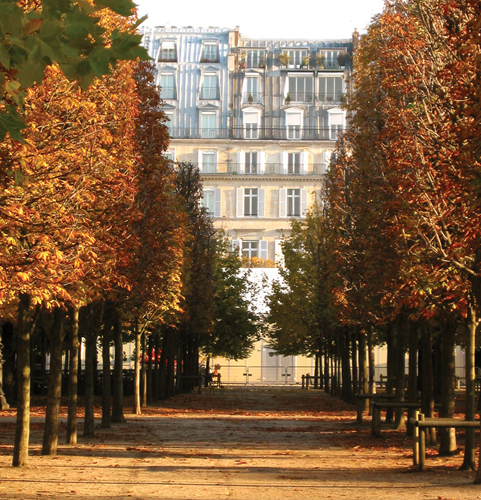
These gardens
were first laid out as part of the old Tuileries Palace,
which was built for Catherine de Médici in 1564 but burned down in1871. André Le Nôtre redesigned them into formal French gardens in
1664. At the Louvre end is the Arc de Triomphe du Carrousel, erected by
Napoleon in 1808. Here is also the entrance to the underground shopping
centre, the Carrousel du Louvre. Nearby, sensuous nude sculptures by
Aristide Maillol (1861–1944) adorn the ornamental pools and walkways. At
the far end is the hexagonal pool, the Jeu de Paume gallery and the Musée de l’Orangerie, famous for its giant canvases of Monet waterlilies.

Musée des Arts Décoratifs
huge collection covers the decorative arts from the Middle Ages
through to the 20th century. With more than 100 rooms, the many
highlights include the Medieval and Renaissance rooms, the Art
Deco rooms, and a wonderful jewellery collection. Also in the same
building are the Musée de la Mode and the Musée de la Publicité, which
are open for temporary exhibitions and worth a visit.
Open 11am–6pm Tue–Fri (until 9pm Thu), 10am–6pm Sat & Sun
Admission charge
Art Nouveau Museum
This
small museum (part of Maxim’s restaurant and downstairs nightclub)
houses Pierre Cardin’s impressive Art Nouveau collection – an elegant
assembly of 550 works of art designed by big names such as Tiffany,
Toulouse-Lautrec, Galle Massier and Marjorelle. A guided visit can be
combined with lunch in the glamorous restaurant.Palais-Royal
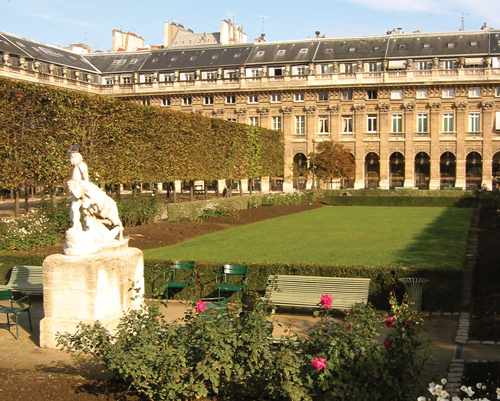
In
the late 18th century this former royal palace and garden underwent
extensive changes under the dukes of Orléans. The architect, Victor
Louis, was commissioned to build 60 uniformly styled houses around three
sides of the square and the adjacent theatre, which now houses the Comédie Française,
France’s national theatre. Today the arcades house specialist shops,
galleries and restaurants, and the courtyard and gardens contain modern
works of art .Pl du Palais Royal, 75001
Public access to gardens and arcades only

Palais Royal courtyard
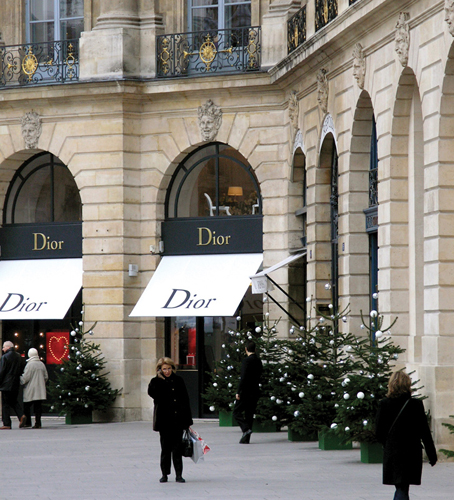
Place Vendôme
Jules Hardouin-Mansart, the architect of Versailles,
designed the façades of this elegant royal square for Louis XIV in
1698. Originally intended for foreign embassies, bankers soon moved in
and built lavish dwellings. It remains home to jewellers and financiers
today. The world-famous Ritz hotel
was established here at the turn of the 20th century. The central
column, topped by a statue of Napoleon, is a replica of the one
destroyed by the Commune in 1871.

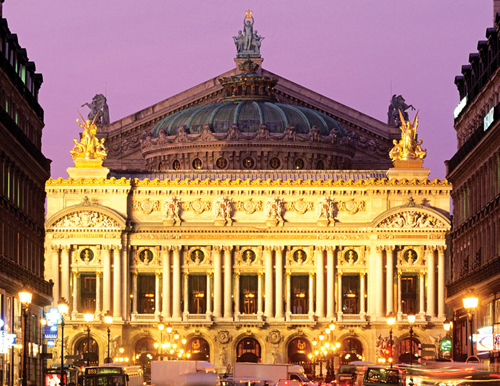
Opéra National de Paris Garnier
Designed
by Charles Garnier for Napoleon III in 1862, Paris’ opulent opera housetook 13 years to complete. A range of styles from Classical to
Baroque incorporates stone friezes and columns, statues and a green,
copper cupola. The ornate interior has a Grand Staircase, mosaic domed
ceiling over the Grand Foyer and an auditorium with a ceiling by Marc
Chagall. There’s even an underground lake – the inspiration for Gaston
Leroux’s Phantom of the Opera – sadly closed to visitors .Pl de l’Opéra, 75009
01 40 01 17 89
Open 10am–5:30pm daily (closes at 1pm on day of matinee performances; closed some dates in Dec)
Admission charge

Opéra de Paris Garnier façade
Place de la Madeleine
Surrounded by 52 Corinthian columns, the huge Classical-style La Madeleine
church commands this elegant square. On the east side a colourful
flower market is held Tuesday to Saturday. The square is surrounded by
some of the most up-market épiceries (food stores) and speciality shops in the city (see Au Verger de la Madeleine).