Covent Garden is a popular
destination for Londoners and tourists alike. At its heart is the
capital’s first planned square, laid out in the 17th century by Inigo
Jones and recently completed by the addition of the imperious, pearly
white Royal Opera House. In spite of such grandeur, there is still a
local feel to the surrounding streets and lanes, especially around
Neal’s Yard and Endell Street. To the south of Covent Garden is another
recently developed institution, Somerset House, which contains the
Courtauld Institute of Art Gallery. To get the full impact of the
imposing riverside setting, enter from the Embankment side.
Sights
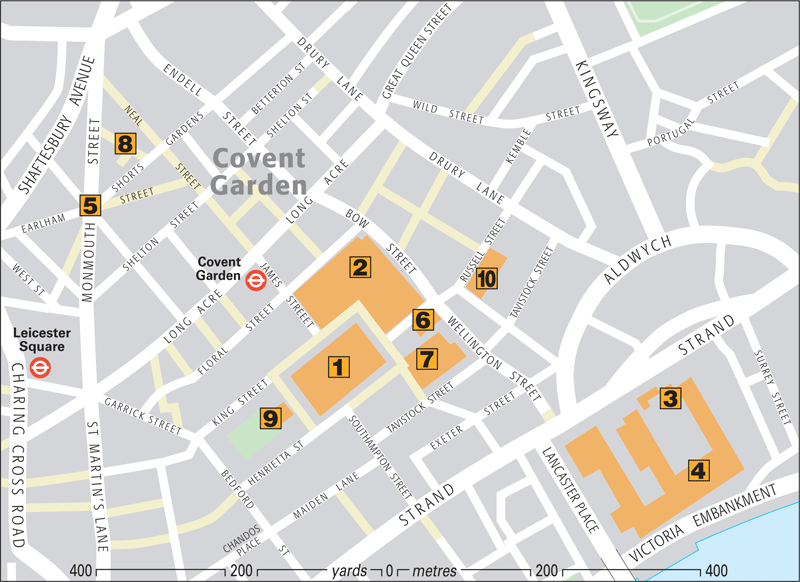
The Piazza and Central Market
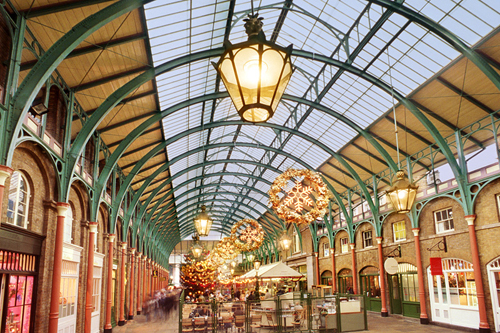
For 300 years, Covent Garden was a fruit, vegetable and flower market – immortalized by Lerner and Loewe’s hit musical My Fair Lady.
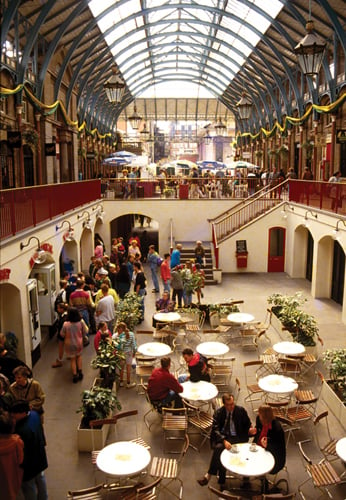
In 1980 the Victorian halls, with their lovely iron and glass roofs,
were transformed into a vibrant, modern-day market place, surrounded by
cafés and bars and enlivened by regular street entertainment.WC2

Covent Garden piazza and central market

Clowns in Covent Garden

Shops and cafés in the former market area
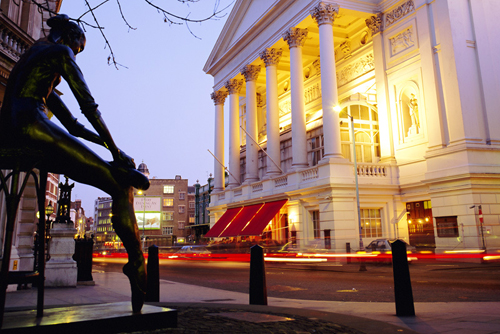
Royal Opera House
London’s
impressive premier music venue is home to both the Royal Opera and
Royal Ballet Companies. The present Neo-Classical theatre was designed
in 1858 by E M Barry and incorporated a portico frieze recovered from
the previous building, which had been destroyed by fire. The Opera House
has recently spread its wings into the lovely Floral Hall, once part of
Covent Garden market and now housing a champagne bar .Bow Street WC2
Open to visitors 10am–3:30pm
020 7304 4000

Royal Opera House
Courtauld Institute of Art Gallery
Founded in 1932
for the study of the history of European art, the Courtauld is part of
Britain’s oldest institute for teaching the history of art. Located in
the North Block of Somerset House the gallery rooms are particularly
strong on Impressionist paintings. Each Tuesday at 1:15pm there is a
free talk on one of the paintings in the exhibition.Strand WC2
Open 10am–6pm daily
Admission charge
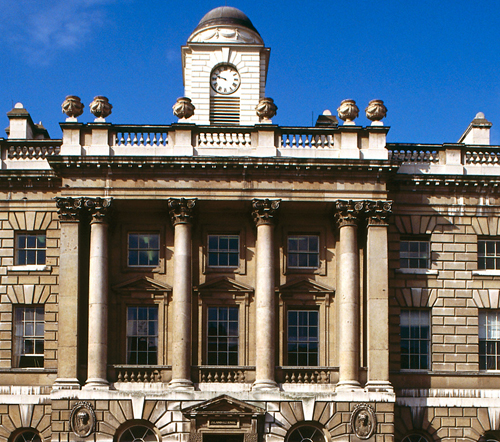
Somerset House
Once
a grand riverside palace, and later home to the Navy Board, Somerset
House is now partly occupied by the Civil Service. A large amount of the
building, though, is open to the public. Aside from housing the
Courtauld Institute, there are the new Embankment Galleries which put on
a varied programme of exhibitions spanning design, fashion,
architecture and photography.
Strand WC2
Open 10am–6pm daily
Admission charge

Somerset House
Seven Dials
Also
known as “Covent Garden’s hidden village”, this characteristic street
layout was created by Thomas Neale (1641–99), MP. The sundial at the
central monument has only six faces, as Neale’s original scheme included
only six streets. Nowadays, it is known for its unusual mix of shops
and leisure and entertainment venues, including restaurants, spas and
four theatres.WC2

Benjamin Pollock’s Toyshop
Established
in the 1880s, this independent, family-run shop specializes in toy
theatres, theatrical gifts and traditional toys for both children and
adult collectors. The colourful range on offer includes marionettes and
puppets, musical boxes and paper dolls.Open 10:30am–6pm Mon–Sat, 11am–4pm Sun
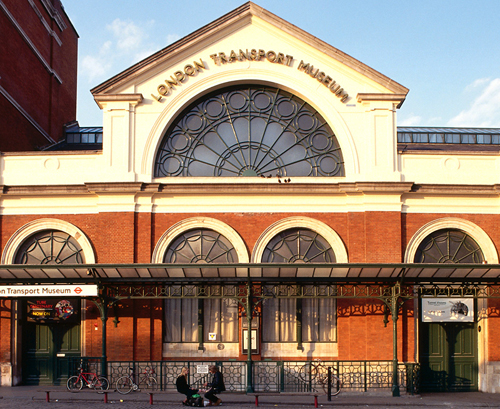
London’s Transport Museum
Some
of the most innovative British designers have worked for London
Transport, and their posters and furnishings are on display here. See
vehicles that have served the city for two centuries. The bookshop sells
souvenir model buses, taxis and goods displaying the distinctive London
Underground symbol .The Piazza WC2
Open 10am–6pm Mon–Thu, Sat & Sun; 11am–9pm Fri
Admission charge

London’s Transport Museum
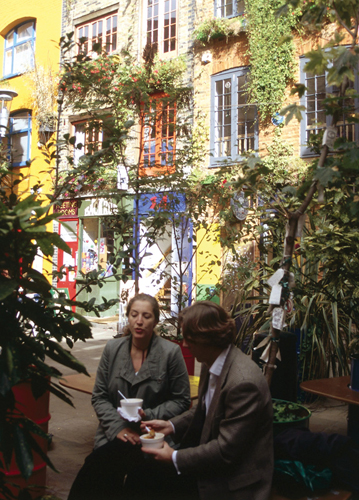
Neal’s Yard
This
delightful enclave is full of colour, with painted shop fronts,
flower-filled window-boxes and oil-drums, and cascades of plants
tumbling down the walls. This is alternative London, with wholefoods and
such alternative therapies as Chinese medicines, walk-in back rubs and
acupuncture. Visit Neal’s Yard Remedies and test out their wonderful
body creams and shampoos, then sample British cheese at Neal’s Yard
Dairy round the corner in Short’s Gardens.Neal Street WC2

Neal’s Yard, Covent Garden
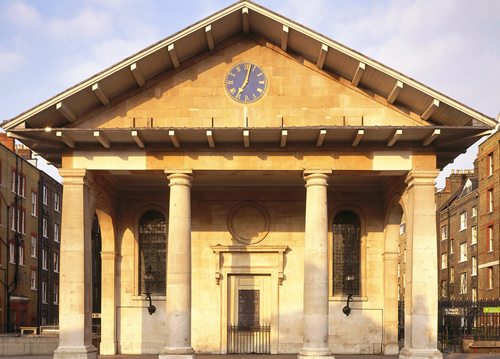
St Paul’s Church
Inigo
Jones built this church (known as the actors’ church) with the main
portico facing east, on to the Piazza, and the altar at the west end.
Clerics objected to this unorthodox arrangement, so the altar was moved.
The entrance is via the west portico while the grand east door is
essentially a fake.Bedford Street WC2

Theatre Royal, Drury Lane
Drury
Lane is synonymous with the London stage and this glorious theatre
explains why. It has a splendid entrance, with magnificent stairways
leading to the circle seats. The auditorium is large enough to put on
the biggest musical extravaganzas, including South Pacific, My Fair Lady, Hello Dolly and Miss Saigon. The first theatre on this site was built in 1663 for Charles II whose mistress Nell Gwynne trod the boards.Catherine Street WC2
Guided tours

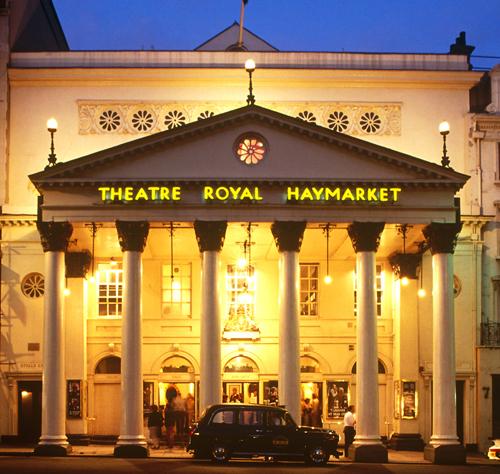
Theatre Royal, Haymarket