The southern part of the city
comprises some of the liveliest, most authentic parts of town – the
clubs of SoMa, the gay world of the Castro, and the Latino Mission
District. There are also some up-and-coming neighborhoods such as Bernal
Heights and Glen Park, as the more central areas have priced creative
types out toward the southern borders. Laid-back Noe Valley was the
first such choice for high-rent refugees, but it, too, has gone
gentrified and pushed people farther south.
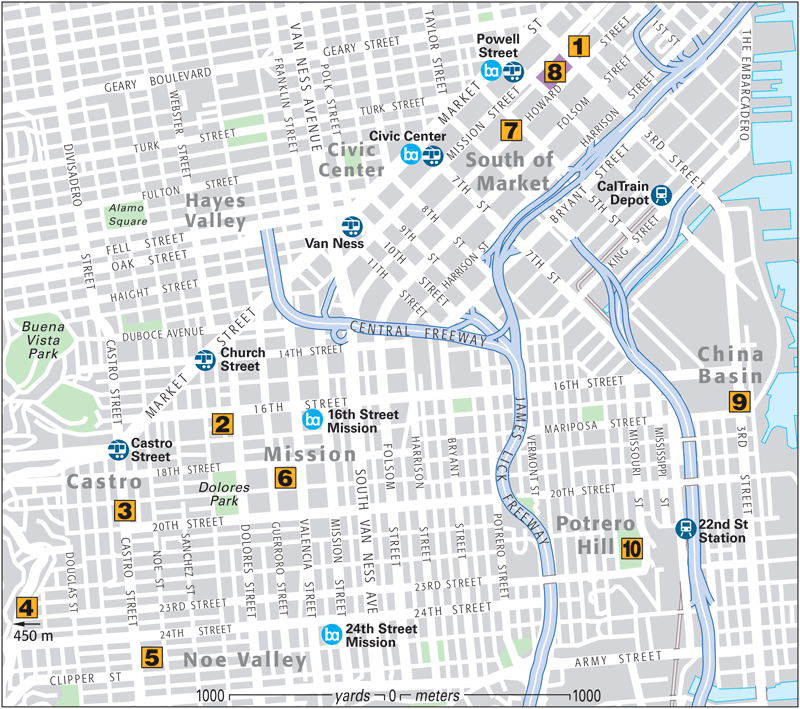
Sights and Neighborhoods
San Francisco Museum of Modern Art
San
Francisco’s home for its extensive modern art collection is as
impressive outside as it is adaptable and awe-inspiring inside. Don’t
miss the top floors, featuring the latest digital installations, if you
want to know what the cutting edge art world is honing itself on these
days .Castro District
This
hilly neighborhood around Castro Street is the center of San
Francisco’s high-profile gay community. The intersection of Castro and
18th streets is the self-proclaimed “Gayest Four Corners of the World,”
and this openly homosexual nexus emerged in the 1970s as the place of
pilgrimage for gays and lesbians from all over the country and the
world. Unlike other cities, where homosexuals once hid themselves away
in dark corners of anonymous bars, the establishments here have full
picture windows right on the street and are busy at all hours. Castro
Street is closed off every Hallowe’en for the famous gay costume party
that most agree is one of the city’s best, second only perhaps to the
Gay Pride Parade .

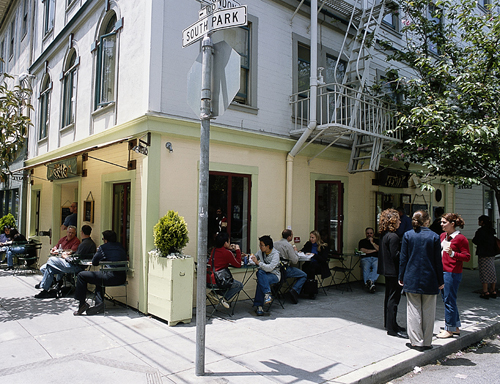
Castro District bar

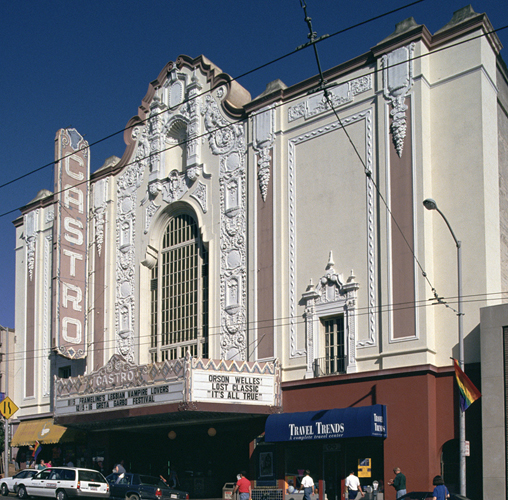
Castro Theater, Castro District
Twin Peaks
These two hills were first known in Spanish as El Pecho de la Chola,
or “The Bosom of the Indian Girl.” At the top, there is an area of
parkland with steep and grassy slopes from which you can enjoy
incomparable views of the whole of San Francisco. Twin Peaks Boulevard
circles both hills near their summits, and there is plenty of parking
near the viewing point. If you’re up to the climb, take the footpath to
the top, above the main viewing area, to get a 360-degree panorama. The
residential districts on the slopes lower down have curving streets that
follow the contours of the hills, rather than the formal grid pattern
that predominates in most of the city .

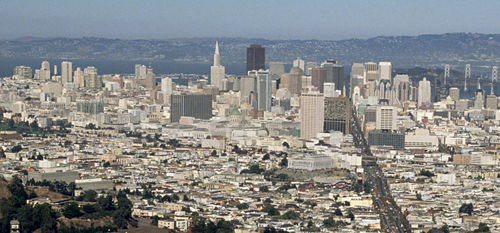
View from Twin Peaks
Once
a simple working-class neighborhood, the 1970s brought hippies, gays,
artists, and other Bohemian types to its slopes and it soon became an
attractive alternative to other, more established quarters. In its
heyday it was known as both “Nowhere Valley” for its relative
remoteness, and as “Granola Valley” for its nature-loving denizens.
Lately, it has been taken over by middle-class professionals, who value
the area for its orderliness, but 24th Street still hums with activity
and is lined with cafés, bookstores, and the occasional oddball shop.

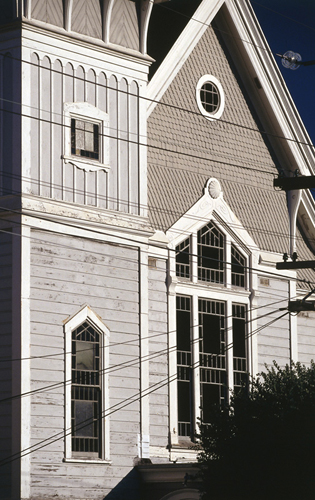
Noe Valley church
Mission District
The
teeming Hispanic world, with all the accompanying noise and confusion,
constitutes the Mission, home to San Francisco’s many Latinos. They have
brought their culture with them – bustling taquerias,
salsa clubs, Santeria shops, lively murals, and Spanish everywhere you
look and listen. It’s a loud, odoriferous place, with edgy crowds
dodging each other along the main drags, Mission and Valencia streets
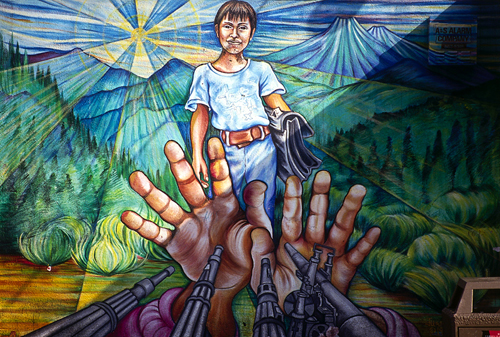
and their connecting streets from Market to Cesar Chavez (Army). Its folklórico festivals are not to be missed, especially the Carnaval.

Mural, Mission District
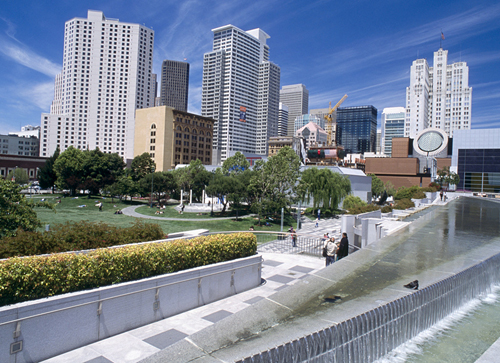
South of Market
The
city’s erstwhile rough-and-tumble warehouse district has been on the
rise for the last few decades and continues to attract arty types as
well as a whole range of clubs and cool cafés. Plans are afoot for more
major transformations in the wake of the building of Pacific Bell Park .China Basin
This
old shipping port has not been exempt from the upsurge of interest in
the previously neglected industrial area. The main change has been
wrought by the building of the new AT&T Park, home to the city’s
major league baseball team, the San Francisco Giants, and developers
have already put forth ideas of how the zone can be put to use. A number
of restaurants, bars, and clubs, many with port views, have opened up
here lately or have been refurbished and gentrified.Potrero Hill
At
one time this usually sunny SoMa hill was set to become the next big
thing. But somehow its isolation kept that from ever happening, cut off
from the rest of the city, as it is, by freeways on three sides and its
own precipitous inclines. Consequently, it has remained the quiet,
pleasant neighborhood it always has been, with spectacular views. To be
sure, a few more upmarket concerns are located here than before, and
there are more restaurants and bars, but mostly it’s thoroughly
residential. One tourist sight of note here is the Anchor Brewing
Company. It’s worth a visit, especially as the 45-minute walking tour
and tasting session are free. There’s only one tour each afternoon so
book ahead.Anchor Brewing Company
1705 Mariposa St
415 863 8350

SoMa Esplanade