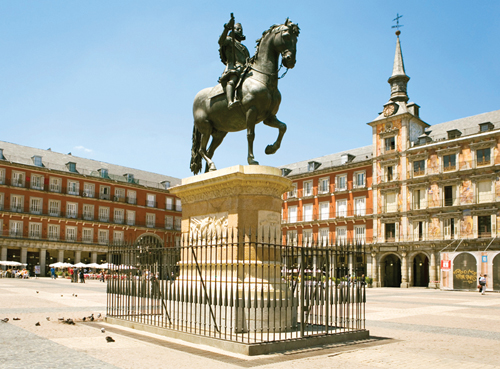
In the 17th century the focus
of the rapidly growing city shifted from the medieval centre, around
Plaza de la Paja, to Plaza Mayor. Part market, part meeting place, this
magnificent square was, above all, a place of spectacle and popular
entertainment. No one knew what the populace wanted better than the
playwrights of Spain’s Golden Age, whose names are still commemorated in
the streets around Calle de las Huertas where many of them lived. There
were no permanent theatres in those days; instead, makeshift stages
were erected in courtyards. Over time the houses deteriorated into slums
and teeming tenements. The parishes to the south of Plaza Mayor were
known as the barrios bajas
(low districts), because they were low-lying and were home to Madrid’s
labouring classes. Mingling with the slaughterhouse workers and tanners
of the Rastro were market traders, builders, innkeepers and horse
dealers, as well as the criminal underclass.
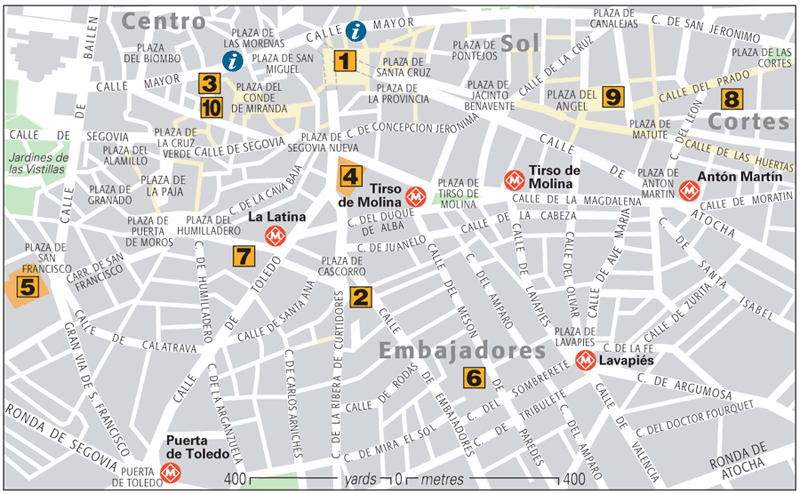
Sights
Plaza de la Villa
This historic square off Calle Mayor has been the centre of local government since medieval times. Opposite the Casa de la Villa,
is the Casa y Torre de los Lujanes, Madrid’s oldest civil building
(15th-century). In the centre of the square is a statue of Alvaro de
Bazán, the Spanish admiral who defeated the Turks at Lepanto in 1571 .
Erected in the late 19th century, it is by sculptor Mariano Benlliure.
The palace on the south side is the Casa de Cisneros (1537), built for
one of Spain’s most powerful families.Museo de los Origenes Casa de San Isidro
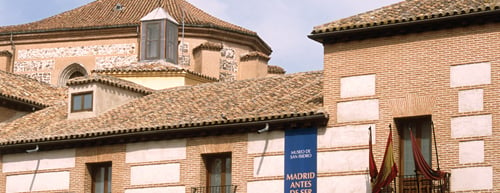
The
museum is housed in an attractive 16th-century palace which once
belonged to the Counts of Paredes. The original Renaissance courtyard is
best viewed from the first floor where archaeological finds from the
Madrid region are exhibited, including a Roman mosaic floor from the 4th
century. Downstairs, the highlights include wooden models of the city
and its royal palaces as they would have appeared in the 17th century, a
short film bringing to life Francisco Ricci’s painting of the 1680 auto-de-fé and the San Isidro chapel built near the spot where the saint is said to have died.Plaza de S Andrés 2
Open 9:30am–8pm Tue–Fri, 10am–2pm Sat–Sun (Aug: 10am–2pm Tue–Sun)
Closed public hols
Free

Museo de los Origenes Casa de San Isidro
San Francisco el Grande
Legend
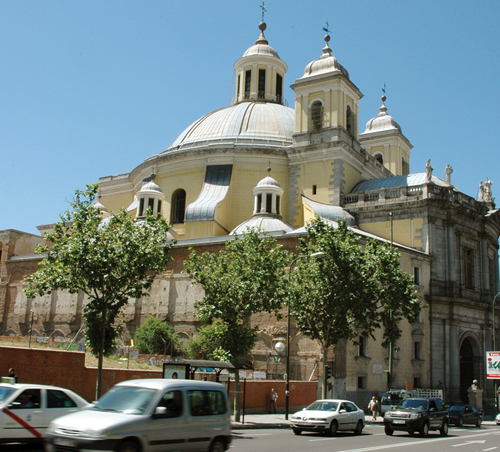
has it that this magnificent basílica occupies the site of a monastery
founded by St Francis of Assisi in the 13th century. Work on the present
building was completed in 1784 under the supervision of Francesco
Sabatini. The focal point of the unusual circular design is the
stupendous dome, 58 m (190 ft) high and 33 m (110 ft) in diameter. After
30 years of painstaking restoration, the 19th-century ceiling frescos,
painted by leading artists of the day, are now revealed in their
original glory. Take the guided tour to be shown other artistic
treasures, which include paintings by artists Zurbarán and Goya (chapel
of San Bernardino) and the Gothic choir.Plaza de S Francisco
Open 11am–12:30pm, 4–6:30pm Tue–Fri, 11am–1pm Sat; Aug: 11am–12:30pm, 5–7:30pm Tue–Fri
Adm

San Francisco el Grande
Lavapiés
This
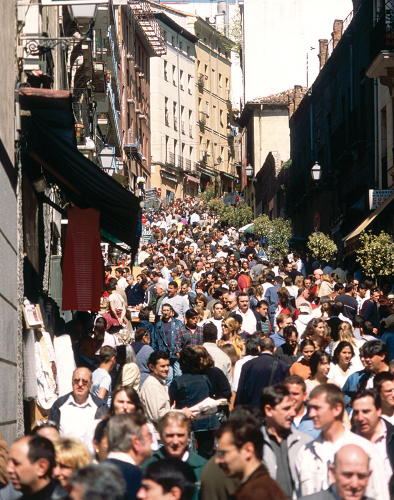
colourful working class neighbourhood has a cosmopolitan feel, thanks
to its ethnic mix of Moroccans, Indians, Turks and Chinese. The narrow
streets sloping towards the river from Plaza Tirso de Molina are full of
shops selling everything from cheap clothes and leather handbags to tea
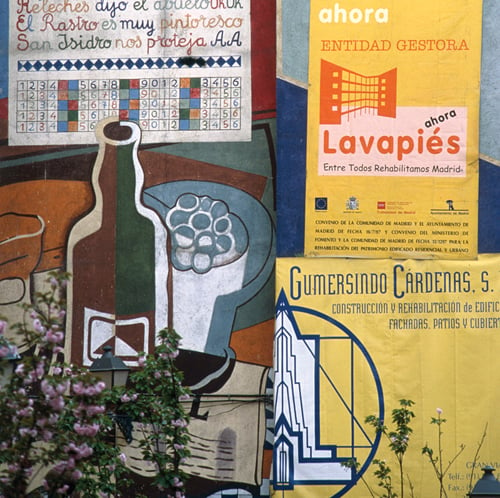
and spices. Check out the traditional bars, such as Taberna Antonio Sánchez for example. Performances of the traditional light opera known as zarzuela are given outdoors in La Corrala in summer.

Mural, Lavapiés

Lavapiés district
La Latina
Historic
La Latina really comes alive on Sundays when the trendy bars of Cava
Baja, Calle de Don Pedro and Plaza de los Carros are frequented by pop
singers, actors and TV stars. Plaza de la Paja – the main square of
medieval Madrid – takes its name from the straw which was sold here by
villagers from the across the River Manzanares. Nowadays it’s much
quieter and a nice place to rest one’s legs. The two churches of San
Andrés and San Pedro el Viejo have been recently restored. Their history
and that of the area as a whole is admirably explained in the Museo de
San Isidro (see Museo de los Origenes Casa de San Isidro).

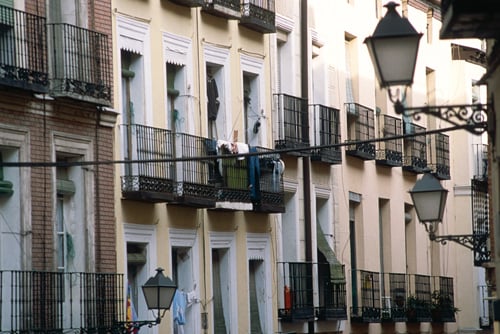
Façade, La Latina
Casa Museo de Lope de Vega
The
greatest dramatist of Spain’s Golden Age lived in this roomy, two
storey brick house from 1610 until his death in 1635. Lope de Vega
started writing at the age of 12 and his amazing tally of 1,500 plays
(not counting poetry, novels and devotional works) has never been
beaten. He became a priest after the death of his second wife in 1614,
but that didn’t stop his compulsive philandering which led to more than
one runin with the law. To tour the restored house with its heavy wooden
shutters, creaking staircases and beamed ceilings, is to step back in
time. You get to see the author’s bedroom, and the book-lined study
where he wrote many of his plays. The women of the house gathered in the
adjoining embroidery room – the heavy wall hangings were to keep out
the cold. Other evocative details include a cloak, sword and belt
discarded by one of Lope’s friends in the guest bedroom.Calle de Cervantes 11
Open for tours 9:30am–1:30pm Tue–Fri, 10am–1:30pm Sat
Closed Aug, public hols
Free
Casa de la Villa
For
hundreds of years Madrid’s town council met in the church of San
Salvador (since demolished) but in 1644 it was decided to give them a
new, permanent home. The Town Hall was completed 50 years later. Its
main features – an austere brick and granite façade, steepled towers and
ornamental portals – are typical of the architectural style favoured by
the Hapsburgs. Juan de Villanueva added the balcony overlooking Calle
Mayor so that Queen María Luisa could watch the annual Corpus Christi
procession. Highlights of the tour include the gala staircase, hung with
tapestries designed by Rubens; the reception hall with its painted
ceiling and chandelier; the 16th-century silver monstrance carried in
the Corpus Christi procession; the courtyard with stained glass ceiling;
and the debating chamber with frescoes by Antonio Palomino.