London’s West End is where
everyone heads for a night out. Clubbers from outside London catch the
last trains into the capital and head for its bars and music venues,
knowing they won’t leave till dawn. Here are the great theatres of
Shaftesbury Avenue and Charing Cross Road, the star-struck cinemas of
Leicester Square and, at its heart, Soho, abuzz with activity as the
night wears on. But it’s not all for the night owl – Trafalgar Square
has the National Gallery, the National Portrait Gallery and free
lunchtime concerts at St Martin-in-the-Fields.
Sights
National Portrait Gallery
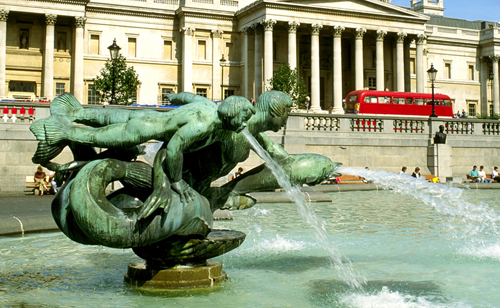
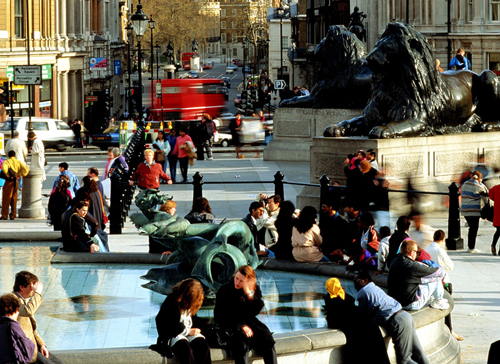
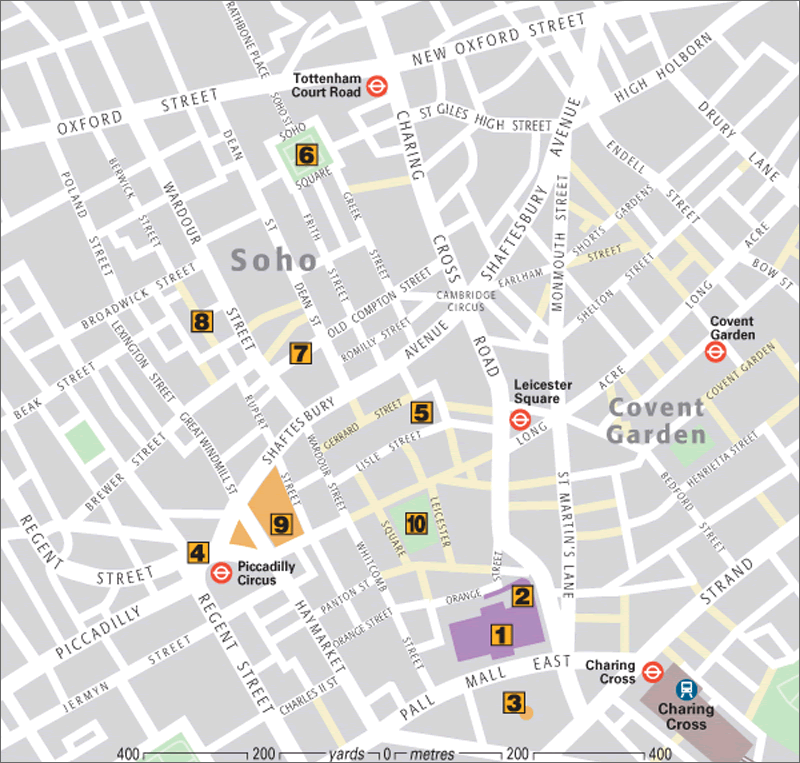
Trafalgar Square
Trafalgar
Square – once the royal mews – is a hub of the West End and a venue for
public rallies and events. From the top of a 50-m (165-ft) column,
Admiral Lord Nelson, who famously defeated Napoleon’s fleet at the
Battle of Trafalgar in 1805, looks down Whitehall towards the Houses of
Parliament. The column is guarded at its base by four huge lions – the
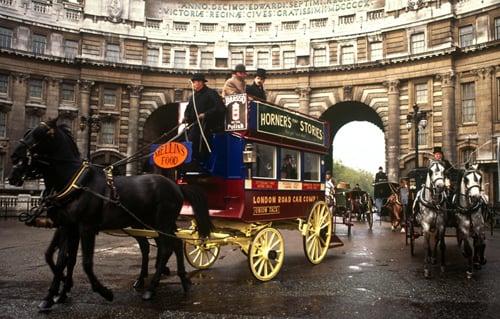
work of Edwin Landseer. On the north side of the square is the National Gallery and the church of St-Martin-in-the-Fields while, to the southwest, Admiralty Arch leads to Buckingham Palace.WC2

Fountain, Trafalgar Square

Admiralty Arch
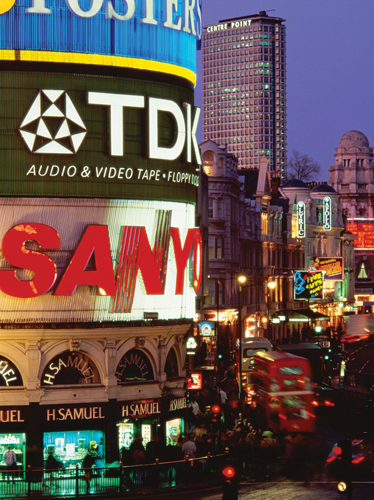
Piccadilly Circus
Designed
by John Nash as a junction in Regent Street, the Circus is the endpoint
of the street called Piccadilly. Its Eros statue – erected as a
memorial to the Earl of Shaftesbury – is a familiar London landmark and a
popular meeting place. Piccadilly Circus is also renowned for its neon
advertising displays, which mark the entrance to the city’s
entertainment district. On the south side of the Circus is the Criterion
Theatre, next to Lillywhite’s – a leading sporting-goods store.W1

Piccadilly Circus
Chinatown
Ornate
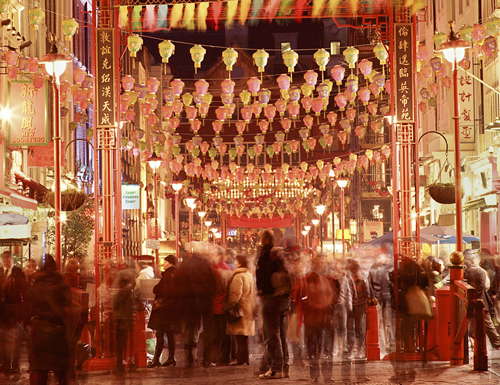
oriental archways in Gerrard Street mark the entrance to Chinatown, an
area of London that has, since the 1950s, been the focus of the
capital’s Chinese residents. Here you can shop at Chinese supermarkets,
gift shops and martial arts suppliers and, on Sundays, browse the street
stalls selling exotic vegetables. The Chinese New Year, celebrated in
late January or early February, is a particular highlight. Chinatown
abounds with excellent-value restaurants.Streets around Gerrard Street, W1

Chinatown
Soho Square
This
pleasant square, spiked with palms, is popular at lunchtime, after work
and at weekends, when there’s always a friendly atmosphere, especially
in summer. With the most fashionable address in London, many of the
square’s buildings are now occupied by film companies. On the north side
is a church built for French Protestants under a charter granted by
Edward VI in 1550. The redbrick St Patrick’s, on the east side,
sometimes has music recitals. On the corner of Greek Street is the House
of St Barnabas in Soho, a charitable foundation in an 18th-century
building which is occasionally open to visitors.

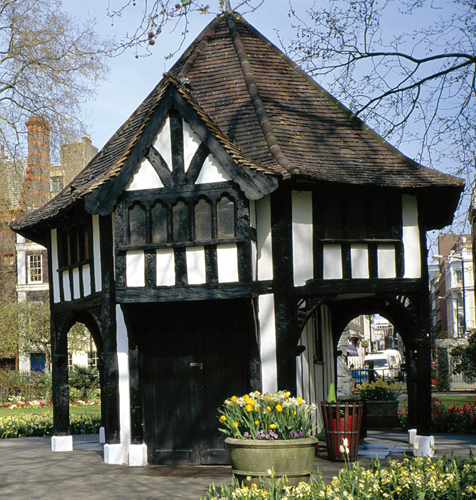
Mock-Tudor shed, Soho Square
Old Compton Street
The
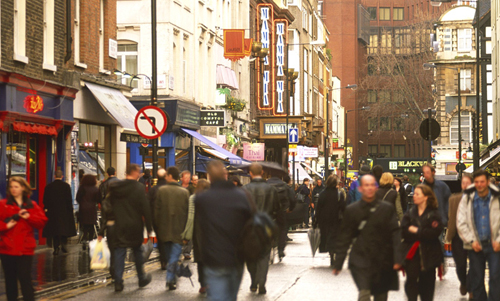
main street in Soho is a lively thoroughfare both day and night. It is
also the centre of London’s sex scene, and now the site of popular gay
pubs, Compton’s of Soho and the Admiral Duncan. Soho’s vibrant
streetlife spills into Frith, Greek and Wardour streets, where pubs,
clubs, restaurants and cafés have pavement tables, often warmed by gas
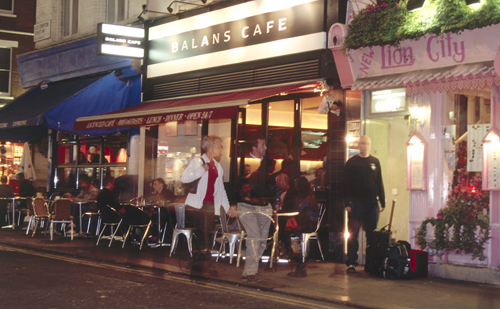
heaters in winter. Some, like Bar Italia in Frith Street and Balans Café
at 34 Old Compton Street, are open until the early hours. Everywhere
fills up when the evening’s performance at the Prince Edward Theatre
ends. A delicious breakfast is to be had at Patisserie Valerie at No.
44, and such long-standing shops as the Italian delicatessen I Camisa,
and the Vintage House (700 whiskies in stock), give the area its village
feel. Body tattooists are at work here, and fetish shops show that the
sex industry still flourishes.

Old Compton Street

Old Compton Street
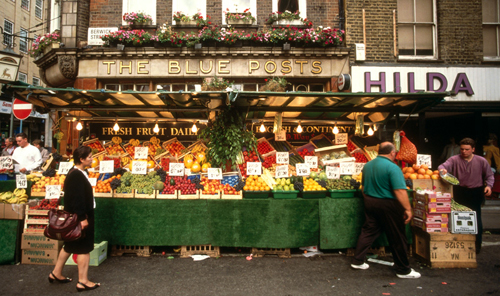
Berwick Street Market
There
has been a market here since the 18th century, and the daily fruit and
vegetable stalls remain cheap, cheerful and thoroughly Cockney. Half the
time, traders talk in old money (“ten bob” is 50p) and round things up
to a “nicker” or a “quid” (£1). It opens around 9am six days a week.

Berwick Street Market
Take
the escalator to the top of Funland and make your way down through this
electronic jungle of video games and virtual-reality rides. There are
dodgem cars, a race-track simulator and a bowling alley. Themed
restaurants, bars, shops and cinemas fill up the space, as well as an
HMV record store.Piccadilly Circus W1
10am–midnight Sun–Thu, 10am–1am Fri & Sat
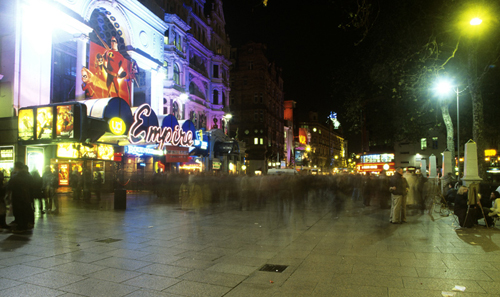
Leicester Square
When
this square was originally laid out in 1670 it was a grand and
fashionable place to live. Celebrities of the 17th and 18th centuries to
live here include Sir Isaac Newton and the painters Joshua Reynolds and
William Hogarth. Today the square forms the heart of London’s West End
entertainment district and houses the Empire and Art Deco Odeon cinemas.
There is also a cut-price theatre ticket booth called “Tkts” on the
southside of the square.Leicester Square W1

Leicester Square