During the Roman Empire the
Tiber Bend area was a public training ground for soldiers called the
Campo Marzio. With Rome’s fall, the city turned its back on this
riverside neighbourhood and, aside from a few foreign settlements, it
wasn’t until the 15th century that anything other than a few churches
was built here. The Baroque boom gave the area’s palaces their
distinctive look. Mussolini cleaned up the neighbourhood in the 1920s
and 1930s to bring out its ancient character. He cleared away the debris
surrounding Augustus’s Mausoleum, reassembled the Ara Pacis and
surrounded the lot with reviled Fascist buildings, complete with
self-aggrandizing bas-reliefs.
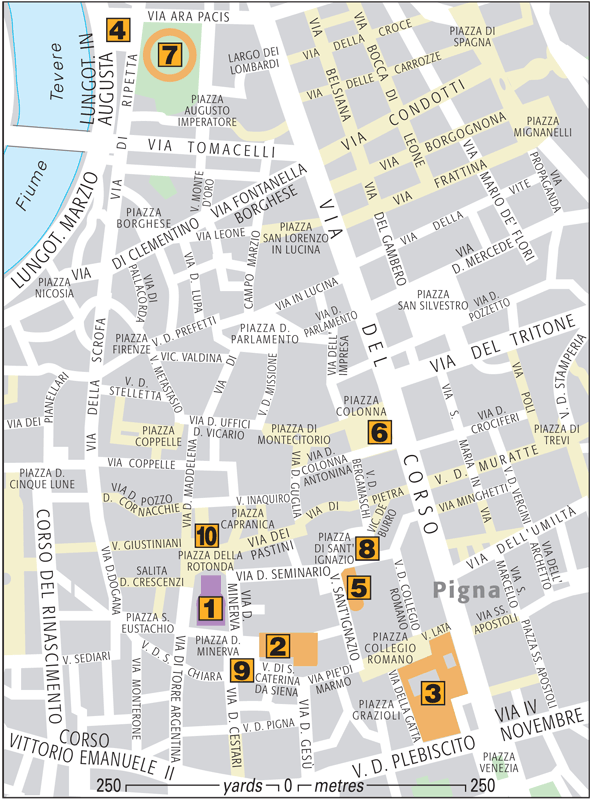
Sights
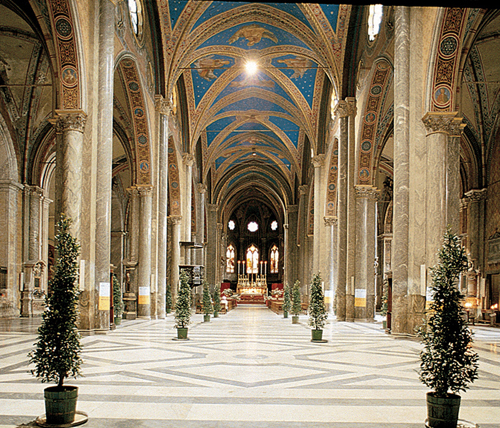
Santa Maria sopra Minerva
The only truly Gothic church in Rome, possibly built, as the name suggests, atop a temple to Minerva. Michelangelo’s
Risen Christ
(1514–21) is a muscular rendition of the Saviour so shockingly
nude that church officials added the bronze wisp of drapery. Filippino
Lippi frescoed the last chapel on the right; the lower scene on the
right wall includes portraits of young Giovanni and Giulio de’ Medici
(known as Popes Leo X and Clement VII), who are buried in tombs by
Antonio Sangallo the Younger, in the apse, with Fra’ Angelico and (most
of) St Catherine of Siena .Piazza della Minerva
Open 7:10am–7pm Mon–Sat, 8am–noon, 2–7pm Sun
Free
DA

Nave, Santa Maria sopra Minerva
Galleria Doria Pamphilj
The
best of the private collection galleries in Rome. In addition to
paintings by Rubens, Correggio, Tintoretto, Carracci and Brueghel, star
works include Caravaggio’s Mary Magdalene, Rest on the Flight into Egypt, and Young St John the Baptist (a copy he made of his Capitoline version); Titian’s Salome with the Head of John the BaptistPiazza del Collegio Romano 2
Open 10am–5pm Fri–Wed
Adm €9.00
DA
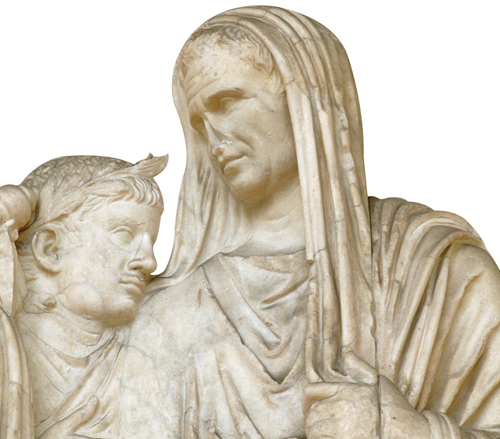
Ara Pacis
Augustus Caesar built this “Altar of Peace” between 13 BC and 9 BC to celebrate the famed pax romana
(Roman peace) he instituted – largely by subjugating most of Western
Europe, the Levant and North Africa. Fragments of the altar were
excavated over several centuries, and in the 1920s Mussolini placed the
reconstituted Ara Pacis by Augustus’s Mausoleum. The altar is now housed
in a Richard Meier-designed museum, the first modern structure to rise
in the centre of Rome in 70 years.Piazza Augusto Imperatore & Lungotevere Augusta
060608
Open 9am–7pm Tue–Sun
Adm €6.50

Marcus Agrippa, Ara Pacis
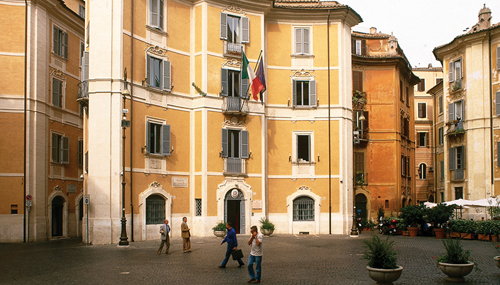
Sant’Ignazio di Loyola
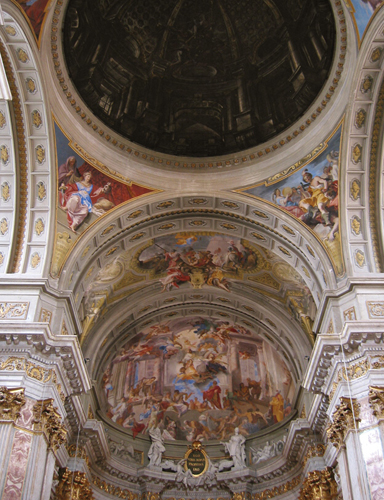
When the Jesuits’ new Baroque church was finished in 1685, it still lacked a dome. Master of trompe-l’oeil
Andrea Pozzo used his flawless technique to create the illusion of an
airy dome on the flat circle of ceiling over the church’s crossing;
stand on the yellow marble disc for the full effect, then walk directly
under the “dome” to see how skewed the painting actually is. Pozzo also
painted the nave vault with the lovely Glory of Sant’Ignazio.Piazza di S Ignazio
Open 7:30am–12:30pm, 3–7:15pm daily
Free

Piazza Sant’Ignazio

Column of Marcus Aurelius
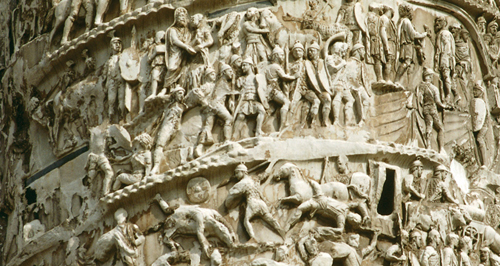
Trajan’s Column was such a success
that this 29.5-m (97-ft) one was erected in AD 180–93 to honour the
military career of Marcus Aurelius. The spiral of reliefs celebrates his
campaigns against the Germans (169–73) on the bottom and the Sarmatians
(174–76) on the top. In 1588, Pope Sixtus V replaced the statues of the
emperor and his wife with that of St Paul.Piazza Colonna

Relief, Column of Marcus Aurelius
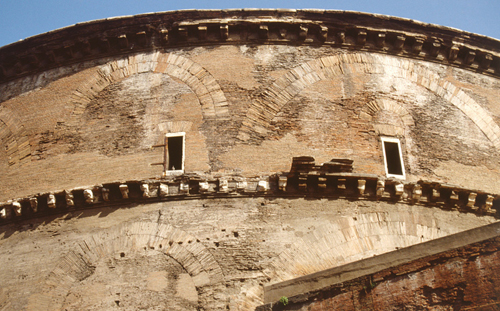
Augustus’s Mausoleum
Augustus
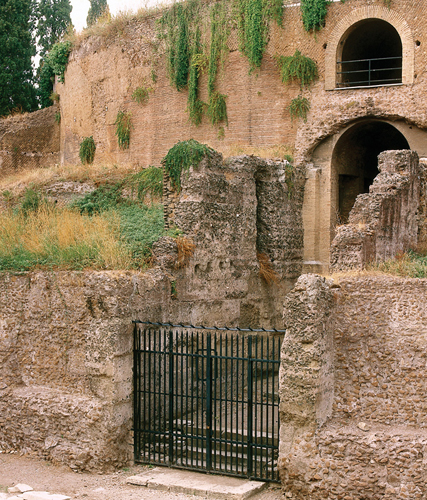
built this grand imperial tomb in 27 BC, his ashes later joined by
those of emperors Tiberius and Nerva, and worthies such as Agrippa and
Marcellus. Barbarian invaders later made off with the urns and locals
mined its travertine facing for their palaces. The ancient rotunda has
served time as a hanging garden, fortress, circus for bear-baiting, and
concert hall. In the 1920s its crown was restored to the ancient style,
covered with grass and cypress, and Mussolini laid out the Fascist
piazza around it. Major architectural work is planned for this area.Piazza Augusto Imperatore
Open by appt only
Adm

Augustus’s Mausoleum
Bernini’s Elephant Obelisk
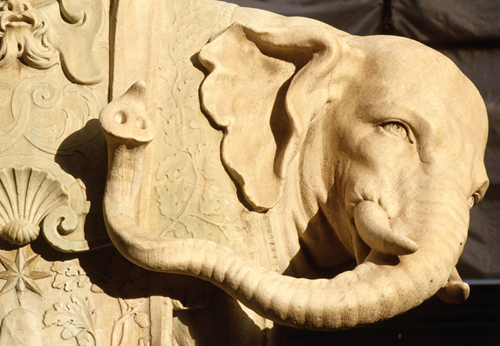
An
example of Bernini’s fun-loving side. This baby elephant, carved to the
master’s designs by Ercole Ferrata in 1667, carries a miniature
6th-century BC Egyptian obelisk on its back. It is a tongue-in-cheek
reference to Carthaginian leader Hannibal’s war elephants, which carried
tall siege towers across the Alps to attack the Roman Empire in 218 BC.Piazza della Minerva

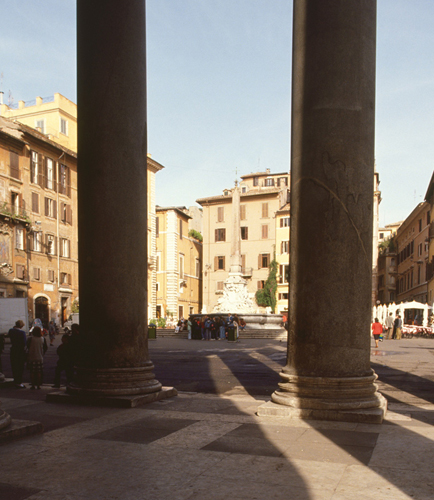
Piazza della Rotonda
The
square in front of the Pantheon was filled with a boisterous daily
market until 1847; some of the Pantheon’s portico columns still bear
square holes from the stall posts once set into them. The square is now
filled with tourists, outdoor tables of cafés, and horse-drawn
carriages, all ranged around Giacomo della Porta’s 1575 fountain, which
supports a tiny Egyptian obelisk dedicated to Ramses II.

Piazza della Rotonda