To wander around this part of
Madrid is to be constantly reminded of its regal associations. The
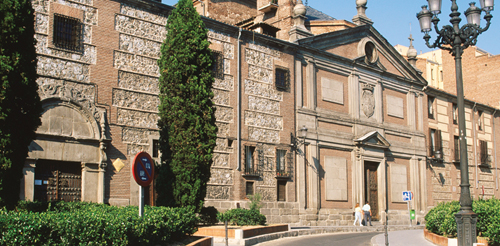
Monasterio de las Descalzas Reales and the Monasterio de la Encarnación
are both royal foundations, dating from the Hapsburg era, while work on
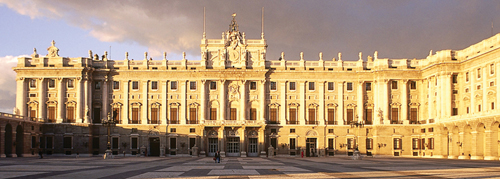
the Palacio Real began in the reign of Felipe V. Joseph Bonaparte was
king of Spain for only four years (1808–12), but he laid the plans for
the Plaza de Oriente. Further afield, the Ermita de San Antonio de la
Florida was commissioned by Carlos IV.
Sights
Museo Cerralbo
Don
Enrique de Aguilera y Gamboa, Marqués de Cerralbo (1845–1922) was a
poet, a politician and a compulsive collector, searching the world for
artistic treasures that would adorn his palatial home. He bequeathed his
collection to the state so that it could be enjoyed by others.
Highlights include a majolica Nativity by Renaissance artist Andrea
della Robbia (Porcelain Room) and El Greco’s Ecstasy of St Francis (Sacristy), but the pièce de résistance is Juderías Caballero’s History of Dance in the dome of the ballroom .Calle de Ventura Rodríguez 17
Closed for restoration (call for opening times)
Dis. access
Adm (except Wed & Sun)
Ermita de San Antonio de la Florida
The
hermitage dedicated to St Anthony of Padua was completed in 1798. Goya
began work on his sublime frescoes in June and by December they were
finished. It was on St Anthony’s Day (13 June) that a procession of
unmarried girls would come to the hermitage to ask the saint to find
them a husband.Monasterio de la Encarnación
The
convent was founded in 1611 by Margarita de Austria, wife of Felipe
III, for daughters of the nobility. It was also the church of the
Alcázar – a picture gallery linked the two buildings. Unfortunately,
when the castle was destroyed by fire in 1734 the conflagration spread
to the convent and many of its treasures were lost. A great deal remains
however: 17th-century paintings by Ribera and Lucas Jordan; impressive
sculptures, such as Christ Recumbent
by Gregorio Fernández; embroidered vestments and liturgical gold and
silverware. The guided tour takes in the cloister with its decoration of
Talavera azulejosPlaza de la Encarnación 1
Open
10:30am– 12:45pm, 4–5:45pm Tue– Thu, Sat, 10:30am–12:45pm Fri, 11am–
1:45pm Sun; Closed 1 Jan, 6 Jan, Easter week, 1 May, 15 May, 27 Jul, 9
Nov, 24 Dec, 25 Dec, 31 DecAdm (except Wed for EU residents)
Teatro Real
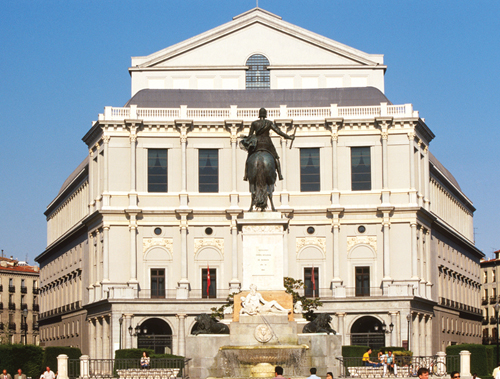
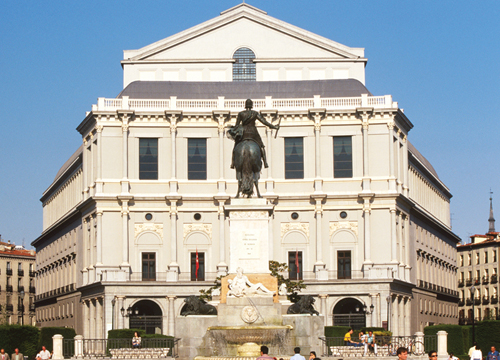
The
city’s state-of-the-art opera house re-opened in 1998 after a lengthy
and expensive restoration. There were so many delays in constructing the
original theatre that the architect, Antonio López Aguado, was long
dead before the official opening in 1850 on Queen Isabel II’s birthday.
Giuseppe Verdi wrote his opera The Force of Destiny
for the Teatro Real in 1863 – he stayed at No. 6 Plaza de Oriente. The
dimensions of the remodelled opera house are truly impressive: the
architects calculate that the backstage area is large enough to contain
the Telefónica building on Gran Vía .Plaza de Oriente
Open for tours 10:30am–1pm Mon, Wed–Fri, 11am–1:30pm Sat, Sun
Closed Aug, 20 Dec–7 Jan
Dis. access
Adm

Teatro Real
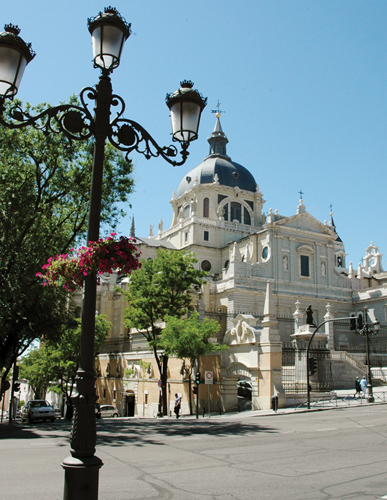
Catedral de la Almudena
There
were plans to build a cathedral on the superb hilltop site since 18th
century, but it was not until 1879 that the Marqués de Cubas got the
go-ahead for his ambitious design; even then, only the Romanesque-style
crypt was actually built. The cathedral was finally completed in the
1980s by architect Fernando Chueca Goitia and opened by Pope John Paul
II in 1993. The Gothic interior comes as a surprise, as the exterior is
Neo-Classical to harmonize with the Palacio Real. The magnificent bronze
doors were installed in October 2000.Calle de Bailén
Open 9am–8pm daily
Dis. access
Free
Museum & dome
open 10am–2pm daily
adm

Catedral de la Almudena
Plaza de Oriente
The
focal point of this beautiful square is the bronze equestrian statue of
Felipe IV, moved here from the Buen Retiro palace in 1842. The sculptor
Pietro Tacca took advice from Galileo on the modelling of the rearing
horse – the figure of the king was based on sketches by Velázquez. The
statues of Spanish rulers were intended for the balustrade of the
Palacio Real but they did not meet with royal approval.

Plaza de Oriente
Plaza de España
A
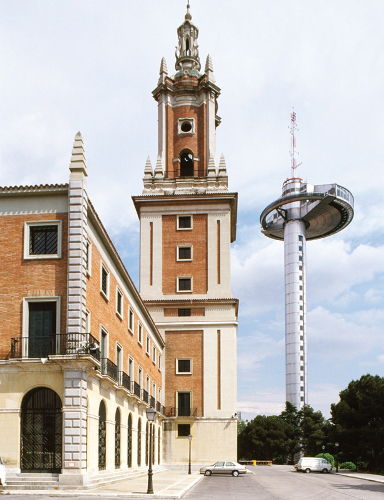
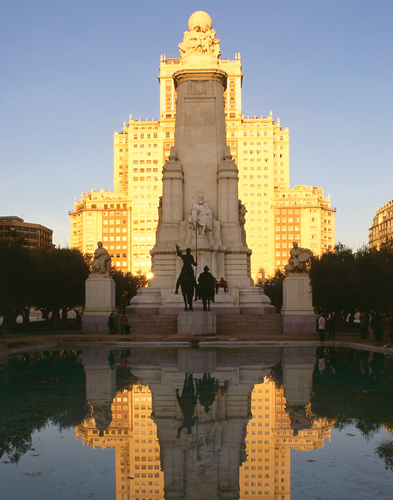
set piece of the Franco era, the huge square at the bottom of Gran Vía
is dominated by Madrid’s first skyscrapers. The Edificio España (Gran
Vía 86) was designed by the brothers Julien and Joaquín Otamendi in
1953. Four years later, the same architects built the even taller Torre
de Madrid (Plaza de España 5). The building is currently unoccupied
because it is up for sale. The monument at the centre of the square
commemorates Miguel de Cervantes, author of Don Quixote.

Plaza de España