Just south of the
business-centric Loop, this sprawling area mixes ethnic enclaves such as
Chinatown (founded in the 1870s by migrant transcontinental railroad
workers) with uppercrust addresses, built after the Great Chicago Fire of 1871.
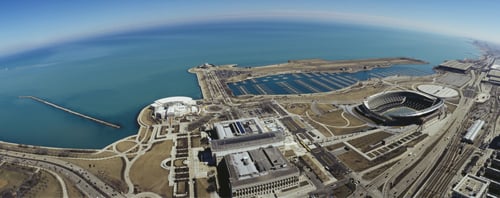
The region has many Chicago “must-sees,” but the jewel in the crown is
undisputedly the impressive Museum Campus: here, the Field Museum, John
G. Shedd Aquarium, and Adler Planetarium celebrate the wonders of the
earth, sea, and sky respectively, collectively drawing over four million
visitors each year. The highway that once separated the Field from its
neighbors has been replaced by an inviting green campus, where cyclists
and skaters join museum-goers on the plant-bordered paths in fair
weather.
|
Sights
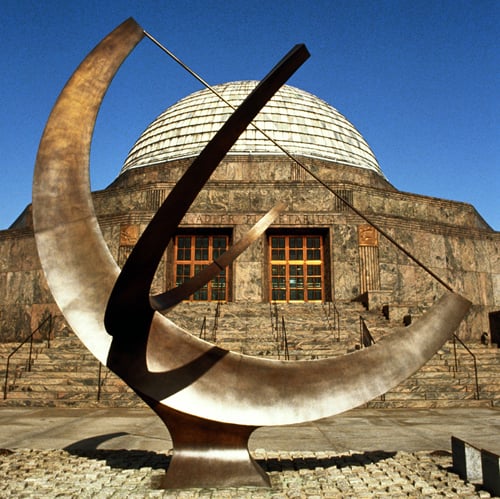
Adler Planetarium
This,
the first planetarium in the Western Hemisphere, completes the Museum
Campus trio. Visit its numerous galleries to walk among the stars,
explore the worlds that orbit the Sun, and be enlightened by 1,000 years
of astronomical discovery. Don’t miss the opportunity to catch the Sky
Theater show, which is projected on the 68-ft (21-m) dome of the
historic Zeiss planetarium. The virtual reality events in the StarRider
Theater are also awe-inspiring, launching you into the outer reaches of
space and even give you the chance to interact with the show via a panel
in the armrest.1300 S. Lake Shore Dr
Open summer (Jun–Sep) 9:30am–6pm daily; winter 9:30am–4:30pm daily; first Fri each month 9:30am–10pm
for showtimes call 312 922 7827
Adm
DA

Adler Planetarium
Prairie Avenue District
Of
the wealthy enclaves both north and south of the Chicago River that
grew up following the Great Fire of 1871, Prairie Avenue was the most
fashionable – and Chicago’s ritziest. Only a few of its mansions remain
today, of which two are open to the public (by tour only): the imposing,
Romanesque-Revival 1887 Glessner House, and Chicago’s oldest remaining
building – Clarke House – built in 1836 in the Greek-Revival style by
New York emigré Henry B. Clarke.Clarke House
1827 S. Indiana Ave
tours noon, 1 & 2pm Wed–Sun
adm
DA
Glessner House
1800 S. Prairie Ave
tours 1, 2 & 3pm Wed–Sun
adm
no DA
Blues Heaven Foundation
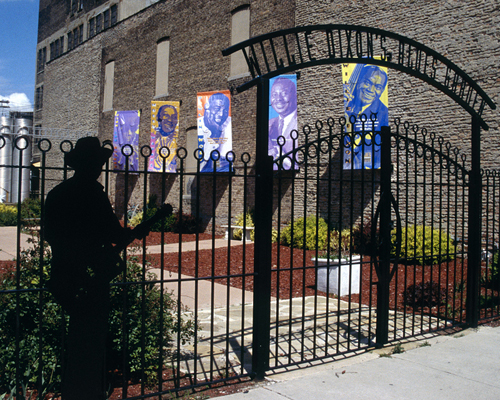
Located
in the former studios of Chess Records, where blues greats from Muddy
Waters to Willie Dixon once recorded, Blues Heaven has an interesting
collection of records, photos, and stage costumes dedicated to Chicago’s
blues style and its performers. Chess music plays on the PA, and there
are occasional live performances. Rock aficionados will note the address
is the namesake of a Rolling Stones song.

Blues Heaven Foundation
Maxwell Street Market
Both
19th-century European immigrants and 20th-century African-American
settlers fleeing the Deep South got their entrepreneurial start selling
from pushcarts around Maxwell Street. In 1994 the market was relocated
to make way for the new University of Illinois at Chicago and, while a
shadow of its former self, it still makes for a vibrant Sunday morning.
Don’t expect valuable finds; do expect plenty of Mexican housewares and
used tools. But the occasional treasure, such as a vintage fur coat,
does show up. Perhaps the best reason to visit is to try the homemade
tacos from the Mexican food stalls that line the street.548 W. Roosevelt Rd
Open 7am–3pm Sun
Free

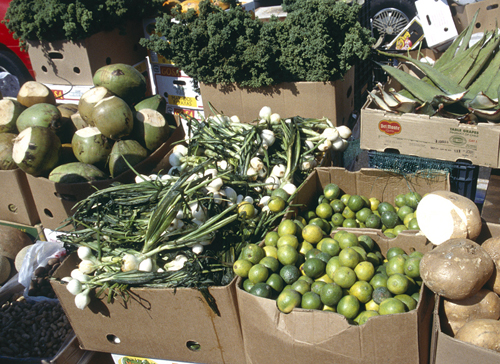
Fresh produce, Maxwell Street Market
Museum of Contemporary Photography
Run
by and located in Columbia College Chicago, this museum is one of a
kind in the Midwest. It exhibits the portfolios of international modern
masters, with shows (including student shows) tending toward the
experimental rather than the traditional documentary. Changing
exhibitions also present a healthy mixture of local talents and
well-established ones, such as Gary Winogrand and William Eggleston.
Frequent gallery talks give curators and artists the chance to discuss
the shows with museum-goers.600 S. Michigan Ave
Open 10am–5pm, Mon–Fri (to 8pm Thu), noon–5pm Sat
Free
DA
Chinatown
Crowned
by the landmark Chinatown Gate spanning Wentworth Avenue, Chicago’s
Chinatown isn’t that large – running roughly eight blocks – but it is
colorful. Home to Chicago’s oldest Asian community, Chinatown was
founded in the 19th century by transcontinental railroad workers fleeing
West Coast prejudice. It continues to be a place where Cantonese and
Mandarin are spoken far more widely than English. Stroll Wentworth to
see the ornate On Leong Tong Building, buy fresh almond cookies from
Chinese bakeries, peruse the many import and herbal shops, or chow down
in one of the dozens of local restaurants.Around Wentworth Ave. & Cermak Rd

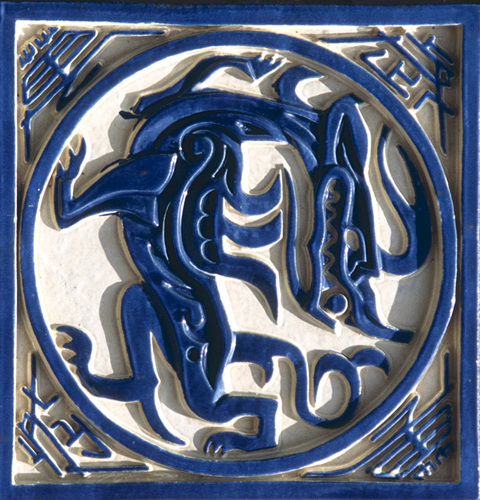
Architectural detail, Chinatown
National Vietnam Veterans Art Museum
A
moving tribute to the horrors of war, this museum, started in the late
1970s, now showcases over 1,000 works by more than 130 artists once
involved in the conflict. Most of the artworks, which include paintings,
sculptures, and drawings, as well as prose and poetry, come from former
US soldiers, doctors and POWs, though powerful entries by former Viet
Cong and native Cambodians attest to the universal effects of the
conflict.1801 S. Indiana Ave
312 326 0270
Open 11am–6pm Tue–Fri, 10am–5pm Sat
Adm
DA
Jane Addams’ Hull House
When
European immigrants were flooding Chicago to work in its rail and stock
yards during the late 19th and early 20th centuries, Jane Addams bought
Hull House for a specific purpose. From here, she offered social
services and facilities to this immigrant working class, including day
care, employment counselling and art classes. A great social reformer
and winner of the 1931 Nobel Peace Prize, Addams also championed the
rights of women and helped usher in child labor laws. Her original
office, furnishings, and artwork are still in place for visitors to see,
supplemented by temporary exhibits that tell the story of the
settlement at Hull House and the invaluable work of its residents.800 S. Halsted St.
Open 10am–4pm Tue–Fri, noon–4pm Sun
Free
DA