The lower east side is alive
with memories, a neighborhood still seeming to echo the calls of
immigrants crowded into tenements, peddlers hawking wares from
pushcarts, and children playing in the streets, the only open spaces to
be found. Early churches became synagogues for the Jews who came in
record numbers between 1880 and 1920. Some remain, but in recent years,
Latinos and Chinese have moved in, adding to the area’s rich history.
Meanwhile, Orchard Street tempts with bargains, and a hip, young
generation is rediscovering the old neighborhood. Nearby, the East
Village has its own layers of history, an early Dutch enclave that
changed from German to Jewish before becoming a 1960s haven for hippies
and the place where punk rock was born. A Ukrainian community has
remained through most of these changes, including recent gentrification.
Sights
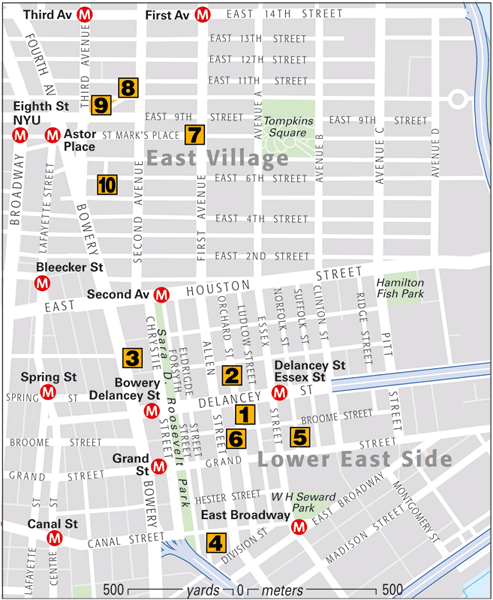
Lower East Side Tenement Museum
Guided
tours inside a tenement building give an insight into the carefully
researched lives of one of three families who lived here; a
German-Jewish clan in 1874, an orthodox Jewish family from Lithuania in
1918, or a Sicilian Catholic family during the Depression in the 1930s.108 Orchard St
212 431 0233
Tours: generally 11:15am–5pm daily (call ahead)
Admission charge
Orchard Street
Orchard
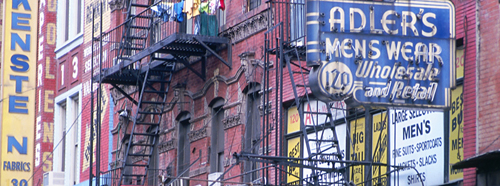
Street became a street of shops in 1940, when Mayor Fiorello La Guardia
outlawed pushcarts in the city. Many merchants still put some of their
wares on the sidewalk on Sundays and lure customers with 20 to 30
percent off brand names. The Lower East Side Visitor Center offers free
tour each Sunday between April and December.Lower East Side Visitor Center, 261 Broome St
212 226 9010
Open 10am–4pm daily

Orchard Street

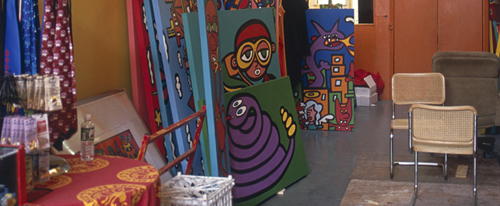
Art for sale, Orchard Street
New Museum of Contemporary Art
Since
its founding in 1977, this provocative museum has mounted shows
featuring experimental work that other museums often overlook,
particularly new multimedia forms, which sometimes extend into
intriguing window displays. The museum opened in a new, cutting-edge
building designed by Tokyo-based architects Sejima and Nishizawa in late
2007. It features a bookstore, theater, learning center, and a café.235 Bowery St
Open noon–9pm Thu–Fri, noon–6pm Wed, Sat–Sun
Admission charge
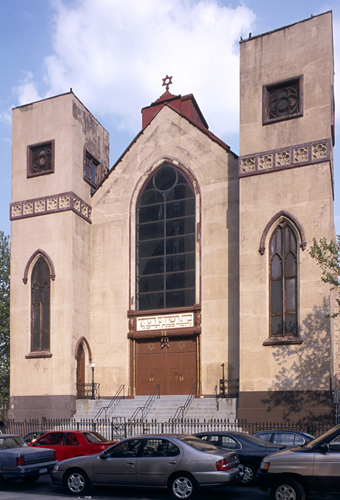
Eldridge Street Synagogue
A
National Historic Landmark. This 1887 Moorish-style synagogue was the
first house of worship built in the U.S. by Jewish immigrants from
Eastern Europe, from where 80 percent of American Jews come. As many as
1,000 people attended services here at the turn of the 20th century. As
congregants left the neighborhood, attendance waned, and the temple
closed in the 1950s. A 20-year restoration initiative was recently
completed and the synagogue has become a vibrant cultural center.12 Eldridge St
Open 10am–4pm Sun–Tue
Tours: half-hourly until 3pm
Admission charge

Street Scene
Beth Hamedrash Hagadol Synagogue
Artists
can often be seen sketching this small, picturesque building. It was
constructed in 1850 as the Norfolk Street Baptist Church, but as the
neighborhood changed, the membership moved uptown, and in 1885 the
structure was converted to a synagogue by America’s oldest Russian,
Orthodox Jewish congregation. Gothic woodwork and the iron fence from
the original church remain.60–64 Norfolk St
Open by appointment
Free

Beth Hamedrash Hagadol Synagogue
Guss’ Pickles
One
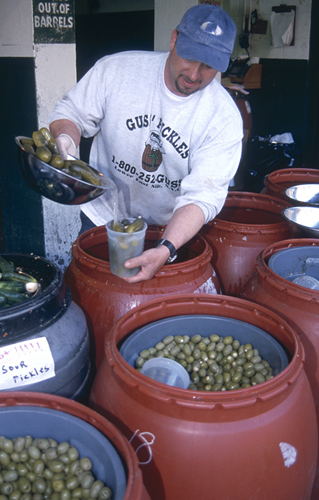
of the survivors from the old days of the Jewish Lower East Side, and a
fixture for more than 80 years, Guss’ was even featured in the movie Crossing Delancey.
Fans stand in line on weekends for their fix from the barrels on the
sidewalk filled with pickles – sour and half-sour. Guss’ also does a
thriving business by mail, shipping all over the U.S.

Guss’ Pickles
St. Mark’s Place
Once
the heart of hippiedom, this block still has a counter-culture feel and
is headquarters for the East Village youth scene. Sidewalks are crowded
until late into the night with patrons of funky, punky bars and shops
selling music, books, T-shirts, vintage clothing, beads, posters, and
black leather everything. The place to get pierced or tattooed.St. Mark’s-in-the-Bowery Church
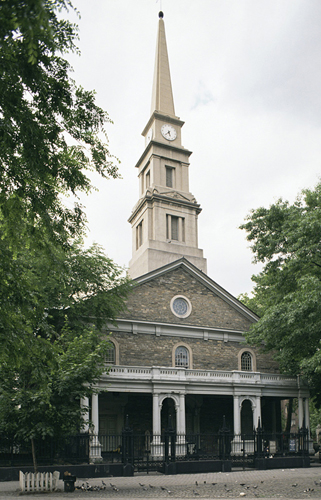
The
second-oldest church in New York stands on land where Peter Stuyvesant,
governor of Dutch New York in the 1600s, had his private chapel.
Stuyvesant is also buried here. In the 1960s it served as one of the
city’s most politically committed congregations and continues to live on
the avant-garde edge.131 East 10th St
Open 8:30am–4pm Mon–Fri; service 10:30am Sun
Free

St. Mark’s-in-the-Bowery Church
Renwick Triangle
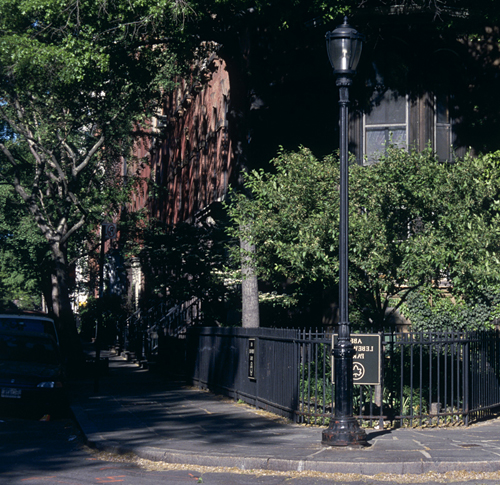
This
handsome group of townhouses was created in 1861 by James Renwick, Jr.,
a prominent architect of the day. The houses are on land that was once
Peter Stuyvesant’s farm, developed by his descendants as stylish
residences.114–128 East 10th St, 23–25 Stuyvesant St, between 2nd & 3rd Aves

Renwick Triangle
Ukrainian Museum
The
museum showcases a beguiling collection of Ukrainian costumes, lavishly
embroidered peasant blouses, colorful sashes, fancy sheepskin and fur
vests, wedding wreaths of yarn and ribbons. There are also ceramics,
jewelry, and the intricately designed Ukrainian Easter eggs known as pysanky.222 East 6th St, between 2nd and 3rd Aves
Open 11:30am–5pm Wed–Sun
Admission charge