Best of the Rest
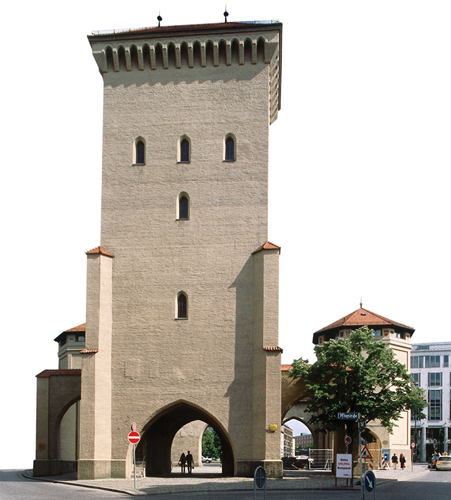
Isartor & Valentin-Musäum
Dedicated
to the city’s favourite son, Karl Valentin (1882–1948), the
Valentin-Musäum is situated in the south tower of the Isartor (14th
century). A small room in the tower furnished in
turn-of-the-19th-century style houses a café.

Isartor & Valentin-Musäum
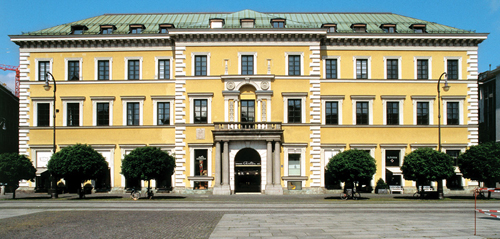
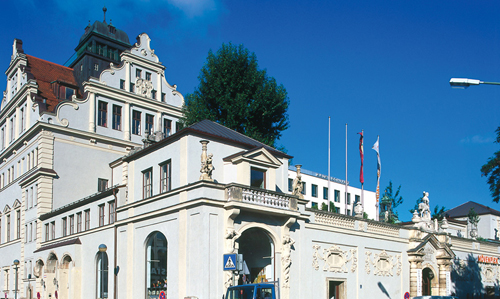
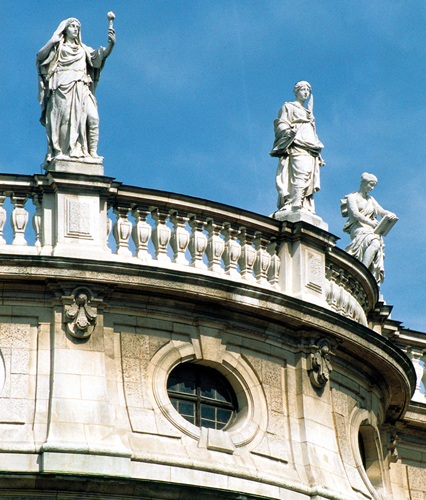
Episcopal Palace & Palais Portia
The Episcopal Palace is the last remaining city palace (1733–7) by Franxçois Cuvilliés. Nearby is the Baroque Palais Portia.
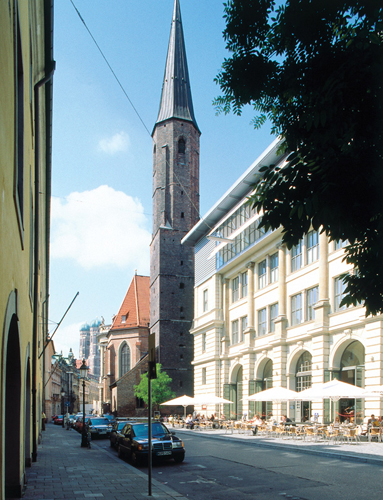
Literaturhaus
On
Salvatorplatz stands the Literaturhaus, a former Renaissance school
now used for literary gatherings. The famed coffee house Oskar Maria, a
café and restaurant, is on the ground floor.

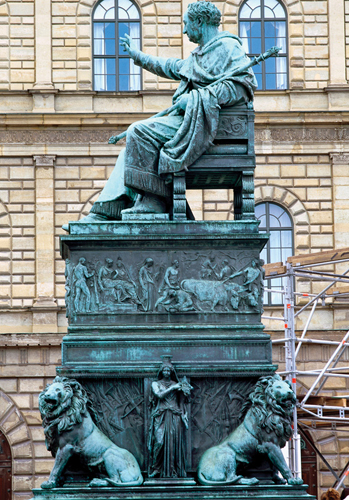
Wittelsbacher Platz
Brienner Straße leads from Odeonsplatz to Wittelsbacher Platz, which features a palace and statue of Maximilian I.

Promenadeplatz
In
the Middle Ages, this long narrow square served as a salt market. On
the north side is the famous Hotel Bayerischer Hof and Montgelas palace.
Künstlerhaus
Meeting
place for artists at the turn of the 19th century, the Künstlerhaus
(1892–1900) on Lenbachplatz features a Mövenpick café and restaurant on
the ground floor.

Künstlerhaus
Justizpalast
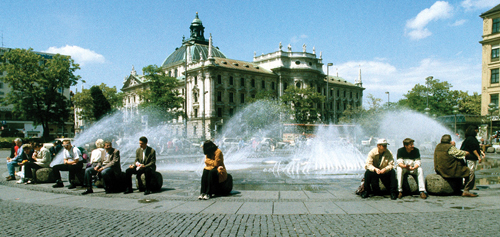
Dominating Stachus, the high court was completed by Friedrich Thiersch in 1898.

Karlsplatz
Also known as Stachus, this square with large fountains just past Karlstor marks the end of the pedestrian zone.

Karlsplatz
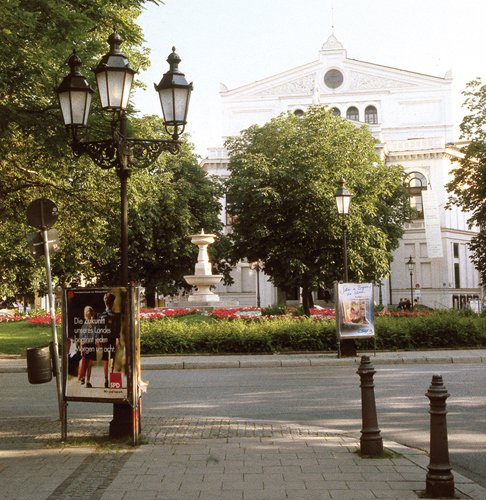
Gärtnerplatz
Pretty 19th-century hexagonal square with Gärtnerplatztheater in Munich’s gay district .

Gärtnerplatztheater on Gärtnerplatz
Max-Joseph-Platz
Square with Königsbau and Nationaltheater developed to the south of the Residenz from 1820 onward.

NOTE
Oskar Maria in the Literaturhaus sells cups and saucers with quotes, in German, from Oskar Maria Graf.