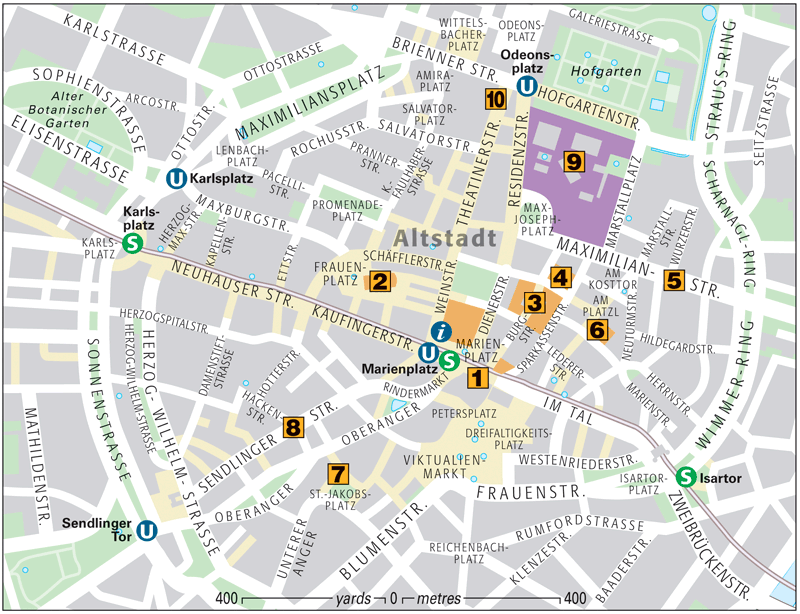
Munich’s historic Old Town is also the downtown area.
This is where you will find many historic buildings as well as
Marienplatz, (the historic central square), and the Residenz. In the
past, further expansion was hindered by the Englischer Garten to the
northeast and the Isar River to the east. Within the boundaries of the
old town gates – Karlstor, Isartor, Odeonsplatz, and Sendlinger Tor –
lie the principal shopping districts. Here you will find the pedestrian
zone, Theatinerstraße, and Maximilianstraße. However, Marienplatz
remains the true heart of Munich for visitors and locals alike.
Attractions
Marienplatz, Neues & Altes Rathaus
The
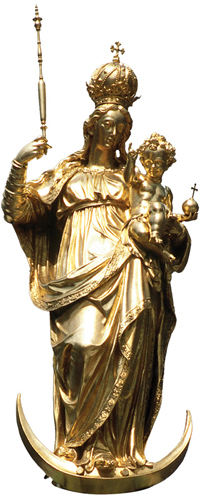
Mariensäule (Column of the Virgin), from 1590, and the 19th-century
fish fountain on Marienplatz are popular meeting spots. Although the
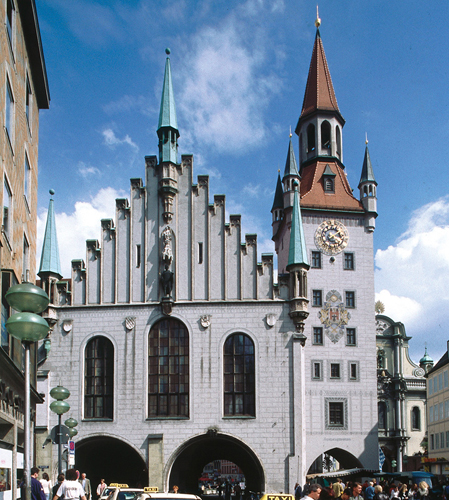
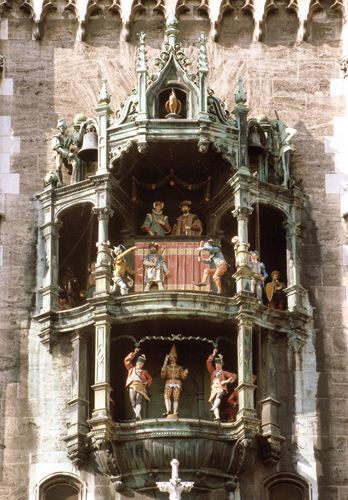
square is dominated by the ornate Neues Rathaus, or New Town Hall
(1867–1908), the eastern side is bounded by the Gothic simplicity of the
Altes Rathaus, or Old Town Hall, built during the 15th century. The
Glockenspiel, a chiming clock, is not to be missed .

Altes Rathaus

Chiming clock, Neues Rathaus

Gilded statue of the Virgin, Mariensäule
Frauenkirche
Weinstraße,
a lane off Marienplatz, leads to the Frauenkirche (1468–88), a basilica
designed by Jörg von Halsbach. A lack of funds forced him to abandon
his idea of Gothic towers. The “Swiss bonnets” that top the towers were
added later and are perhaps the forerunners of all the onion domes in
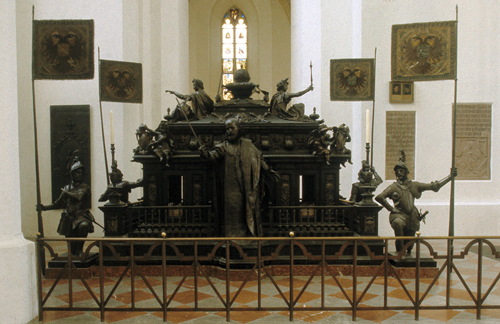
Bavaria. Highlights are the emperor’s tomb, Erasmus Grasser’s carving,
and the statue of St Christopher .

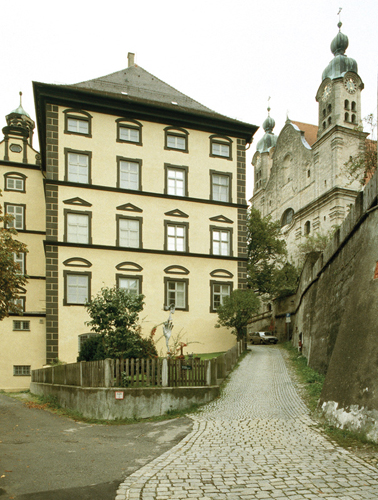
Alter Hof
Built
within the city walls between 1253 and 1255, the former residence of
the Wittelsbach dynasty lies northeast of Marienplatz. Preserved in its
original form, the west wing features a gatehouse embellished with the
family’s coat of arms. A bay window, known as the Affenturm, or Monkey
Tower, is another original element. According to legend, a court monkey
abducted young Ludwig IV, the future emperor of Germany, and climbed to
the top of the tower with the boy before returning him safely to ground
level.Burgstr. 4
8am–4:30pm Mon–Thu (Fri to 2pm)
Alte Münze
Northeast
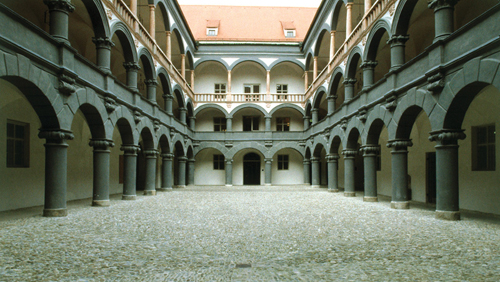
of the Alter Hof lies the Münzhof (1567), the former royal stables of
the Bavarian rulers. This stunning Renaissance courtyard with arcades
rising across three stories held the stables and coach houses, as well
as the library and treasure chamber of Albrecht V. In the 19th century,
the complex was converted into the state mint, hence the name Alte
Münze, or Old Mint. Coins were minted here as recently as 1983.Hofgraben 4
Courtyard open year-round

Renaissance triple-tier arcades in the Münzhof
Maximilianstraße
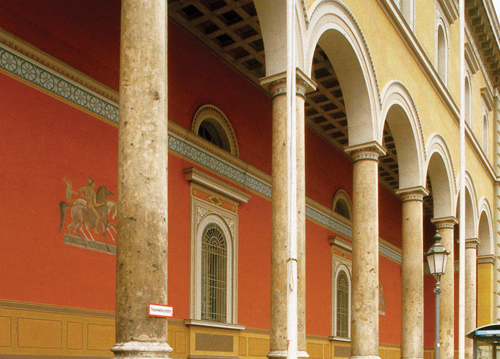
Maximilian II built this monumental boulevard between 1852 and 1855. The stretch between Max-Joseph-Platz and Alstadtring
is one of the world’s most exclusive shopping streets. In the arcades,
luxury boutiques such as Armani, Jill Sander, and Chanel offer their
exquisite wares; the Hotel Vierjahreszeiten and the Kammerspiele are
also found here, as is the new Maximilianhöfe complex. At its far end, the boulevard is flanked with ornate public buildings.

Main post office, Maximilianstraße
Hofbräuhaus & Platzl
Munich’s
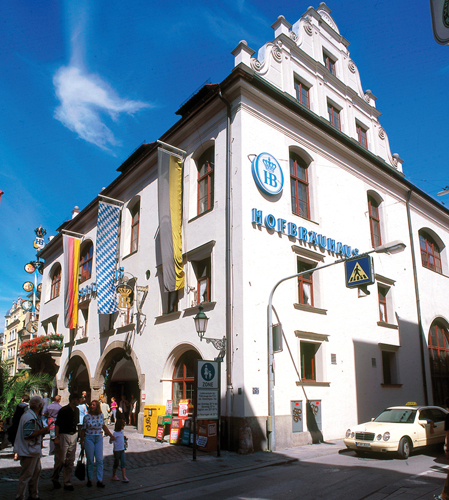
most famous pub dates from 1896 and was originally the royal court
brewery, founded in 1598 by Wilhelm V. There is space for 1,000 patrons
on the ground floor, where Hofbräu is, of course, the main beverage
served – over 10,000 litres (2,600 gallons) per day. A barrel-vaulted
banquet hall occupies the second floor and the complex also features a
beautiful small beer garden. Walk through the winding lanes nearby, such
as Burgstraße, to enjoy one of Munich’s most historic districts.Am Platzl 9
089 22 16 76
Hofbräuhaus
Sankt-Jakobs-Platz & Stadtmuseum
Since 2006 Sankt-Jakobs-Platz has been home to the new Jewish Centre. This comprises the Ohel Jakob Synagogue, the Jüdisches Museum,
and a community centre. Six buildings on the square, including the
Marstall (royal stables) and the former Zeughaus (arsenal), are occupied
by the Stadtmuseum. It contains several permanent collections and
exhibitions. The film museum enjoys international renown ,
especially for reconstructions of silent films. Ignaz-Günther-Haus – a
late Gothic building that was the home and studio of the famous Rococo
sculptor – stands on the west side of the square.St-Jakobs-Platz 1 & 15

Sendlinger Straße & Sendlinger Tor
For
a long time this was one of the oldest retail strips in the city, with
shops owned by the same families for generations. In recent years,
Sendlinger Straße has become more elegant – and more expensive. If you
prefer a more eclectic experience, wander into the adjacent side streets
and lanes, where you can browse in the many stores to your heart’s
content. Be sure to visit the two Rococo jewels of the district – the Asamkirche and the Asamhaus at Sendlinger Straße No. 34. Egid Quirin Asam acquired
the building (unfortunately closed to the public) and adapted it to his
own needs. One of the windows affords a direct view of the high altar
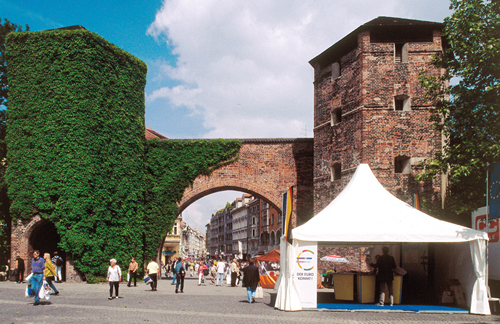
in the Asamkirche. A surviving element of the medieval town
fortifications, the vine-covered Sendlinger Tor marks the end of the
street.Sendlinger Str. 34 & 62

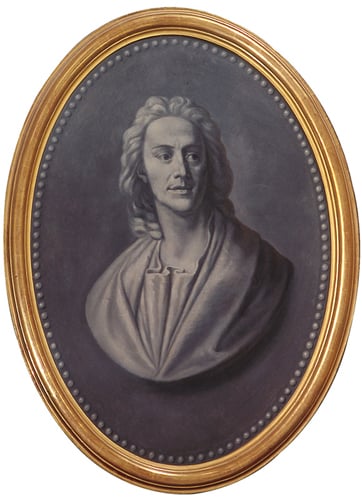
Egid Quirin Asam
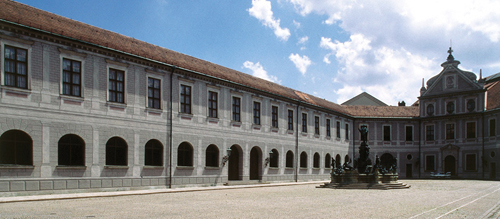
Residenz & Hofgarten
Munich’s largest historic complex, the Residenz, lies adjacent to the Hofgarten,
with its lovely plantings and arcades. To the north, the garden is
bounded by the Bavarian Chancellery (1989–93), which incorporates the
ruins of an army museum. Remnants of a 16th-century wall and garden are
visible behind glass on one side.

Chancellery overlooking the Hofgarten
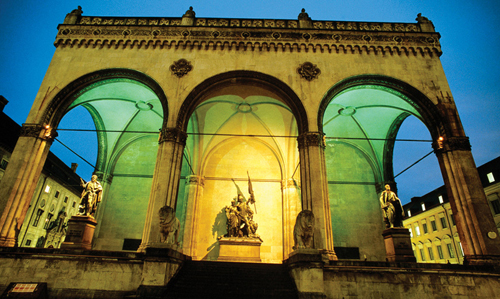
Odeonsplatz, Theatinerkirche & Feldherrnhalle
Princely palaces once occupied the area between Residenz and Theatinerkirche.
From 1800, old fortifications here were dismantled to make way for the
Ludwigstraße, which ends or begins – depending upon your viewpoint –
with Odeonsplatz and the Feldherrnhalle. Statues of the Bavarian field
marshals Tilly and Wrede are displayed in the niches of the loggia.

Feldherrnhalle with a view of the Residenz
An Old Town Stroll
Morning
From Marienplatz walk through the pedestrian zone to Mazaristr., which will lead you to the Frauenkirche. Continue north along Maffeistr. to the Fünf Höfe
complex and stroll along Theatinerstr. to Odeonsplatz with
Theatinerkirche and Feldherrnhalle. Enjoy an excellent cup of coffee
with a view of the Hofgarten at Café Tambosi. You will need half a day
to tour the Residenz, but you can explore the palace’s many inner
courtyards on your own. Cross the Residenzstr. to Max-Joseph-Platz and
the opera and exclusive shops along Maximilianstr. Return to Marienplatz
via Dienerstr., Alter Hof, and Platzl, just in time for the clock’s
chiming (at 11am or noon). Walk along Tal to the Weißes Bräuhaus at
No.10 for a traditional Bavarian lunch.
Afternoon
After lunch, climb to the top of St Peter’s
and take in the glorious view of the Old Town. Then walk through the
Rindermarkt with its medieval Löwenturm and right into Sendlinger Str.
Although Asamhaus (No. 34) is closed to the public, the interior of the
late Baroque Asamkirche (No. 62) will take your breath away. Keep left
to reach St-Jakobs-Platz, the Stadtmuseum, and the impressive Ohel Jakob
Synagogue. Drop into the Stadtcafé for an afternoon break. From
Viktualienmarkt, just around the corner, go east to Isartor and the
Valentin-Musäum (see Gärtnerplatz) or south to the Gärtnerplatz district with its many pubs and bars.