This imposing tree-lined avenue,adorned with
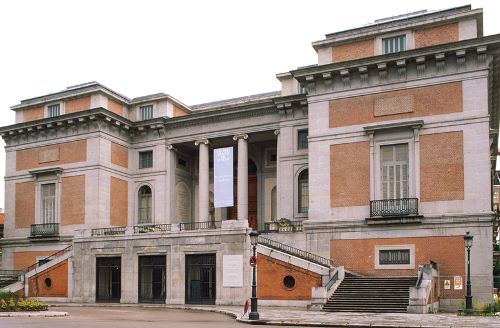
fountains and sculptures, is home to no fewer than three worldclass art
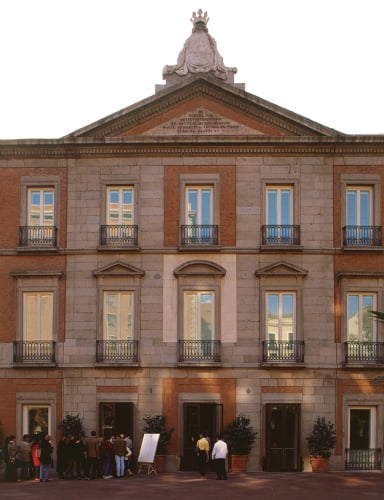
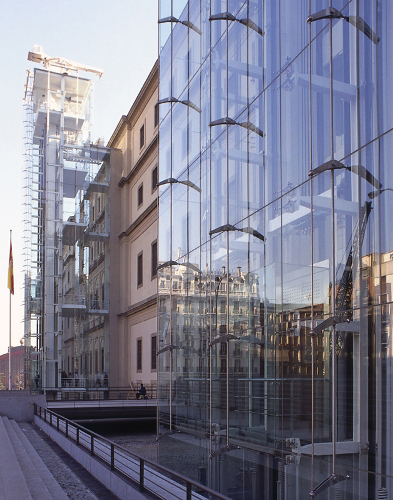
galleries: the Prado, the Reina Sofía and the Thyssen-Bornemisza. In the
18th century the prado was a meadow, crossed by a stream, but the
bucolic surroundings were deceptive, as the area was acquiring an
unsavoury reputation for muggings and amorous encounters. The solution,
devised by Charles IV, was a new boulevard between Plaza de Cibeles and
Plaza de Atocha, lined with handsome buildings devoted to the pursuit of
scientific inquiry. Work began in 1775 on a museum of natural history
(now the Prado), the botanical gardens and observatory and medical
school (now the Reina Sofía).
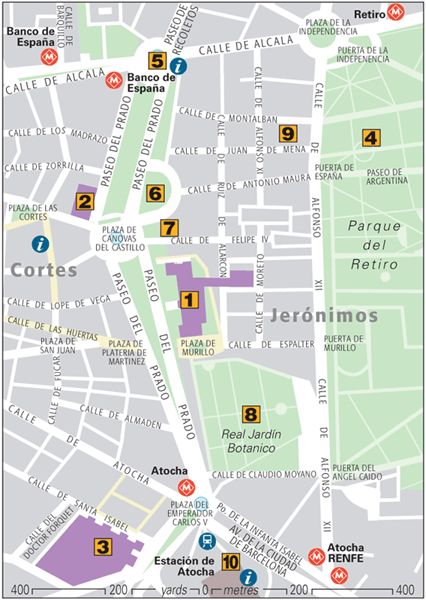
Sights
Plaza de Cibeles
One
of Madrid’s busiest traffic intersections also boasts the city’s most
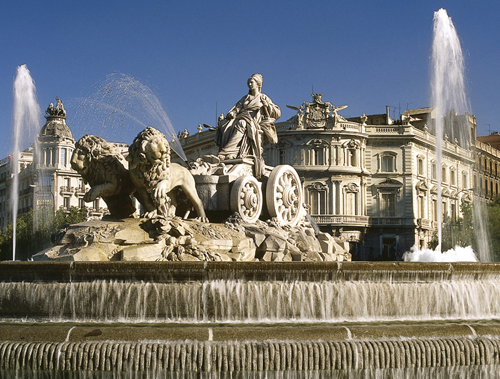
famous landmark. The Fountain of Cybele, designed by Ventura Rodríguez,
depicts the goddess of nature and abundance riding her chariot, hauled
by a pair of prancing lions. (The water-spouting cherubs were added at
the end of the 19th century.) The most striking architectural monument
on the square is the over-the-top Palacio de Comunicaciones,
now the Madrid Town Hall. Opposite is the Neo-Baroque Palacio de
Linares, one of the city’s finest 19th-century buildings, and now the Casa de América.
On the corner of Calle Recoletos, partly hidden from view by its
steeply sloping gardens, is the former Palacio de Buenavista,
commissioned in 1777 for the Duchess of Alba, a legendary beauty and
one-time lover of artist Francisco de Goya. Today it is home to the
General Army Barracks.

Fountain of Cybele, Plaza de Cibeles
Plaza de la Lealtad
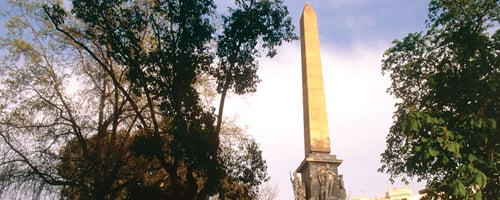
This leafy square honours the fallen heroes of the 1808 uprising against the French. The ashes of the rebel leaders, immortalized in Goya’s famous painting,
were interred in the funerary urns beneath the obelisk when the project
was finally completed in 1840. The beautifully proportioned
Neo-Classical building occupying the north side of the square is the
Madrid Stock Exchange, designed by Enrique María Repullés in 1884.
Visitors may admire the Corinthian-columned façade at any time, but
anyone wishing to see the trading floor from the gallery (parquet
flooring, painted vaults, stained glass ceiling and gilded clock) will
have to join the guided tour at midday.Madrid Stock Exchange

Plaza de la Lealtad
Hotel Ritz
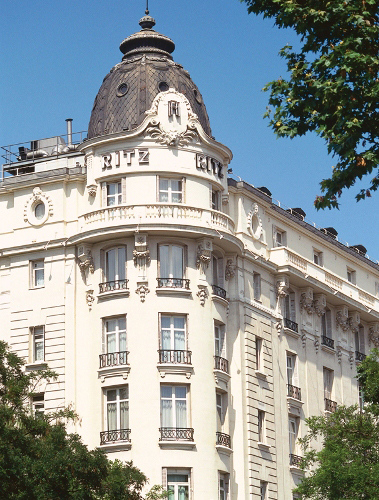
The Ritz
first opened its doors in 1910 and the inauguration was attended by
King Alfonso XIII, who had backed the project after complaining of the
lack of quality accommodation in his capital. French architect Charles
Mewes’ Neo-Classical building is surprisingly understated from the
outside, but the interior is predictably opulent. Outstanding features
include handwoven carpets from the Royal Tapestry factory and the belle époque dining room. Stop for a drink on the terrace.

Real Jardín Botánico
Anyone
seeking a bit of peace and quiet will relish these delightful gardens,
inaugurated in 1781 as a centre for botanical research. The three
ascending terraces conform to Juan de Villanueva’s original design.
Beyond the main entrance is the herbarium, the aromatic, culinary and
medicinal plants neatly arranged in separate beds and individually
labelled. The rose garden adds a dash of colour. The central terrace
arranges plants by family, species and genealogical history. Look out
for the 100-year-old tree known as “El Pantalones”
because of its resemblance to a pair of inverted trousers – disease has
split the trunk in half. More than 1,200 tropical and sub-tropical
species are cultivated in the Exhibition Greenhouse, opened in 1993. The
Villanueva Pavilion and the arbors, by contrast, date back to the 18th
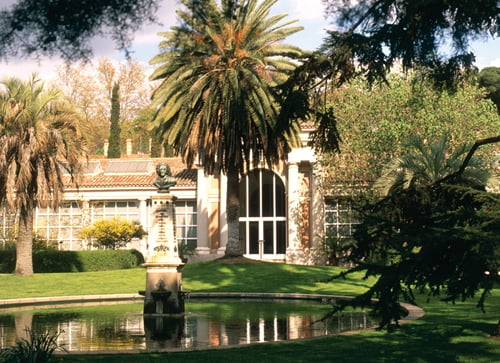
century. The statue by the pond honours the great Swedish botanist, Carl
von Linné (Linnaeus), who devised the system of plant classification.

Real Jardín Botánico
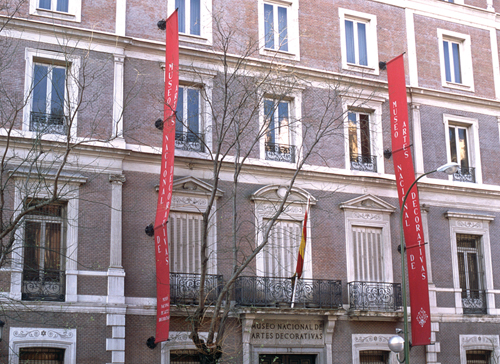
Museo Nacional de Artes Decorativas
Housed
in a 19th-century mansion overlooking the Retiro is this compelling
collection of furniture, silverware, ceramics and glassware from the
royal factory of La Granja, as well as jewellery, tapestries, clocks,
toys and musical instruments. But the museum is more than a showcase of
handicrafts. Arranged chronologically over four floors are reconstructed
rooms illustrating Spanish domestic life from the 16th to the early
20th centuries. Unmissable on the fourth floor is the recreated
Valencian kitchen, decorated with over 1,600 hand-painted azulejo
tiles. The below-stairs life of an 18th-century palace is vividly
brought to life as servants struggle with trays of pies and desserts
while the domestic cats filch fish and eels.Calle de Montalbán 12
Open 9:30am–3pm Tue–Sat (5–8pm Thu), 10am–3pm Sun
Dis. access
Adm (except Sun)

Museo Nacional de Artes Decorativas
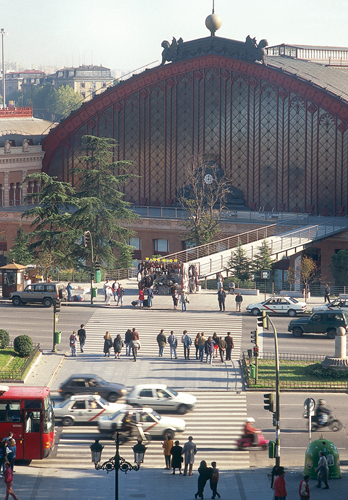
Estación de Atocha
Madrid’s
southern railway station is also a palm garden and an arresting
architectural monument. The old terminal, a magnificent castiron
structure, 152 m (500 ft) long and more than 40 m (130 ft) high,
overlooks Plaza de Atocha. It was designed by Alberto del Palacio in
1888 – the French engineer Gustave Eiffel, designer of Paris’s famous
tower, was a consultant – and completed four years later. When, more
than a century later, the decision was taken to run a new high-speed
train service to Seville (AVE), prize winning Spanish architect Rafael
Moneo was commissioned to remodel the terminal. His makeover
incorporated the square and the old station canopy, and added a
cylindrical lantern over the commuter station, and a streamlined glass
concourse from where the AVE now departs.Glorieta de Carlos V
Dis. access

Estación de Atocha