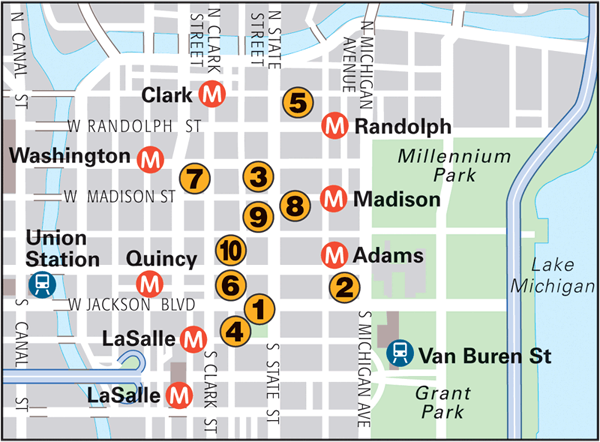
A Day in The Loop
Morning
Start early with breakfast at the charming Atwood Café in the lobby of the historic
Hotel Burnham
, with its beautifully reconstructed interior. Then stroll a block west to Daley Plaza to see the giant unnamed Picasso sculpture, stopping off at the Hot Tix booth at
78 W Randolph Street
, to get half-price, same-day tickets to a Loop theater performance. Continue along Michigan Avenue, past the
Chicago Cultural Center
, and south to The Art Institute of Chicago. A whirlwind tour of the highlights ,
all conveniently located on the upper level, can be done in a couple of
hours, though you may want to come back for a second helping.
Afternoon
Either have lunch in The Art Institute’s outdoor café or head west along State Street to eat at
Macy’s
legendary seventh-floor Walnut
Room, a Chicago fixture since 1907. Then burn off the calories by
shopping your way around the vast store and along the famous street that
it’s situated on. For pre-theater dining, try the sophisticated
Rhapsody
, convenient for the
Symphony Center
Or, on weekdays, try the all-you-can-eat buffet at
Trattoria No. 10
.
Evening
After the show, hop a quick cab ride to stylish
Nine
for a cocktail or some dancing late into the night in the slick second-floor Ghost Bar.
Architectural Sites

Monadnock Building
At
16 stories, this Holabird and Roche designed building (1891) is one of
the world’s tallest all-masonry high-rises. Inside, there’s a
magnificent wrought-iron staircase .
Marquette Building
Holabird and Roche also built this 1895 Chicago School structure with a steel skeleton and decorative ornamentation.
Reliance Building
Daniel H. Burnham’s stunning glass-and-white-glazed-terra-cotta building (1895) is now the Hotel Burnham.
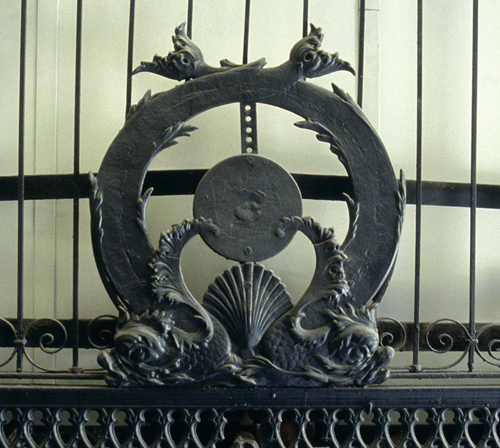
Fisher Building
Another
Chicago School edifice with a steel structure, this 1896 neo-Gothic
building is also by Daniel H. Burnham. Aquatic motifs on the façade
honor the building’s first owner, L. G. Fisher.

Fisher Building
Carson Pirie Scott Building
Eye-catching
cast-iron swirls on part of the exterior of this building (1899 &
1903) express architect Louis H. Sullivan’s love of elaborate detail.
Santa Fe Center
Daniel
H. Burnham designed this elegant high-rise in 1904: its carved building
signs are from Chicago’s days as a railroad hub. The ground level
houses the Chicago Architecture Foundation.
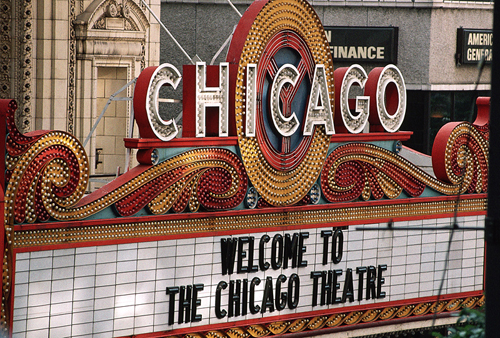
Chicago Theater
The red marquee of this Beaux Arts-style theater is a symbol of Chicago. Built in 1921, today it is a performance venue.

Chicago Theater
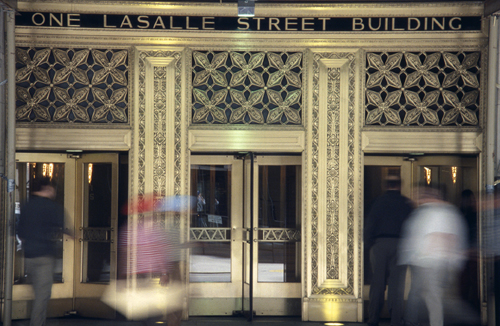
One North LaSalle
This
1930-built, 49-story building was Chicago’s tallest for 35 years, and
is one of the city’s best surviving examples of Art Deco architecture.

One North LaSalle
Inland Steel Building
One of the first skyscrapers to be built (in 1957) on steel, not concrete, pilings. It predated the John Hancock building in using external supports.
Federal Center
Flanked
by Ludwig Mies van der Rohe’s federal buildings, this plaza (1959–74)
contains Alexander Calder’s striking statue Flamingo (1974).