What strikes many visitors to downtown Seattle is how
easy it is to see the sights, since key attractions lie within walking
distance of one another. Bookended by Belltown to the north and Pioneer
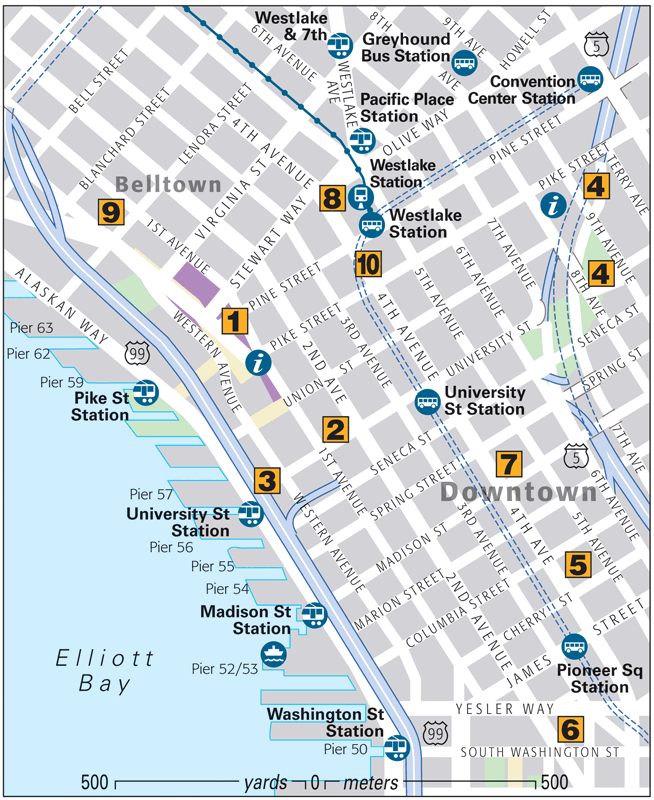
Square to the south, downtown can be seen on foot or by city bus at no
cost – since all of it lies in the Ride Free Zone. Alternatively, for a
small fare, the waterfront streetcar stops at several key points between
the Market and the International District. In addition to being a
business district full of skyscrapers, downtown offers a wide range of
options – such as gourmet restaurants, attractive shopping centers, and a
perfect place to begin exploring the city.
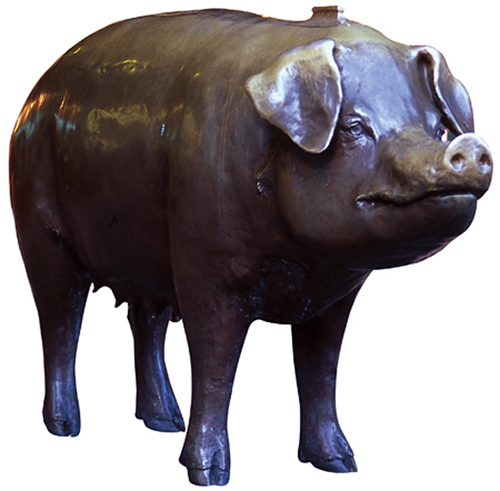
Rachel, the Market pig
|
|
|
NOTE
Sights
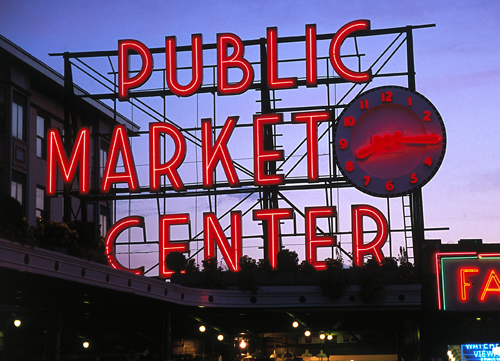
Pike Place Market
Anyone
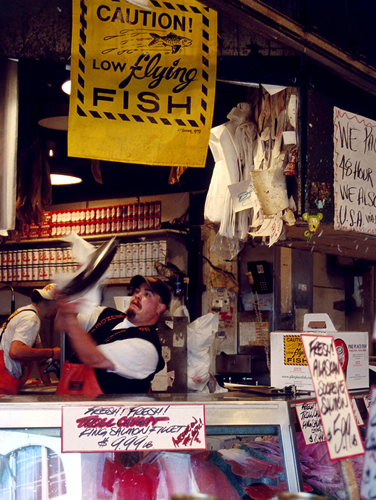
descending on Pike Place Market to stroll by innumerable stalls of
seafood, fresh produce, crafts, and flower bouquets can feel the rapid
pulse of a scene that’s all about hard work and hustle. The Market is
famous for its salmon-throwing fishmongers and street musicians who
entertain tourists daily.

Fish-flinging fishmongers

Pike Place Market
Seattle Art Museum
Designed
by Venturi Scott Brown and Associates, the imposing sandstone and
limestone edifice houses an enviable permanent collection of about
23,000 pieces. The African collection inspires with traditional
sculpture, masks, textiles, basketry, and decorative arts. The John
Hauberg Collection, one of the most prized examples of Northwest Coastal
Native American art, comprises nearly 200 artifacts from British
Columbia, Alaska, Washington, and Oregon. The museum is undergoing
extensive refurbishment until spring 2007. The construction of a new
Olympic Sculpture Park in downtown Seattle is also underway.Harbor Steps
If
you happen to be near the Seattle Art Museum on First Avenue and need
to get down to the waterfront, try the Harbor Steps. A street’s abrupt
end has been turned into a wide-open stairway landscaped with water
sculpture and planters. The steps are spacious and an ideal urban
meeting place, located below a nouveau luxury apartment complex in the
heart of an ever-changing downtown Seattle. Countless restaurant and
nightlife options abound in the vicinity.Washington State Convention Center/ Freeway Park
Straddling
Interstate 5 in a miraculous feat of engineering, the Washington State
Convention Center is located within easy walking distance of the city’s
best shops, hotels, and restaurants. Marvel at the center’s 90-ft (27-m)
wide glass canopy bridge that frames views to Elliott Bay and to the
historic Pike-Pine neighborhood. Adjoining is Freeway Park, where
blossoms delight visitors in spring and waterfalls mask the sounds of
traffic flowing on all sides.Washington State Convention Center
800 Convention Place
206 694 5000
Freeway Park
Columbia Tower
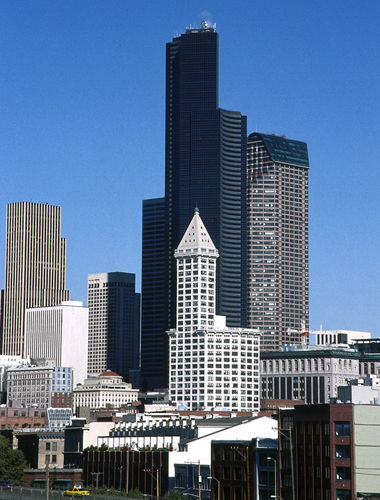
The
sleek, three-tiered black skyscraper that dominates Seattle’s skyline
might have been even taller, but for an order to reduce the ultimate
height from the Federal Aviation Administration. To break a record for
most floors in any one building, the builder kept the original 76
stories but reduced the ceiling heights to compensate. The 1985 building
has an observation deck on the 73rd floor that offers panoramic views
of Elliott Bay and Mount Rainier.

The tall, black Columbia Tower
Find
art galleries, intricate Victorian architecture, bookstores, and cafés
in a constantly changing National Historic District. Pioneer Square’s
20-block neighborhood became Seattle’s commercial center during the boom
years of logging, fishing, railroads, and Klondike Gold Rush economies.
An exclusive 90-minute underground tour offers a lively look at the 19th-century storefronts that were
periodically flooded by tides from Elliott Bay until street levels were
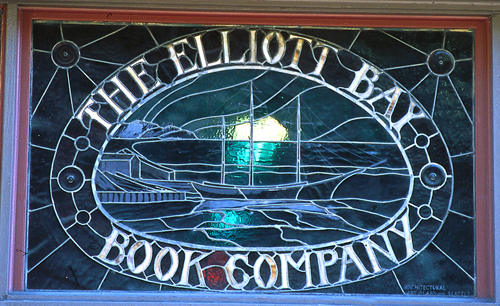
raised. Key sights include the Smith Tower, Elliott Bay Book Co. and
Café, and an art walk on the first Thursday night of each month.

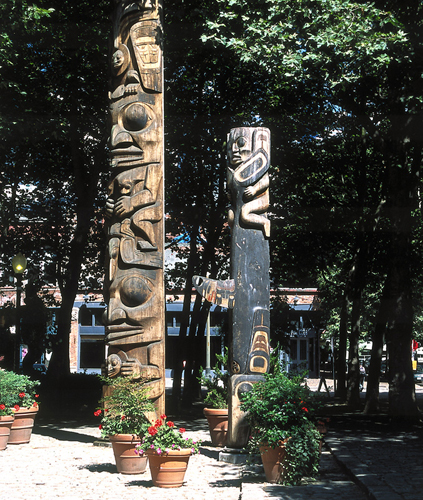
Totem poles, Pioneer Square

Elliott Bay Book Company
Monorail
In
2005, Monorail services were suspended due to a collision between
trains. By mid 2007 you’ll be able to hop aboard once again to
experience the future of mass transit from the perspective of engineers
who built the elevated rail as an attraction for the 1962 World’s Fair.
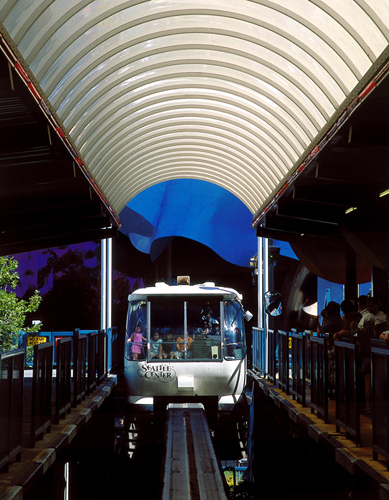
The Monorail travels speedily and nonstop for 1.2 miles (2 km) between Seattle Center and Westlake Center.

Monorail at Seattle Center Station
Belltown
Pedestrians
are welcomed with an explosion of shops, clubs, cafés, luxury condos,
and fine restaurants. This upscale neighborhood was named in the 1970s
after a pioneer, William M. Bell. In those days, Belltown attracted
sailors on shore leave, artists seeking inexpensive loft spaces, and
ragtag urban dwellers. But it was the dot.com boom of the 1990s that
changed everything by engendering a commercial revival for the
neighborhood. Remnants of old Belltown include a few well preserved
façades.Ride Free Zone
The
downtown sightseeing area between Belltown and Pioneer Square falls
within the city’s Ride Free Zone where fares are gratis. Hop on a street
level bus within the Zone and don’t forget to check in with the driver.
All stations in the Downtown Seattle Transit Tunnel (DSTT)
are within the Ride Free Zone but during tunnel closure buses along 3rd
Avenue are free between 6–9am and 3–6pm, and the Ride Free Zone is
extended to include the stops at 9th Avenue and Howell Street.