Alexander Hamilton
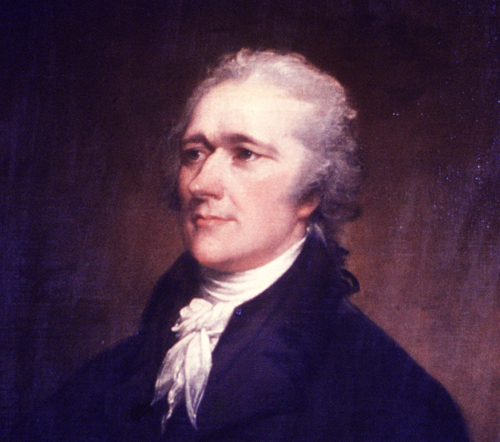
Revolutionary
leader and first Secretary of the Treasury, Hamilton’s (1755–1804)
business-friendly policies were instrumental in New York’s emergence as
the financial center of the U.S. He lost his life in a duel with
political opponent Aaron Burr and is buried in Trinity Church graveyard.

Alexander Hamilton
William “Boss” Tweed
The
political leader of Tammany Hall, Tweed (1823–78) became the living
embodiment of political corruption, kickbacks, and payoffs. It is
estimated that he and his associates took up to $200 million from the
city. To hide his crime, he did good works, building orphanages, public
baths, and hospitals, but died in prison.DeWitt Clinton
Mayor
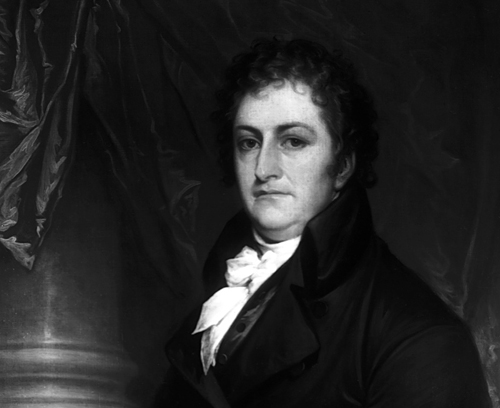
of the city, governor of the state, and U.S. senator, Clinton
(1769–1828) is best remembered for negotiating the construction of the
Erie Canal in 1817–25. By connecting the Great Lakes to the Hudson
River, he helped to secure New York’s future as a predominant seaport.

DeWitt Clinton
Jacob Riis
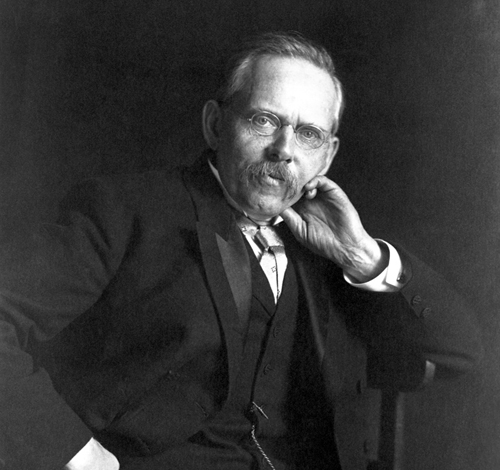
Appalled
by immigrant living conditions, Riis (1849–1914), a social reformer,
writer, and photographer, used photos taken in tenements to illustrate
his stories, shocking the middle class and motivating them to act. His
1888 article, Flashes from the Slums, and his book, How the Other Half Lives, brought national attention.

Jacob Riis
John D. Rockefeller, Jr.
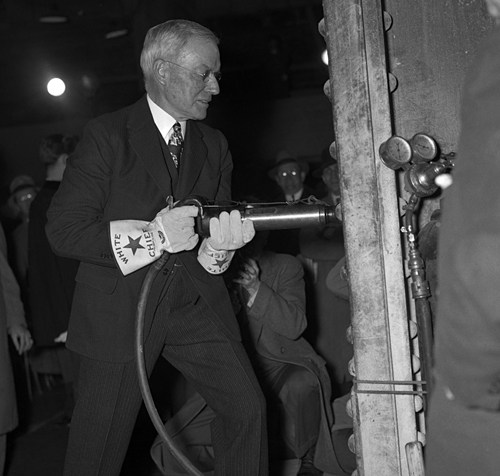
The
largess of John D. Rockefeller, Jr. (1874–1960) helped support housing
in Harlem, the Bronx, and Queens, created Fort Tryon Park and the
Cloisters, and provided land for the United Nations. The construction of
Rockefeller Center employed thousands at the height of the depression and gave the city an enduring landmark.

John D. Rockefeller, Jr.
Fiorello LaGuardia
Considered
the city’s best mayor, after his election in 1933 LaGuardia (1882–1947)
modernized and centralized a chaotic city government, eliminated waste,
unified the transit system, and obtained federal funds to help the
city. A man of the people, he is remembered for reading the comics on
the radio during a city newspaper strike.Robert Moses
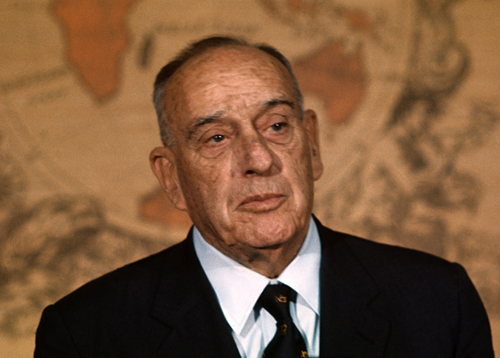
As
construction supervisor and parks commissioner from the 1930s–1950s,
Moses (1888–1981) vastly enlarged and upgraded the city’s recreational
areas, but he also covered the city with highways rather than develop a
public transport system and was responsible for urban renewal projects
that razed many neighborhoods in favor of high-rises.

Robert Moses
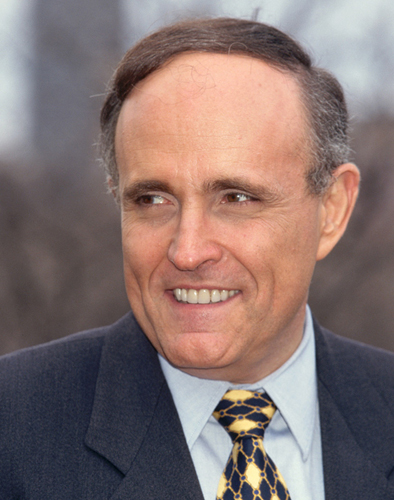
Rudolph Giuliani
Mayor
Rudy Giuliani (b. 1944) is widely credited with reducing crime, making
the city cleaner, and upgrading quality of life for most New York
citizens during his tenure, 19932001. Once controversial for his strong
personality, his leadership following the attack on the World Trade
Center rallied a stunned city and won praise at home and abroad.

Rudolph Giuliani