Imperial Fora
The
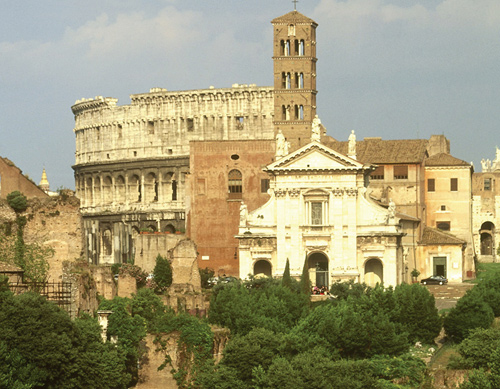
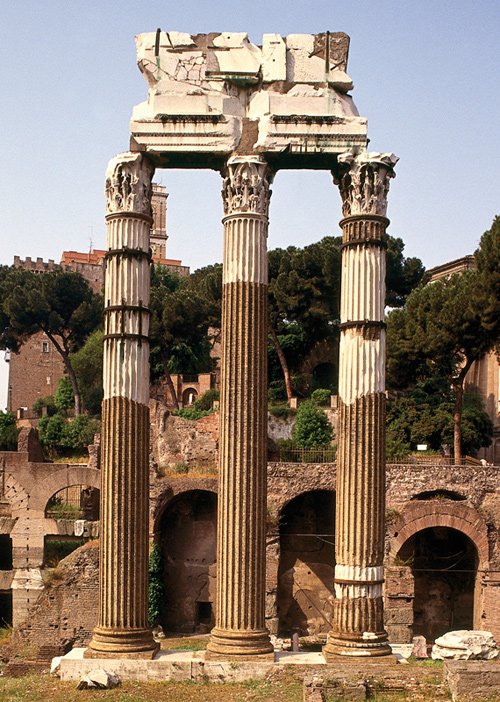
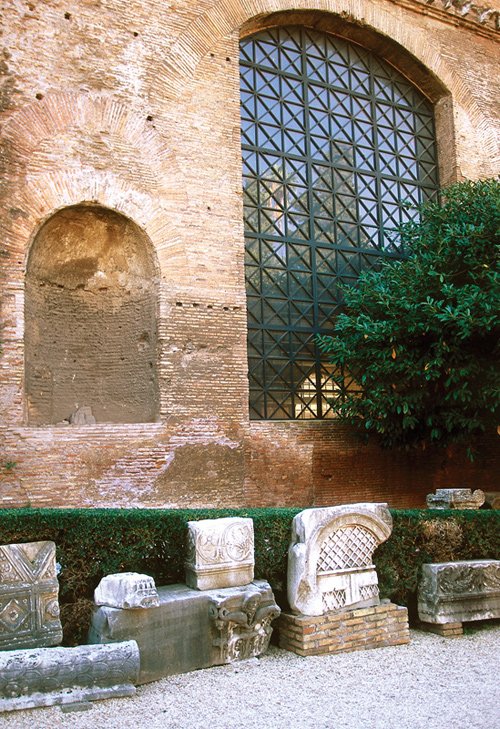
largest temple and one of the most commanding of this imposing zone was
the 2nd-century AD Temple of Venus and Rome, its columns standing high
on the hill between the Forum and the Colosseum. Its back-to-back design
was Hadrian’s, and when the great architect Apollodorus criticized it,
Hadrian had him put to death .

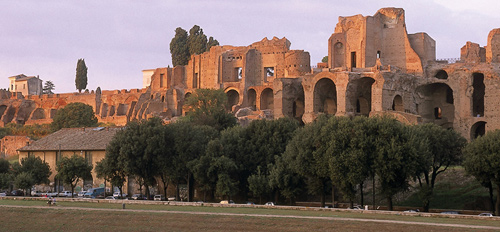
Palatine Hill
Most
European languages derive their word for palace from the name of this
hill. All important in the history of early Rome, first as its
birthplace, then as the home of its leaders’ opulent homes, it now
serves as a bucolic setting for a romantic stroll .

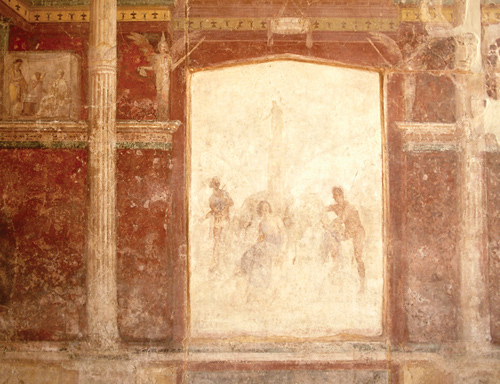
Palatine fresco

Domus Augustana, Palatine Hill
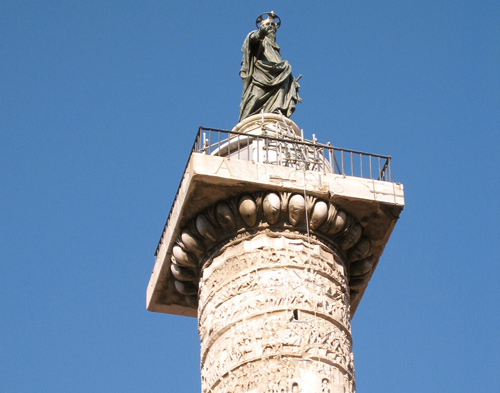
Column of Marcus Aurelius
A
2nd-century AD commemoration of conquests along the Danube, this
colossus stands 30 m (100 ft) high and is composed of 28 marble drums.
The 20 spiral reliefs realistically chronicle scenes from two wars. A
statue of the emperor and his wife once stood on top of the column, but
it was replaced by one of St Paul in 1589 .

Nero’s Golden House
When
the rooms of the mad emperor’s house were discovered in the late 1400s,
everyone thought they’d found mysterious grottoes. Consequently, the
style of wall painting found here became known as “grotesque” and was
much imitated by Renaissance artists, including Raphael.

Nero’s Golden House
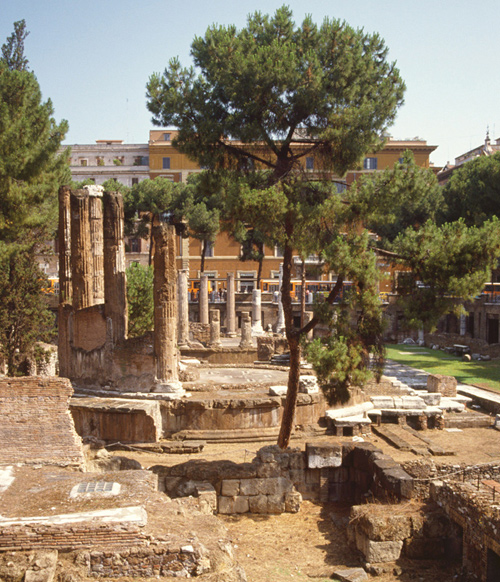
Largo di Torre Argentina
Discovered
in the 1920s, four Republican temples stand out distinctly, with the
columns of a portico at the north end. The drainage gutters of an
Imperial public latrine are behind one temple, and behind others stands
the tufa-block platform of the Curia of the Theatre of Pompey. Caesar
was killed here on 15 March 44 BC.

The
theatre was inaugurated by Augustus in 23 BC and dedicated to his
nephew and son-in-law Marcellus, who had just died, aged 19. Not much
remains of the once huge structure, which held up to 20,000 people. In
later ages, what was left of it was used as support for medieval and
Renaissance fortresses and palaces .