Beijing’s Top 10 : Beijing Opera – Top 10 Beijing Opera Venues


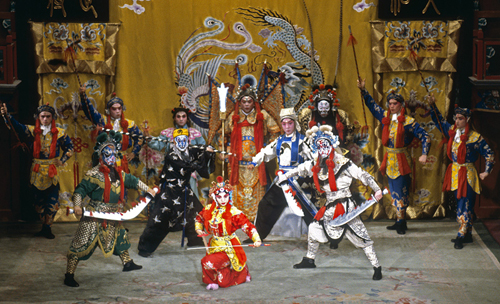
Beijing Opera cast

  1. Colors

    The
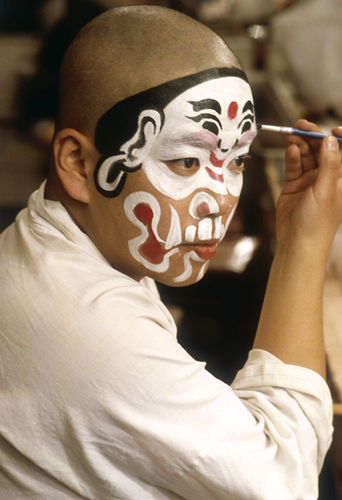
    colors of the performers’ painted faces symbolize the individual
    characters’ qualities. Red, for example, represents loyalty and courage.
    Purple stands for solemnity and a sense of justice, green for bravery
    and irascibility.


    Painted face

  2. Acrobatics

    Beijing
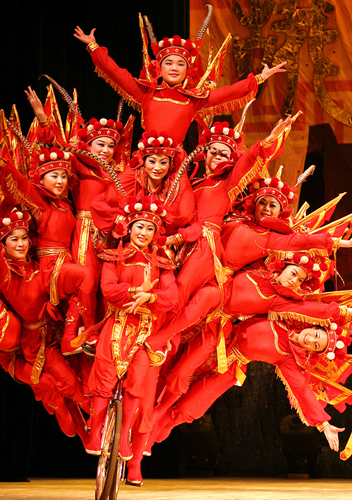
    Opera is a form of “total theater” with singing, speech, mime, and
    acrobatics that combine graceful gymnastics and movements from the
    martial arts. Training is notoriously hard. Costumes are designed to
    make the jumps seem more spectacular by billowing out as they spin.


    Acrobats

  3. Musical instruments

    Despite
    the dramatic visual elements of Beijing Opera, the Chinese say that
    they go to “listen” to opera, not to see it. Typically six or seven
    musicians accompany the dramatics. The stringed instruments usually
    include the erhu, or Chinese two-stringed violin, while percussion includes instruments such as clappers, gongs, and drums.

  4. Sheng

    There are four main role types in Beijing Opera: sheng (male), dan (female), jing (painted face), and chou (clown). Sheng are divided into laosheng, who wear beards and represent old men, xiaosheng who are young men, and wusheng, who are the acrobats and whose roles are typically those of warriors.
  5. Dan


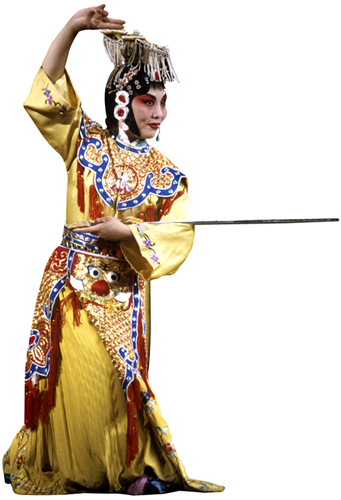
    Dan are the female roles. Laodan are old ladies and caidan the female comedians, while wudan are the martial artists. The most important category, qingyi, usually play respectable and decent ladies in elegant costumes.


    Dan

  6. Jing


    Jing
    have stylized patterned, colored faces, and represent warriors, heroes,
    statesmen, adventurers, and demons. Not only are these characters the
    most striking looking but they also usually have the most forceful
    personalities.

  7. Chou

    The chou
    are the comic characters and they’re denoted by white patches on their
    noses. Patches of different shape and size mean roles of different
    character. It is the chou who keep the audience laughing.

  8. Mei Lanfang

    Mei Lanfang was the foremost male interpreter of the female role (dan)
    during Beijing Opera’s heyday in the 1920s and 1930s. Traditionally all
    female roles were played by male actors, although no longer.

  9. Repertoire

    The
    traditional repertoire includes more than 1,000 works, mostly based on
    popular tales. Modern productions aimed at tourists often include
    English-language displays of the text.

  10. Monkey

    Clever,
    resourceful, and brave, Monkey is one of the favorite characters in
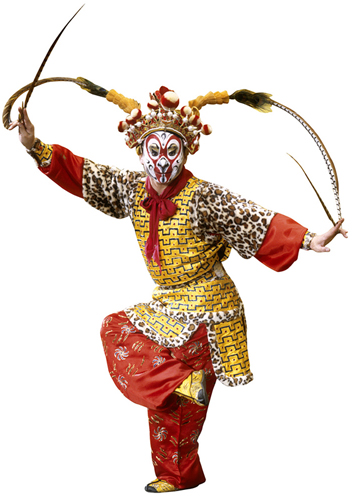
    Beijing Opera. He has his origins in classic Chinese literature.


    Monkey


Top 10 Beijing Opera Venues

  1. Beijing Traditional Opera Theater

    Highlights shows in English.

    • 8 Majiapu Dong Lu, south of Taoranting Park

    • 6757 2221

  2. Chang’an Grand Theater

    Daily two-hour performances of mostly complete operas.

    • 7 Jianguo Men Nei Dajie

    • 6510 1309

    • 6510 1310

  3. Mei Lanfang Grand Theater

    This steel-and-glass theater sits over 1,000 people.

    • 32 Ping’Anli West St

    • 5833 1388

  4. East Pioneer Theater

    Occasional two-hour highlights shows.

    • 8-2 Dongdan 3 Tiao, off Wangfujing Dajie

    • 6559 7394

  5. Hu Guang Guildhouse

    Daily one-hour highlights shows.

    • 3 Hufang Lu

    • 6351 8284

  6. Lao She Teahouse

    Daily 90-minute variety shows that include Beijing Opera.

    • 3 Qian Men Xi Dajie

    • 6303 6830

  7. Li Yuan Theater

    Daily 80-minute highlights shows.

    • Qian Men Hotel, 175 Yong’an Lu

    • 8315 7297

  8. Mansion of Prince Gong

    Summer performances only .

    • 17 Qianhai Xi Jie

    • 6616 8149

  9. De Yun She

    A famous teahouse hosting traditional Chinese cross-talk shows Tue–Sun.

    • 1 Bei Wei Lu

    • 6304 0617

  10. Zheng Yi Temple Theater

    Daily two-hour performances.

    • 220 Xiheyan Qian Men

    • 8315 1649