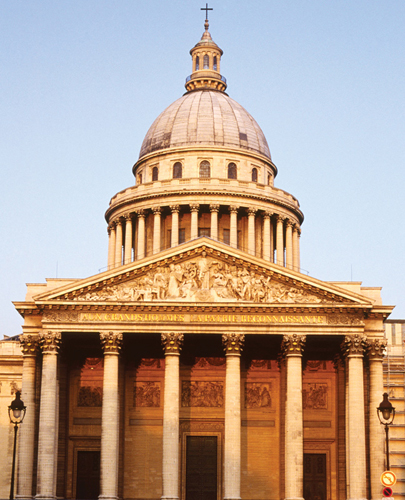
Eglise du Dôme
The
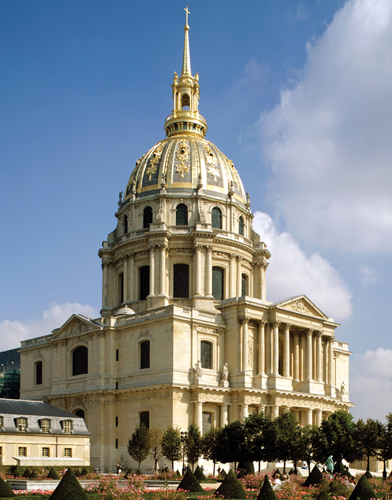
final resting place of Napoleon Bonaparte is the beautiful Dôme Church
in the Hôtel des Invalides complex – an elaborate monument to French
Classical style. Built as the chapel for the resident soldiers of the
Invalides, its ornate high altar is in stark contrast to the solemn
marble chapels surrounding the crypt, which hold the tombs of French
military leaders. Its golden dome can be seen for miles around.

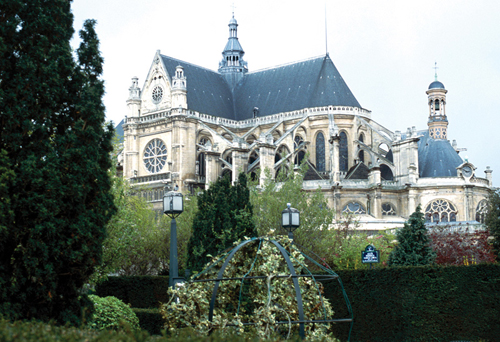
St-Eustache
For
centuries, this monumental Gothic edifice was the “market church”
serving the traders of Les Halles. Taking more than 100 years to build,
it was finally completed in 1637 and its cavernous interior displays the
architectural style of the early Renaissance. Popular Sunday afternoon
organ recitals and other classical concerts take place in this
wonderfully atmospheric setting.

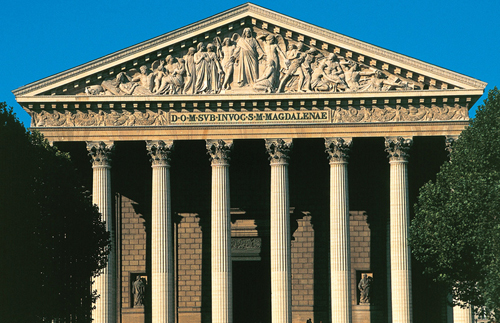
La Madeleine
Designed
in the style of a Greek temple in 1764, this prominent church in
Paris’s financial district, on the edge of the Opéra Quarter, is one of
the city’s most distinctive sights, spectacularly surrounded by 52
Corinthian columns. The church was consecrated to Mary Magdalene in
1845. The bronze doors, which include bas-reliefs depicting the Ten Commandments, and the Last Judgment
on the south pediment are exterior highlights, while the ornate marble
and gold interior has many fine statues, including François Rude’s Baptism of Christ. Organ recitals are often held in the church.Pl de la Madeleine, 75008
Open 9am–7pm daily (services vary)
Free

La Madeleine
Grande Synagogue de la Victoire
Built
in the late 19th century, this elaborate synagogue is the
second-largest in Europe. Its façade design represents the Tablets
though, sadly, the building is not open to the public. Other smaller
synagogues can be found in the Marais, which has a large Jewish
community, including one at 10 rue Pavée, built in 1913 by Hector
Guimard, the architect who designed the city’s Art Nouveau metro
stations.44 rue de la Victoire, 75008
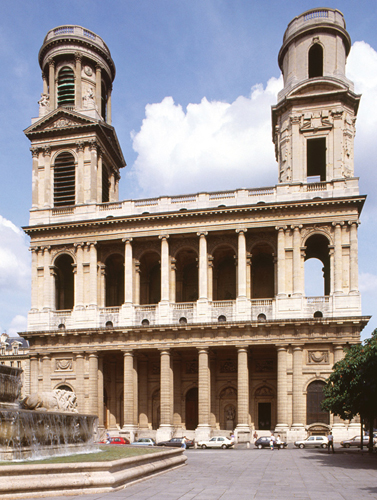
St-Sulpice
Outstanding
frescoes in the Chapel of the Angels by Eugène Delacroix are the
highlight of this 17th-century church’s otherwise sober interior. With
more than 6,500 pipes, its organ, designed by Jean-François Chalgrin in
1776, is one of the largest in the world. The novelist Victor Hugo
married Adèle Foucher here in 1822 .

St-Sulpice façade