Rome’s Top 10 : Ostia Antica (part 2) – Moments in History & Top 10 Influential Popes

Moments in History

  1. Romulus and Remus

    The
    foundation of Rome is said to have occurred in 753 BC. Twins Romulus
    and Remus, sons of Mars and a Vestal Virgin, were set adrift by their
    evil uncle and suckled by a she-wolf. They then founded rival Bronze Age
    villages on the Palatine, but Romulus killed Remus during an argument,
    and his “Rome” went on to greatness.

  2. Rape of the Sabine Women

    To
    boost the female population in the 750s BC Romulus’s men kidnapped
    women from the neighbouring Sabine kingdom. As Rome began to expand,
    however, the kingdoms were united. Rome was later conquered by the
    Etruscan Tarquin dynasty. In 510 BC, a patrician-ruled Republic was
    formed that lasted more than 450 years.

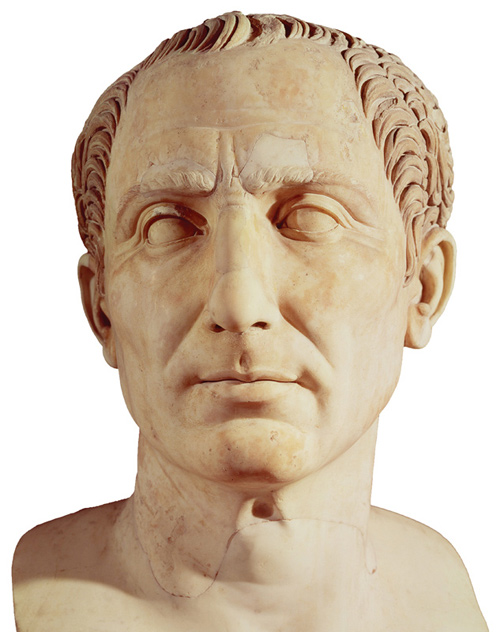
  3. Assassination of Caesar

    A
    series of military victories, adding Gaul (France) to Rome, increased
    General Julius Caesar’s popularity. He marched his army to Rome and
    declared himself Dictator for Life, but on 15 March 44 BC he was
    assassinated. Caesar’s adopted son Octavian changed his name to Augustus
    and declared himself emperor in 27 BC.


    Bust, Julius Caesar

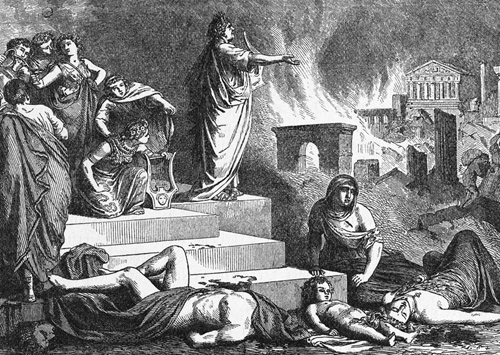
  4. Rome Burns

    In
    AD 64 fire destroyed much of Rome. Emperor Nero rebuilt many public
    works, but also appropriated vast tracts of land to build his Golden
    House. Hounded from office, he committed suicide in AD 68 .


    Rome burns

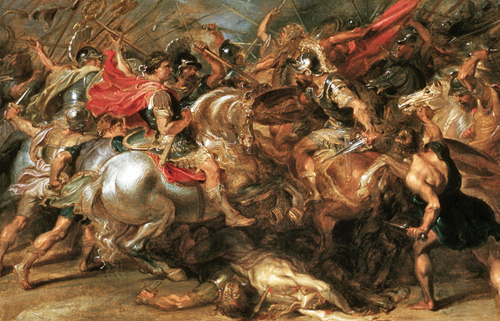
  5. Battle at Milvian Bridge

    In
    312 Emperor Constantine, whose mother was a Christian, had a vision of
    victory under the sign of the Cross and defeated co-emperor Maxentius at
    Milvian Bridge. He declared Christianity the state religion.


  6. Fall of the Empire

    By
    the late 4th century Rome was in decline, as Barbarians from across the
    Rhine and Danube conquered outlying provinces. In 476, the last emperor
    was deposed and the Empire fell.

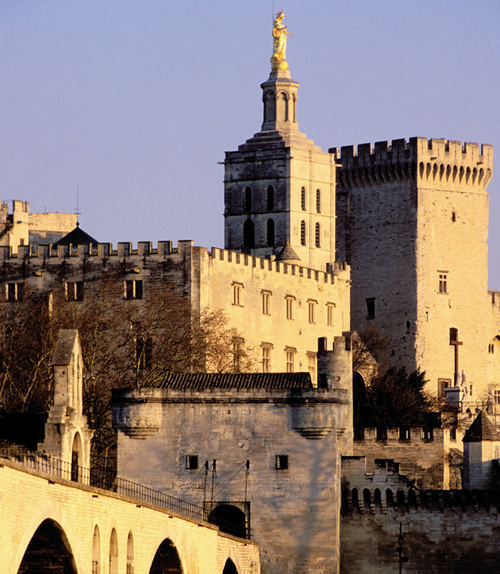
  7. Papacy moves to Avignon

    Following
    the departure of the papacy to France in 1309, the city became a
    backwater ruled by petty princes who built palaces out of marble from
    the great temples. In 1377 the papacy returned to Rome, and the city was
    reborn.


    Papal Palace, Avignon

  8. Sack of Rome

    Rome
    was conquered for the first time in more than a millennium in 1527.
    Emperor Charles V’s Germanic troops held the city for seven months until
    Pope Clement VII surrendered and promised to address concerns of the
    new Protestant movement.

  9. Unification of Italy

    Piemontese
    King Vittorio Emanuele II and his general, Garibaldi, spent years
    conquering the peninsula’s kingdoms and principalities to create a new
    country called Italy. In 1870, Garibaldi breached the Aurelian walls and
    took the ancient capital, completing Italian Unification.

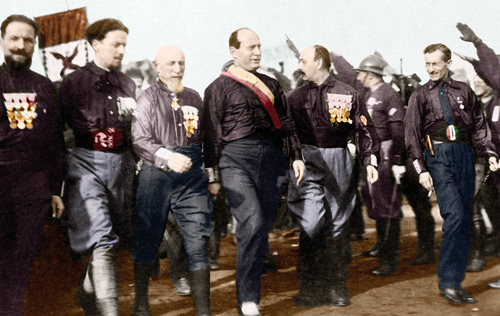
  10. Mussolini Takes Power

    Benito
    “Il Duce” Mussolini, leader of the nationalistic Fascist Party, marched
    on Rome in 1922 and was declared prime minister. Delusions of imperial
    grandeur led him to excavate many of the ruins we see today. He allied
    Italy with Hitler, but when the tides turned, Mussolini was deposed and
    Italy joined Allied troops. The current Republic was set up in 1946.


    Mussolini and Fascists march on Rome, 1922
Top 10 Influential Popes

  1. St Peter

    The
    Apostle (AD 42–67) tapped by Jesus to lead the church. After his
    martyrdom in Rome the city became the epicentre of Christianity.

  2. St Leo the Great

    Rome’s bishop (440–61) made himself pontifex maximus of the Christian church.

  3. St Gregory the Great

    Affirmed the papacy as the western secular leader and converted England to Christianity (590–604).

  4. Innocent III

    This medieval pope (1198– 1216) hand-picked emperors and approved monkish orders.

  5. Boniface VIII

    Imperious, pragmatic and power-hungry, Boniface (1294–1303) instituted the first Jubilee to make money.

  6. Alexander VI

    Ruthless Borgia pope (1492–1503) used the pontificate to destroy rival families.

  7. Julius II

    Warrior
    pope and patron of the arts (1513–21), he hired Michelangelo for the
    Sistine Chapel and Raphael to decorate his apartment .

  8. Paul III

    Scholarly and secular, but fighting Protestant reforms, Paul III (1534–49) founded the Jesuits and the Inquisition.

  9. Sixtus V

    Cleansed Papal States of corruption (1585–90) and masterminded a Baroque overhaul of Rome.

  10. John Paul II

    The first non-Italian Pope for over 400 years, John Paul II (1920-2005), was famed for his extensive travelling.