John Winthrop (1587–1649)
Acting
on a daring plan put together by English Puritans in 1629, Winthrop led
approximately 800 settlers to the New World to build a godly
civilization in the wilderness. He settled his Puritan charges at Boston
in 1630 and served as the governor of the new Massachusetts Bay Colony until his death.Increase Mather (1639–1723)
Educated
at Harvard, preacher Increase Mather solidified the hold of Puritan
theologians on the Massachusetts government. When William took the
English crown, Mather persuaded the king to grant a charter that gave
the colony the right to elect the council of the governor in 1691. His
influence was later undermined by his support of the 1692 Salem witch
trials.Samuel Adams (1722–1803)
Failed businessman Samuel Adams
became Boston’s master politician in the tumultuous years leading up to
the revolution. Adams signed the Declaration of Independence and served
in both Continental Congresses. As governor of Massachusetts, he joined
Paul Revere in laying the cornerstone of the State House in 1795.Paul Revere (1735–1818)
Best
known for his “midnight ride” to forewarn the rebels of the British
march on Concord, Revere served the American Revolution as organizer,
messenger, and propagandist. A gifted silversmith with many pieces in
the Museum of Fine Arts, he founded the metalworking firm that gilded the State House dome and sheathed the hull of the USS Constitution.Harrison Gray Otis (1765–1848)
In
the 1790s, Harrison Gray Otis and James Mason transformed Beacon Hill
from a hilly pasture into a chic neighborhood that embodies the Federal
building style. Otis championed the architecture of Charles Bulfinch,
and three of his Bulfinch-designed houses still grace Beacon Hill,
including the one now known as Harrison Gray Otis House.Donald McKay (1810–1880)
McKay
built the largest and swiftest of the clipper ships in his East Boston
shipyard in 1850. The speedy vessels revolutionized long-distance
shipping at the time of the California gold rush and gave Boston its
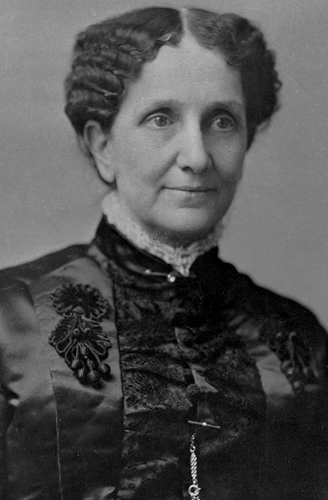
last glory days as a mercantile port before the rise of rail transport.After recovering from a major accident, Eddy wrote Science and Health with Key to the Scriptures,
the basis of Christian Science. She founded a church in Boston in 1879,
and in 1892 reorganized it as the First Church of Christ, Scientist . Eddy also established the Pulitzer prize-winning Christian Science Monitor newspaper in 1908.

Mary Baker Eddy
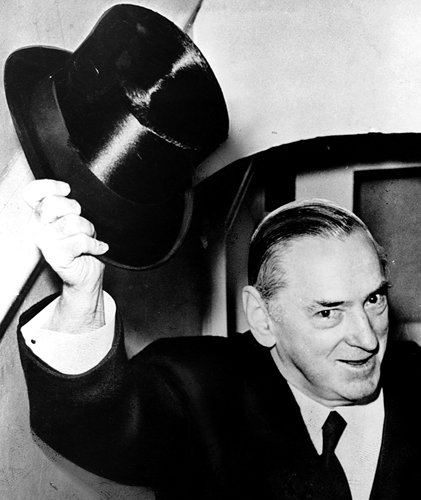
James Michael Curley (1874–1958)
Self-proclaimed
champion of “the little people,” Curley used patronage and Irish pride
to retain a stranglehold on Boston politics from his election as mayor
in 1914 until his defeat at the polls in 1949. Known as “the rascal
king” he embodied political corruption but created many enduring public
works.

James Michael Curley
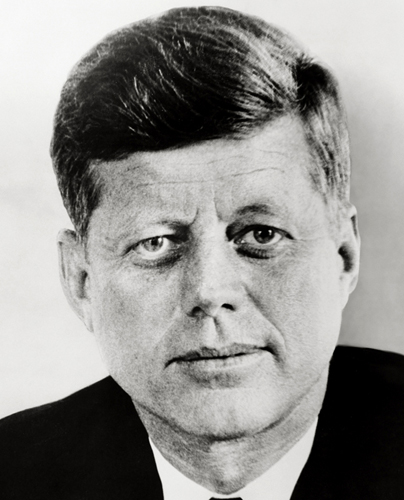
John F. Kennedy (1917–1963)
Grandson
of Irish-American mayor John “Honey Fitz” Fitzgerald and son of
ambassador Joseph Kennedy, John F. Kennedy represented Boston in both
houses of the US Congress before he became the first Roman Catholic
elected president of the United States. The presidential library at Columbia Point exhibits his brief, but intense, period in office.

John F. Kennedy
W. Arthur Garrity, Jr. (1920–1999)
In
1974, US District Court judge Garrity ruled that African-American
students had been denied their constitutional rights to the best
available education. He ordered a desegregation plan for Boston’s 200
schools, setting off protests, some violent, in predominantly white
neighborhoods.