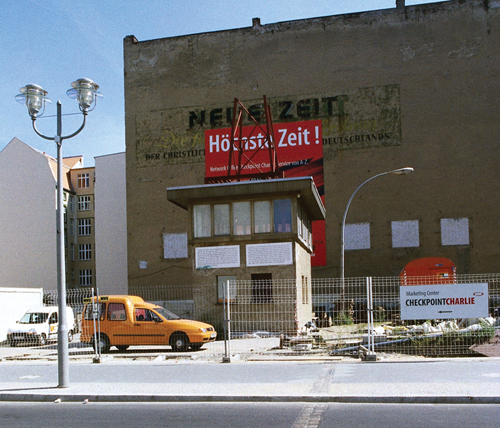
At Checkpoint Charlie
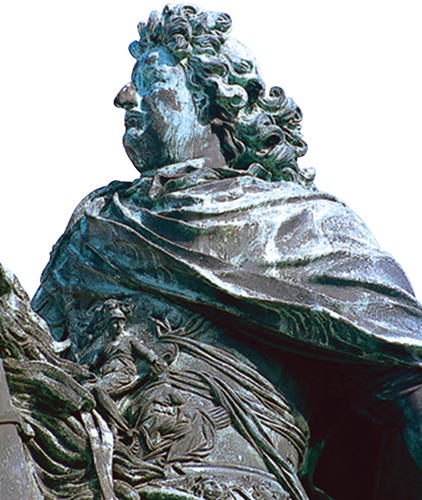
1685: Edict of Potsdam
Berlin’s
history as a cultural capital began in 1685, when the far-sighted Great
Elector announced in the Edict of Potsdam that around 20,000 Huguenots
would be taken in by Berlin. Many were excellent craftsmen and
scientists, who, having fled Catholic France because of their Protestant
beliefs, brought a new age of cultural ascendancy to the provincial
town.

Statue of the Great Elector
1744: Frederick the Great
Although
“Old Fritz”, as Frederick the Great was nicknamed, preferred the
isolation of Sanssouci to the bustle of Berlin, in 1740 he began to
transform the city into a new metropolis. In particular, the “Forum
Fridericianum” in Unter den Linden brought new splendours to the town,
and masterpieces such as the national opera house helped transform
Berlin into one of the most important European cities.1928: Golden Twenties
Between
1919 and 1933, Berlin flourished culturally and became an important
metropolis. Film, theatre, cabaret shows and thousands of restaurants
and bars transformed the town into an international centre of
entertainment. In the realms of fine art and architecture, too, Berlin
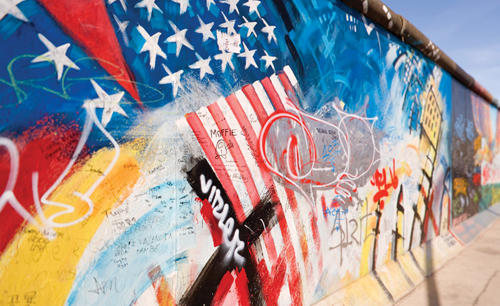
set new standards.1961: Building of the Wall
The
building of the Berlin Wall, which commenced during the night of 12
August 1961, was, after the surrender of 1945, the second most traumatic
event for many Berliners. Many families were torn apart by the concrete
wall and more than 100 people were to be killed over the following 30
years at the border dividing East and West.

1963: “I am a Berliner”
No
other politician was as enthusiastically received in Berlin as the US
President John F. Kennedy. On 17 July 1963, in front of Rathaus
Schöneberg, he declared to the cheering crowd: “I am a Berliner”.
Berliners had forgiven the US for staying silent when the Wall was
built. Kennedy confirmed once more that the Western Allies would stand
by Berlin and support the town, just as they had done during the
blockade of 1948–9, when the US and Britain air-lifted food to the
“island” of West Berlin.The
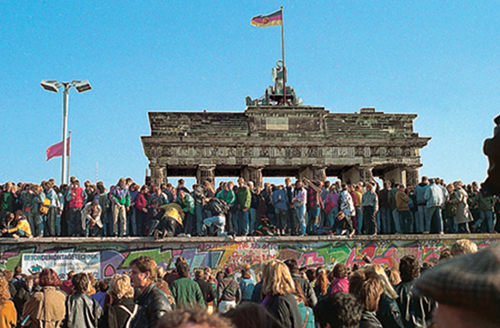
fall of the Berlin Wall in November 1989 heralded a new dawn. For the
first time in 30 years, Berliners from both halves of the divided city
were able to visit each other. The town celebrated all along Ku’damm and
in front of the Brandenburg Gate. When the Wall was built, Willy
Brandt, then governing mayor of West Berlin, had promised: “Berlin will
survive!” He was right.

Celebrations after the Fall of the Berlin Wall
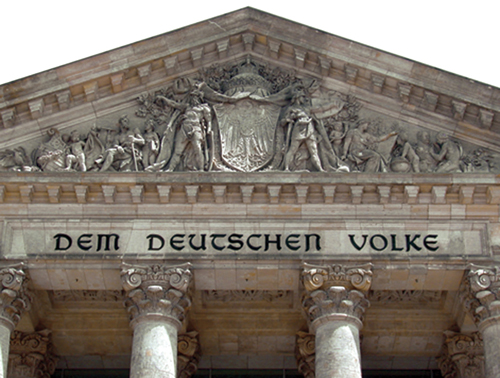
1991: Berlin becomes the capital of Germany
In
1991, Berlin was officially declared the capital of the reunified
Federal Republic of Germany. Allied Forces left the city during 1994,
but it was only when the Bundestag, the German parliament, moved here
from Bonn on 19 April 1999 that Berlin became the “real” capital. Today,
all the main ministries, the Bundesrat (upper house), and the
Chancellor’s and the President’s offices are based in Berlin.

1991: Berlin becomes the capital