Chicago’s Top 10 : Skyscrapers

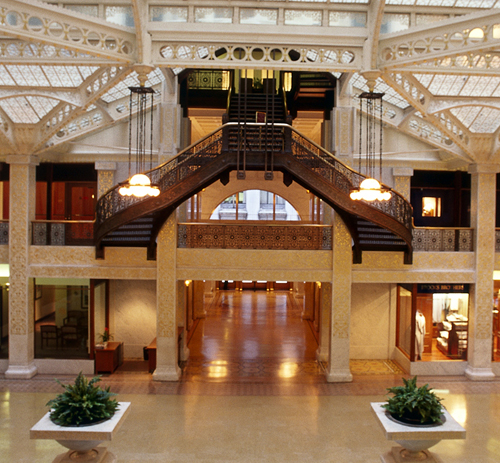
  1. The Rookery

    One of the earliest remaining skyscrapers, this 1888 Chicago landmark combines traditional wall-bearing and newer steel frame construction.
    The latter made it possible for its architects, Burnham and Root, to
    design an open interior, with office spaces set around a central light
    well.


    The Rookery

  2. Auditorium Theatre

    Built
    by Adler and Sullivan in 1889, the ornate Auditorium also originally
    contained a hotel and office building and had one of the first public
    air-conditioning systems. The revamped 4,000-seat theater boasts
    near-perfect acoustics.

    • 50 E.Congress Pkwy

    • For tours call 312 431 2354


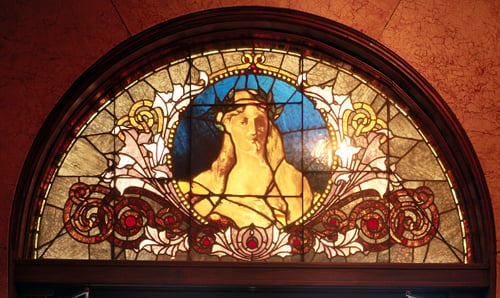
    Art glass, Auditorium Theatre

  3. Monadnock Building

    Constructed
    in two stages, this Loop edifice represents the evolution of skyscraper
    architecture. The northern half was built in 1891 using solely
    wall-bearing construction, while the southern half was built two years
    later and incorporated the then emerging steel-frame technology that is
    still used today .


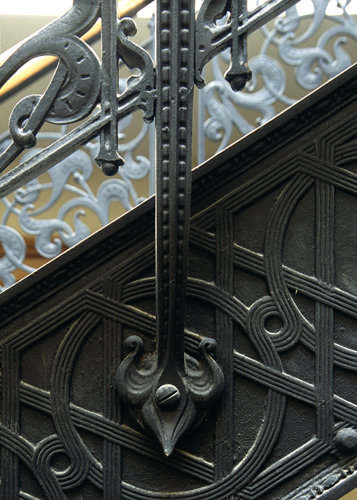
    Detail of staircase, Monadnock Building

  4. Reliance Building

    The
    steel skeleton on this 1895-built skyscraper allowed it to be wrapped
    in glass. It offers an excellent example of the Chicago window, which is
    characterized by a bay window placed between two narrow, double-hung
    windows – a signature feature of the Chicago school of architecture.
    Occupied by the Hotel Burnham the interior sports replicas of original features .

  5. 860–80 N. Lakeshore Drive

    You
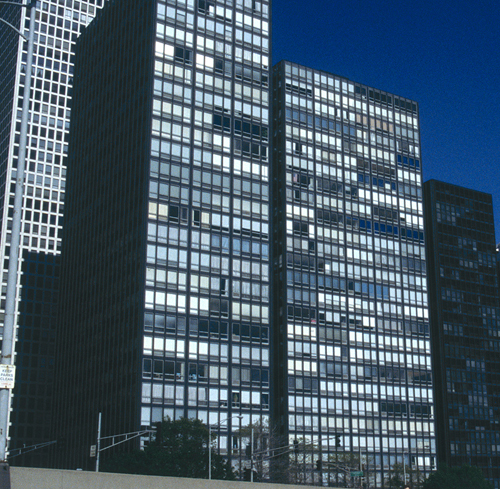
    might think these two highrise apartment buildings (1949–51) look like
    many others along this tony strip. Actually, the others look like these.
    German architect Mies van der Rohe perfected the “less is more”
    approach which so many other architects went on to copy.


    860–80 N. Lakeshore Drive

  6. Marina City

    With
    its twin cylindrical structures (1959–64) on the Chicago River, Marina
    City is a “city within a city,” containing offices, residences, a
    theater, a grocery store, and more. The apartments start on the 21st
    floor, affording spectacular views, but their slice-of-pie shape creates
    some interior decorating challenges.
  7. Sears Tower

    This
    soaring tower, built in 1974 as the headquarters of retailer Sears
    Roebuck and Co. (who have since moved out), can be seen from almost
    anywhere in the city. Its Skydeck affords sensational views .

  8. 333 W. Wacker Drive

    The
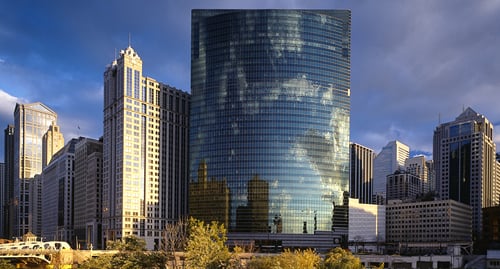
    graceful curve of this triangular, tinted-glass office building (1983)
    hugs the Chicago River. The water, together with the changing light and
    clouds create dynamic reflections: the green and silver lobby continues
    the shimmering show.


    333 W. Wacker Drive

  9. James R. Thompson Center

    From
    inside the circular atrium of this magnificent 17-story building
    (1985), a quick glance up is almost dizzying. Take the elevator to the
    top for an impressive view of the stunning marble rosette on the
    concourse level .

  10. Ogilvie Transportation Center

    Rising
    40 stories in waves of glass and steel is this striking 1996-rebuilt
    commuter train station (aka the Northwestern Station). Its streamlined
    façade mimics a vintage luxury train.

    • 500 W. Madison St.


Top 10 Architects

  1. William Le Baron Jenney

    The “father of the skyscraper” (1832–1907) who designed the first all-metal-framed structure in 1885.

  2. Daniel Burnham

    Visionary city planner and architect, Burnham (1846–1912) was the man behind the White City .

  3. William Holabird & Martin Roche

    This influential team (Holabird 1854–1923; Roche 1855–1927) developed early Chicago-style skyscrapers including the Marquette Building.

  4. Louis H. Sullivan

    The creator (1856–1924) of the “form follows function” doctrine designed according to a building’s intended use.

  5. Frank Lloyd Wright

    Inspired by the wide open spaces of the Midwest, Wright was the originator of the Prairie style.

  6. George Maher

    A Prairie School architect (1864–1926) who favored Arts and Crafts motifs.

  7. Walter Burley Griffin

    Another Prairie–style architect (1876–1937) with a namesake historic district on Chicago’s Southside.

  8. Ludwig Mies van der Rohe

    Minimalist architect (1886–1969) and creator of the modern glass-and-steel box.

  9. Bertrand Goldberg

    A pupil of Mies van der Rohe who rebelled to produce curvilinear concrete shapes.

  10. Harry Weese

    A Modernist (1915–98), but one sympathetic to existing buildings of merit.