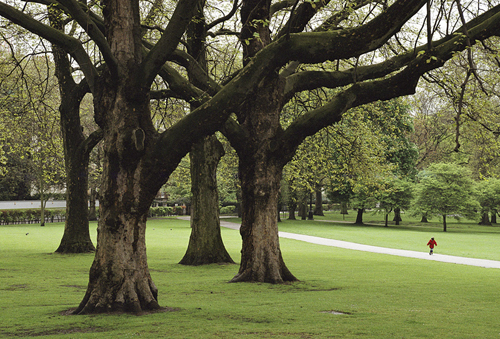
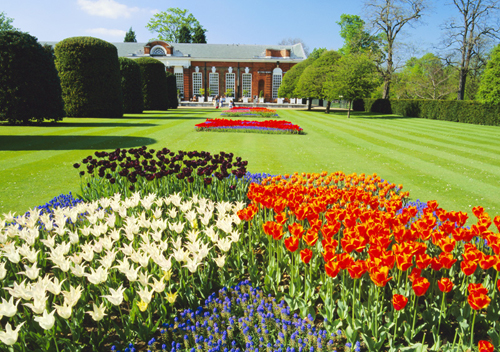
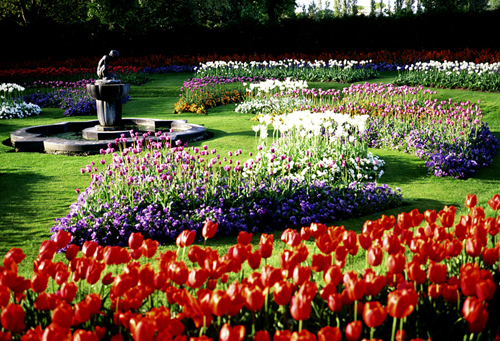
Buckingham Palace overlooks two of London ‘s most
central Royal Parks – St James’s and Green Park – and is just a short
walk from Hyde Park and Kensington Gardens. Along with the other London
parks, these provide year-round pleasure and an invaluable retreat for
all who live, work and visit the city. Many offer facilities for tennis,
riding and boating, as well as opportunities for other activities.
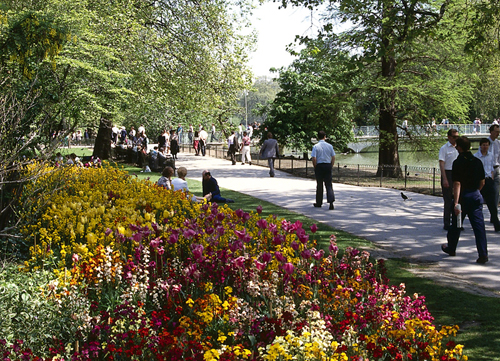
Picnicking in the park while a band plays is one of London’s greatest
summer joys.
Much of the land of
London’s Royal Parks was taken from the Church by Henry VIII in the
1530s, during the Reformation. He was a passionate hunter and filled
Hyde, Green and St James’s parks with deer. Henry also hunted in
Greenwich Park, London’s oldest, having been founded in 1433. From the late 17th
century, parks were landscaped and gardens laid out. In 1689 William and
Mary ordered the planting of Kensington Gardens. In 1811 the Prince
Regent and Nash built the private estate that became Regent’s Park. |
Most of the larger parks have a number of open-air cafés, restaurants and ice-cream stands. |
|
Parks open at dawn and
close at sunset (around 9:30pm in summer). Don’t get caught in the
middle of large parks just as the sun goes down. |
|
Open-air concerts,
festivals and other events are regularly held in Hyde Park, Regent’s
Park and St James’s Park in the summer months. |
|
Top 10 Green Spaces
Hyde Park
One of the most popular features of this huge London park
is its lake, the Serpentine, with boats for rent and a swimming area.
Horses can be rented and ridden in the park. On Sundays at Speakers’
Corner, near Marble Arch, you can get up on a soapbox and address the
crowds who gather there.

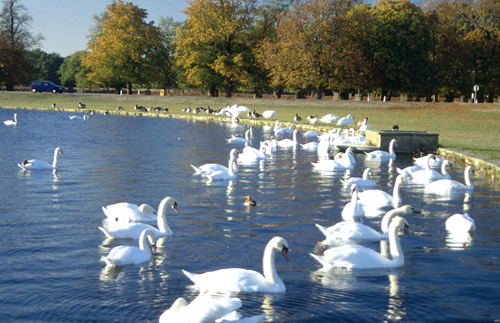
St James’s Park
London’s
most elegant park was laid out in the 18th century by Capability Brown.
Its lake is home to some 40 varieties of waterfowl. It has an
attractive café and, in summer, lunchtime concerts are given on the
bandstand .

Kensington Gardens
A
continuation of Hyde Park, Kensington Gardens was opened to the public
in 1841. More recently, the magical Diana, Princess of Wales memorial
playground has proved a great hit with children.

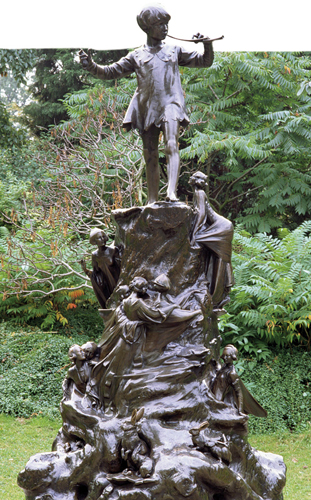
Statue of Peter Pan in Kensington Gardens

Regent’s Park
Home
to London Zoo and an open-air theatre, Regent’s Park is surrounded by
John Nash’s Classical terraces. The fragrant Queen Mary’s Rose Garden is
a delight .

Green Park
Popular
with office workers, this small park has deckchairs for hire in summer.
It was once part of the grounds of St James’s Palace.

Greenwich Park
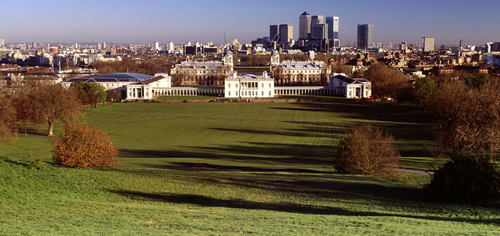
The
0° longitude meridian passes through the Royal Observatory Greenwich,
located on a hill in this leafy family park. There are great views of
the Old Royal Naval College, and over London .

Richmond Park
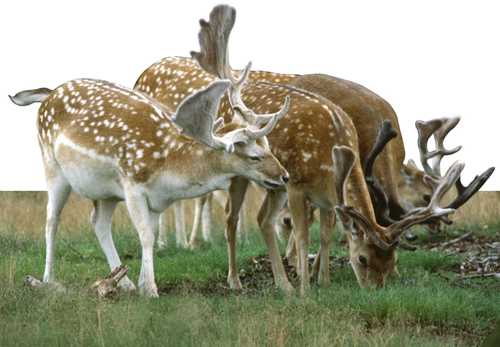
Covering
an area of 2,500 acres, this is by far the largest Royal Park. Herds of
red and fallow deer roam freely across the heath. In late spring, the
Isabella Plantation is a blaze of colourful rhododendrons. The Royal
Ballet School is based in the White Lodge, originally built for George
II in 1727.

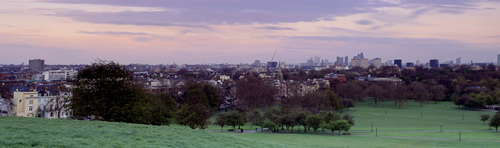
Primrose Hill
North
of Regent’s Park, Primrose Hill offers spectacular views of the city
skyline from its 66-m (216-ft) summit. Once a popular venue for duels,
this small park was saved from development in 1841 when it was taken
over by the Crown Commissioners.

Bushy Park
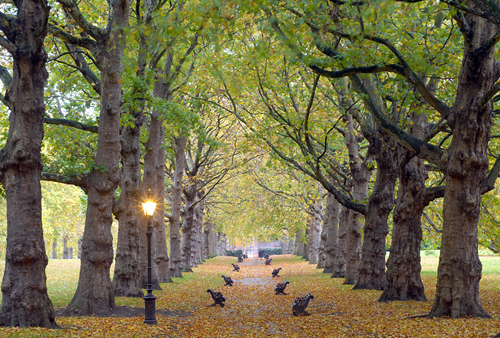
Chestnut
Sunday in May, when the trees’ blossoms are out, is one of the best
times to come to Bushy Park, near Hampton Court. Highlights include the
Arethusa “Diana” Fountain and Chestnut Avenue.

Grosvenor Square
The
hub of high society from the early 18th century until World War II,
Grosvenor Square is the only London square that is owned by the Crown.
On its west side stands the imposing American Embassy.