The National Museum of Rome, with its excellent
Classical art collection, grew too vast for its home in the Baths of
Diocletian, which closed in 1981. In 1998 the collection was split
between various sites, becoming a truly modern, 21st-century museum. The
Ludovisi, Mattei and Altemps collections of sculpture moved into the
gorgeous 16th-century Palazzo Altemps near Piazza Navona (see Palazzo Altemps Collection).
The 19th-century Palazzo Massimo alle Terme, a former Jesuit College
near Termini, received some of the best individual sculptures, as well
as ancient mosaics and fantastic frescoes, some never previously
displayed, as detailed below. The ancient Aula Ottagona inherited the
oversized bathhouse sculptures; the Baths of Diocletian re-opened in
2000 with an important epigraphic collection and exhibition space.
Palazzo Massimo alle TermeLargo di Villa Peretti 1 06 3996 7700 Open 9am–7:45pm Tue–Sun Adm €7.00
Palazzo Altemps |
The Palazzo Massimo
exhibits all its statuary relating to Republican and Early Imperial Rome
(up to Emperor Augustus) on the ground floor, along with a few precious
earlier, Greek pieces. The first floor exhibits detail art in the
political, cultural and economic spheres of Imperial Rome up to the 4th
century. The second floor, which must be visited on a timed-entry
ticket, preserves ancient mosaics and frescoes. The numismatic
collection is in the basement, alongside some gold jewellery and a
mummified eight-year-old girl. |
From Palazzo Altemps, pop into Piazza Navona for refreshments at Tre Scalini . |
|
Call ahead for Palazzo Massimo tickets, as the frescoes and mosaics on the top floor are timed entry-only. |
|
Top 10 Exhibits
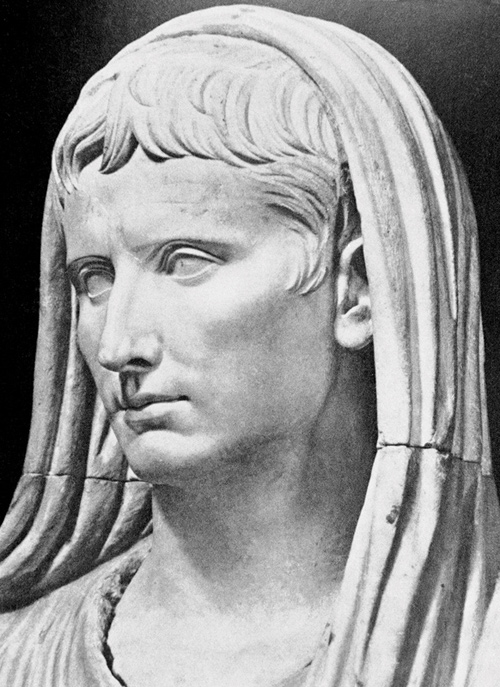
Statue of Augustus
This
statue of Rome’s first emperor once stood on Via Labicana. It shows
Augustus wearing his toga draped over his head – a sign that, in AD 12,
he added the title Pontifex Maximus (high priest) to the list of honours he assigned himself.

Triclinium Frescoes
These frescoes (20–10 BC) depicting a lush garden came from the villa of Augustus’s wife, Livia. They were in the triclinium, a dining pavilion half-buried to keep it cool in summer.
Four Charioteers Mosaic
The
imperial Severi family must have been passionate about sports to have
decorated a bedroom of their 3rd-century AD villa with these
charioteers. They are dressed in the traditional colours of the Roman
circus’s four factions.
Wounded Niobid
This
hauntingly beautiful figure of Niobid (daughter of Queen Niobe),
reaching for the fatal arrow that killed her siblings, was sculpted
around 440 BC for a Greek temple, and was later acquired by Julius
Caesar.
Leucotea Nursing Dionysus
A
luxuriously frescoed villa, discovered in 1879, included this bedroom
scene of the nymph nursing the wine god with additional scenes in the
niches.
Bronze Dionysus
Few
large Classical bronzes survive today, making this 2nd-century AD
statue special beyond its obvious grace, skill and preserved decoration.
You can still see the yellow eyes, red lips and a comb band in the
grape-festooned hair.
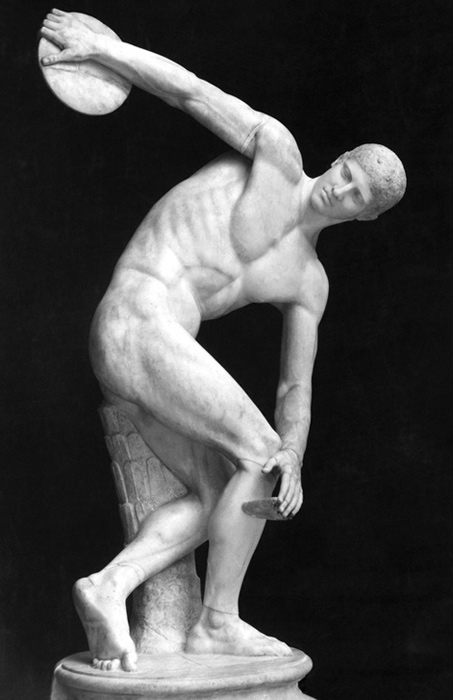
Discus Thrower
This
2nd-century AD marble copy of the famous 450 BC Greek original by Myron
is faithful to the point of imitating the original bronze’s imperfect
dimensions.

Ostia Altar
This
Trajan-era altar connects the foundation of Rome to the divine consorts
Mars and Venus. Mars is shown as father to Rome’s legendary founder
Romulus;
Venus bears the hero Aeneas, who fled Troy for Rome and consequently
founded the Iulia dynasty (Julius Caesar’s own, invented family tree).
Scenes from the Basilica of Giunio Basso
Colourful
marble inlays represent paganism’s dying grasp among prominent Roman
families. The empire had converted to Christianity by AD 331 when consul
Giunio Basso (pictured as a charioteer in one panel) commissioned the
scenes for his meeting hall.
Numismatic Collection
Italian
coinage and currency is on display here, from the Roman Republic and
Empire coins through to the medieval and Renaissance principalities, to
the lira and the euro.