Palazzo dei Conservatori Exhibits
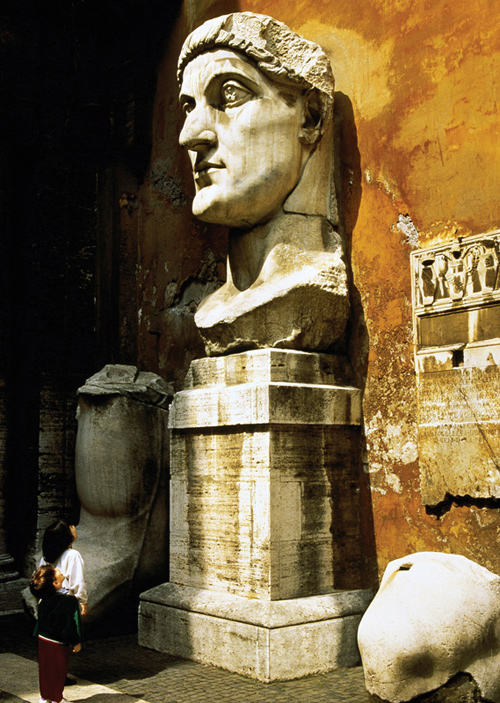
Colossal Statue of Constantine Fragments
Found
in the ruins of the Basilica of Maxentius and Constantine, these
surreal outsized body parts (c.AD 313–24) formed the unclothed segments
of an overwhelming seated effigy of the first Christian emperor,
recognizable by his protuberant eyes. The rest of the sculpture was made
of carved wood dressed in sheets of bronze.

Lo Spinario
One
of the precious bronzes that comprised Sixtus IV’s donation to the
people of Rome, this charming sculpture dates from the 1st century BC.
Hellenistic in its everyday subject matter, the head recalls more
archaic models. The boy’s unusual and graceful pose inspired many works
during the Renaissance.Guercino’s Burial of St Petronilla
The
influence of Caravaggio is clearly evident in this huge altarpiece,
executed for St Peter’s Basilica between 1621 and 1623. Powerful effects
of light and dark combined with pronounced musculature and
individuality of the figures bring the work directly into the viewer’s
physical world.Caravaggio’s Gypsy Fortune-Teller
An
earlier work by Caravaggio, but just as revolutionary as his St John
the Baptist. This subject is taken from everyday street life in late
16th-century Rome, which the painter knew intimately. Notice that the
gypsy is slyly slipping the ring from the unsuspecting young dandy’s
finger.Bust of L. Junius Brutus
Dating
from between the 4th and 3rd centuries BC, this bronze bust is possibly
the rarest object in the museum. Its identification as the first Roman
consul is uncertain, because it also resembles Greek models of poets and
philosophers. Its intense, inlaid glass eyes make it one of the most
gripping portraits.Pietro da Cortona’s Rape of the Sabines
Baroque
painting is said to have begun with this work (c.1630), where symmetry
is abandoned and all is twisting, dynamic movement. It depicts an early
episode in Roman history: the new city had been founded but the
population lacked women, so they stole those of the neighbouring Sabine
tribe .Bust of Commodus as Hercules
The
2nd-century emperor, who loved to fight wild animals in the Colosseum,
had himself represented as the demigod Hercules, to promote his own
divinity. The club in his right hand, the lion’s mantle and the apples
of the Hesperides in his left hand are all symbols of Hercules’ labours.