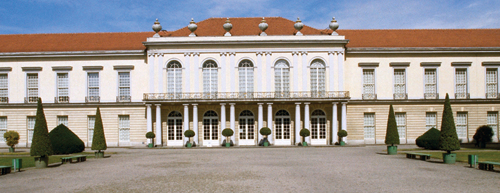
The construction of Schloss Charlottenburg, designed
as a summer residence for Sophie Charlotte, wife of the Elector
Friedrich III, began in 1695. Between 1701 and 1713 Johann Friedrich
Eosander added a cupola and the Orangerie was extended. Today, it has
been extensively renovated.
Spandauer DammAltes SchlossNeuer Flügel10am–5pm Wed–Mon 030 32 09 11
BelvedereNeuer PavilionMausoleumMuseum BerggruenSchloßstr 1 10am–6pm Tue–Sun 030 326 95 80
|

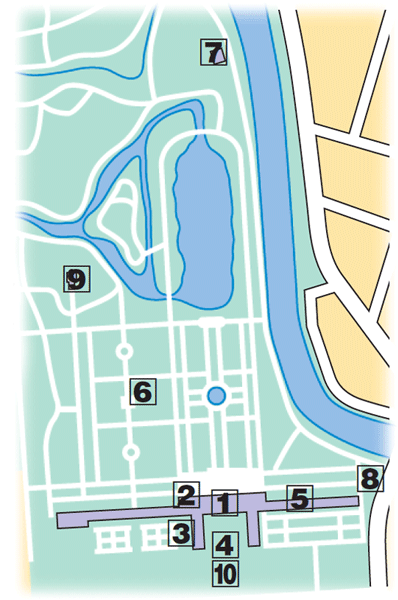
Palace Layout

Schloss Charlottenburg
The Orangery Café (left of the main entrance) has an attractive garden. |
|
At weekends, the palace park is overcrowded, but a midweek early-evening stroll can be very romantic (open 6am–dusk). |
|
Top 10 Sights
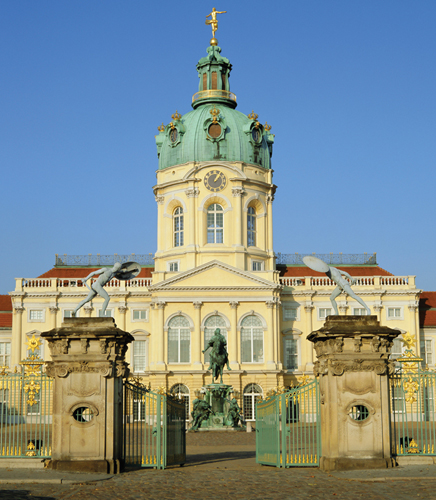
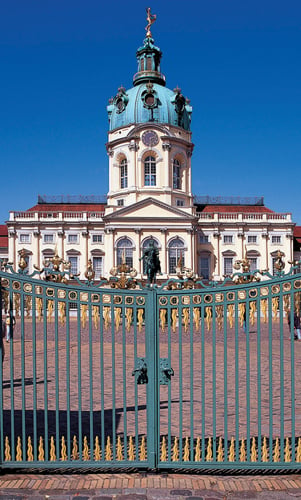
Altes Schloss
The
Baroque tower of the oldest part of the palace (1695) by Johann Arnold
Nering is crowned by Richard Scheibe’s golden statue of Fortuna.

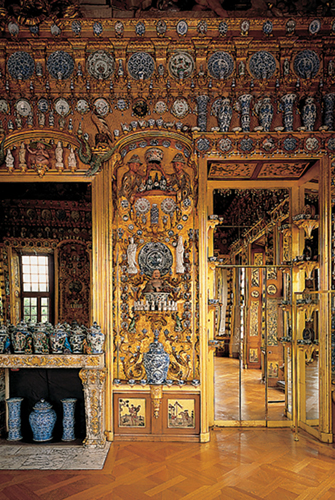
Porzellankabinett
The
small, exquisite mirrored gallery has been faithfully restored to its
original glory. Valuable porcelain items from China and Japan are on
display.

Schlosskapelle
The
luxurious splendour of the palace chapel recalls the once magnificent
interior design of the palace, before it was destroyed in World War II.
But appearances can be deceptive: apart from the altar which is
preserved in its original form, the entire chapel – including the king’s
box – is a costly reconstruction.
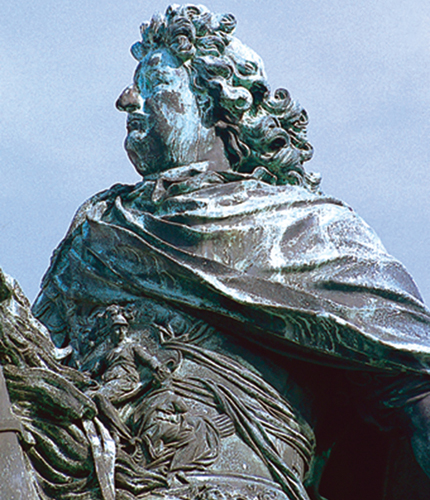
Monument to the Great Elector
The
equestrian monument of Friedrich Wilhelm I is considered to be one of
his most dignified portraits. Made in 1696–1703 by Andreas Schlüter, it
originally stood on the Rathausbrücke, near the destroyed Stadtschloss.

Neuer Flügel
Built between 1740 and 1747 by Georg Wenzeslaus von Knobelsdorff, the new wing contains Frederick the Great’s private quarters.

Schlossgarten
The
palace park, originally Baroque in style, was redesigned by Peter
Joseph Lenné between 1818 and 1828 as an English-style landscape garden.
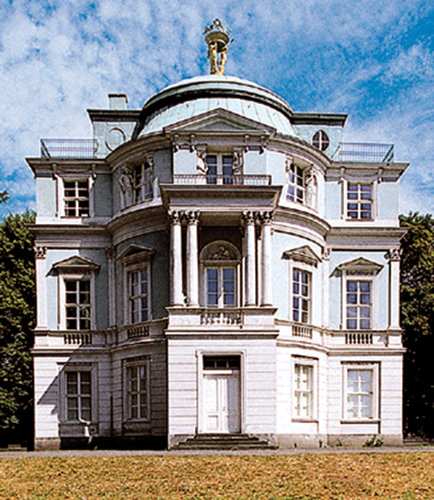
Belvedere
Friedrich
Wilhelm II liked to escape to the romantic Belvedere, a summer
residence built in 1788 by Carl Gotthard Langhans, which served as a tea
pavilion. Today it houses a collection of precious Berlin porcelain
objects.

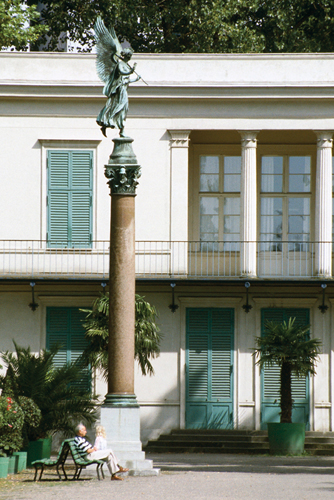
Neuer Pavillon
This
Italianate villa behind the palace, designed by Schinkel for Friedrich
Wilhelm III in 1825, was inspired by the Villa Reale del Chiatamone in
Naples. The pavilion clearly shows the Hohenzollern’s love of the
Italian style.

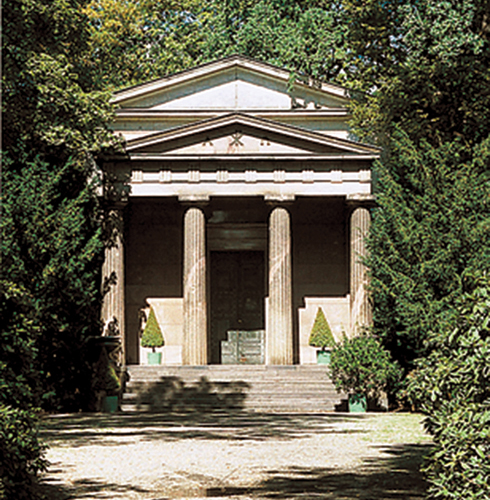
Mausoleum
Slightly hidden, this Neo-Classical building by Schinkel, is the final resting place for Queen Luise and other Hohenzollerns.

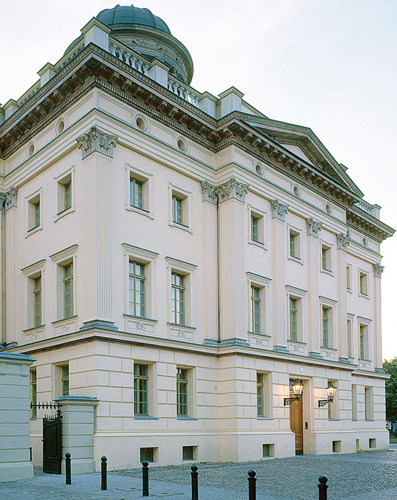
Museum Berggruen
Situated
in the Western Stüler Building, opposite Schloss Charlottenburg, this
modern art gallery houses the permanent exhibition, “Picasso and his
Time”, featuring more than 100 works that span the artist’s career.
Other highlights of the collection include works by Matisse, Klee and
Giacometti.