The Borghese Gallery is one of the world’s greatest
small museums. A half dozen of Bernini’s best sculptures and Caravaggio
paintings casually occupy the same rooms as Classical, Renaissance and
Neo-Classical works. The setting is the beautiful frescoed 17th-century
villa set in the greenery of Villa Borghese park, all of which once
belonged to the great art-lover of the early Baroque, Cardinal Scipione
Borghese. Scipione patronized the young Bernini and Caravaggio, in the
process amassing one of Rome’s richest private collections.
Villa Borghese, off Via Pinciana 06 328 101
www.galleriaborghese.it
www.ticketeria.it (for reservations)
Open 9am–7pm Tue–Sun Adm €10.50, €7.25 EU citizens 18–25, €4students, over 65, journalists Max. viewing time 2 hours
|
Scipione used this
17th-century villa as a showplace for a stupendous antiquities
collection given to him by his uncle, Pope Paul V, to which he added
sculptures by the young Bernini. When Camillo Borghese married Pauline
Bonaparte, he donated the bulk of the Classical sculpture collection to
his brother-in-law Napoleon in 1809. They now form the core of the
Louvre’s antiquities wing in Paris. |


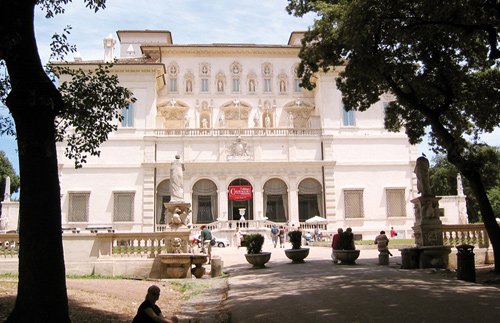
Façade, Galleria Borghese
There’s a decent
café in the museum basement, although the Caffè delle Arti (06 3265
1236) at the nearby Galleria Nazionale d’Arte Moderna is better, with a
park view. |
|
Entrance to the gallery
is strictly by reservation. Book well ahead of time – entries are timed
and tickets often sell out days, even weeks, in advance, especially if
an exhibition is on. |
|
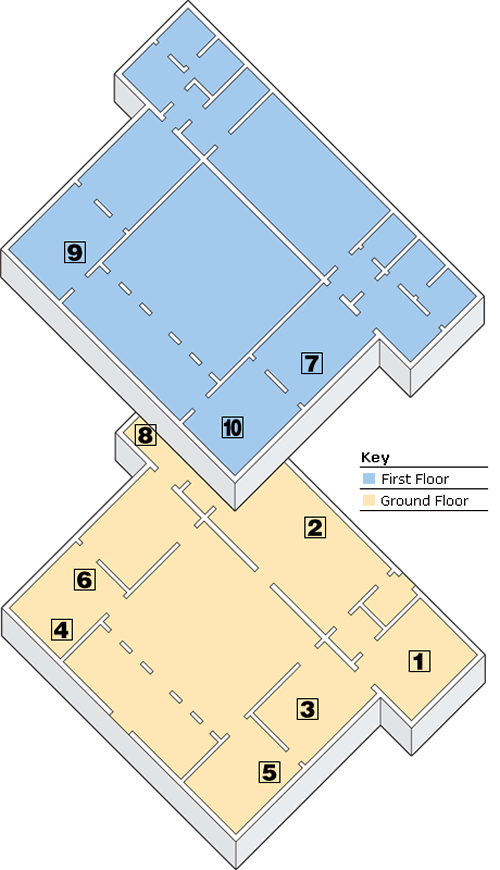
Top 10 Exhibits
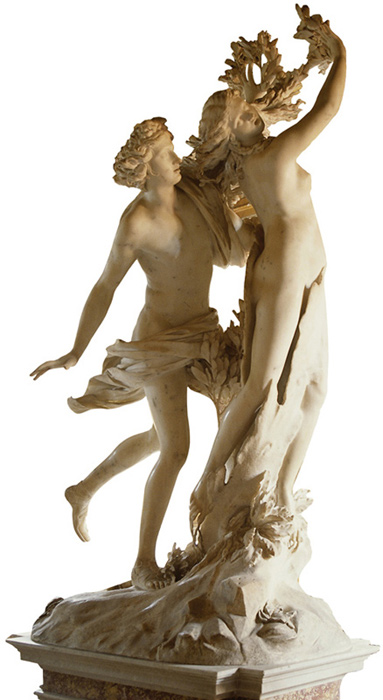
Bernini’s Apollo and Daphne
A
climactic moment frozen in marble (1622–5). As Apollo is inches from
grabbing Daphne, the pitying gods transform her into a laurel.

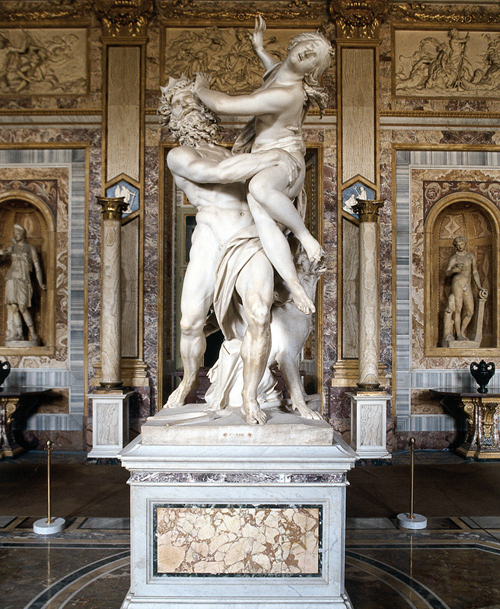
Bernini’s Rape of Persephone
Bernini
carved this masterpiece at age 23 (1621–2). Muscular Hades throws his
head back with laughter, his strong fingers pressing into the maiden’s
soft flesh as she struggles to break free of his grasp.

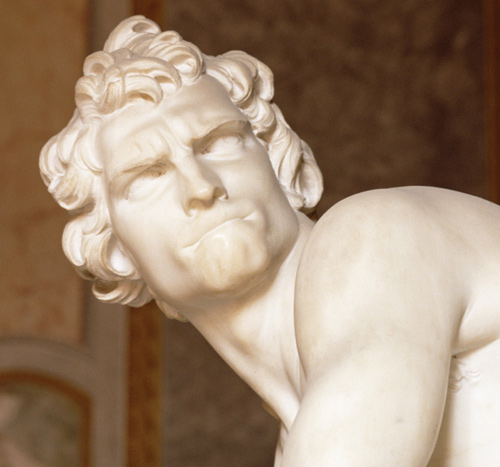
Bernini’s David
Young Bernini’s David (1623–4)) was the Baroque answer to Michelangelo’s Renaissance version. The frowning face is a self-portrait.

Caravaggio’s Madonna of the Serpent
Baroque
tastes disliked this altarpiece’s lack of ornamentation (1605). It
spent only weeks on St Peter’s altar before being moved to a lesser
church then sold to Borghese.
Canova’s Pauline Bonaparte
Napoleon’s
sister caused a scandal with this half-naked portrait (1805–8),
lounging like a Classical goddess on a carved marble cushion.
Caravaggio’s Self-Portrait as a Sick Bacchus
This
early self-portrait (1593) as the wine god was painted with painstaking
detail, supposedly when the artist was ill. It shows finer brushwork
than later works.
Raphael’s Deposition
The
Borghese’s most famous painting (1507), although neither the gallery’s
nor Raphael’s best. The Perugian matriarch Atalante Baglioni
commissioned the work to honour her assassinated son (perhaps the
red-shirted pall-bearer).
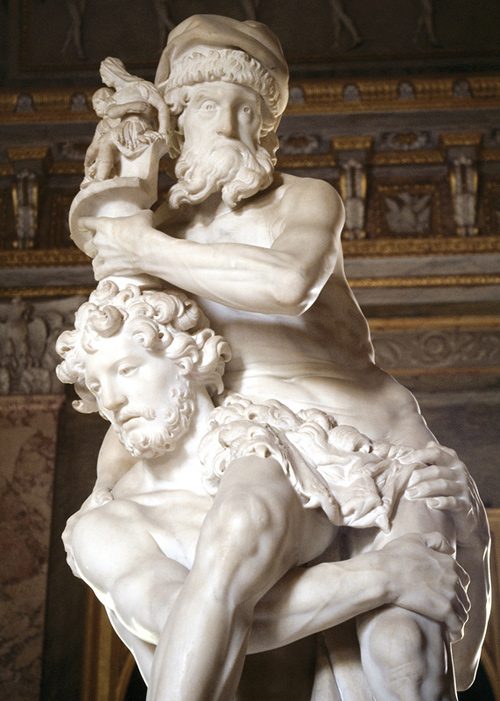
Bernini’s Aeneas and Anchises
Pietro
Bernini was still guiding his 15-year-old son in this 1613 work. The
carving is more timid and static than in later works, but the genius is
already evident.

Titian’s Sacred and Profane Love
Titian’s
allegorical scene (1514), painted for a wedding, exhorts the young
bride that worldly love is part of the divine, and that sex is an
extension of holy matrimony).
Correggio’s Danae
A sensual masterpiece (1531) based on Ovid’s Metamorphoses. Cupid pulls back the sheets as Jupiter, the golden shower above her head, rains his love over Danae.