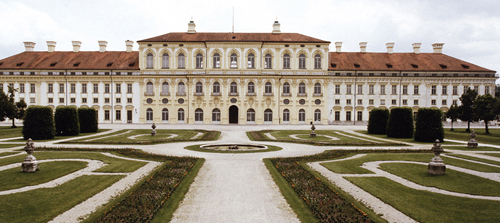
Located in the heart of the city, this former
residence of Bavarian kings and home of the Wittelsbach dynasty until
1918 was gradually transformed from a moated castle (1385) into an
extensive complex with seven courtyards. Highlights include the largest
secular Renaissance building (the Antiquarium), interiors from the 17th
century and the Rococo period, and Leo von Klenze’s Classicist
Königsbau. The complex also houses special collections such as the
silver and church vestments collection, and porcelain from the 18th and
19th centuries.
Residenzstr. 1 U3/U6: Odeonsplatz 089 29 06 71 Open Apr–mid-Oct: 9am–6pm daily; mid-Oct–Mar: 10am–5pm daily (one section of the Residenz is open mornings, one, afternoons) Closed 1 Jan; Shrove Tue; 24, 25 & 31 Dec Adm: €6 (reduced €5); Combined adm to the Residenz and Schatzkammer: €9 (reduced €8, under-18s free)
Cuvilliés TheaterOpen Apr–mid-Jun & Oct: 2–6pm Mon–Sat, 9am–6pm Sun; mid-Jun–Sep: 9am–6pm daily; Nov–Mar: 2–5pm Mon–Sat, 10am–5pm Sun Adm: €3 (reduced €2) Not wheelchair accessible
|
Bavaria’s rulers
built the Residenz over hundreds of years; in just a few hours during
World War II, large sections of it were destroyed. Reconstruction began
immediately after the war ended. Many of the art treasures stored
elsewhere during the war were returned safely – sometimes by circuitous
routes. Visitors can view some 130 rooms documenting princely culture
from four centuries. |

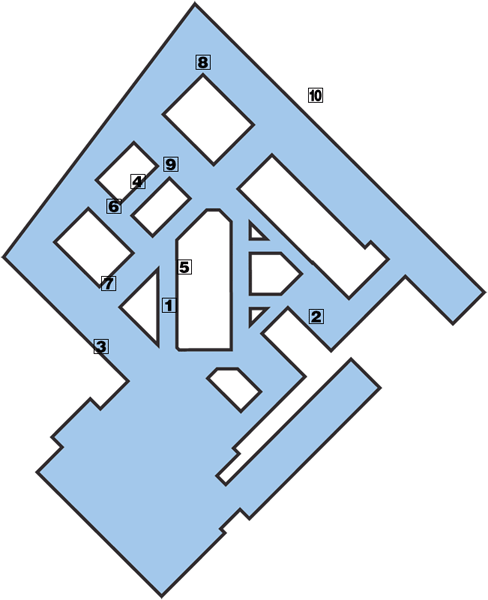
Plan of the Residenz

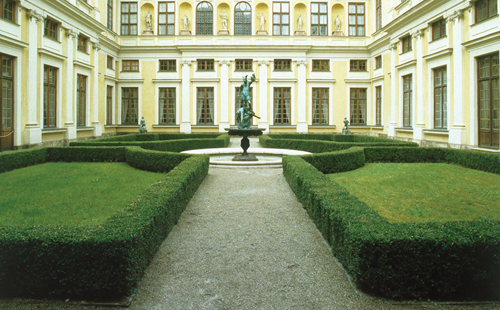
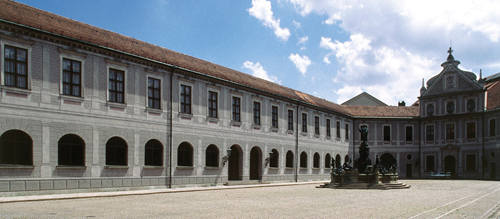
View into the Grottenhof of the Residenz
The historic Café
Tambosi in the Hofgarten offers light meals. The Pfälzer
Residenzweinstube (Residenzstr. 1) offers heartier fare. |
|
There are numerous guided tours in and around the Residenz. |
|
The Coin Collection and the Egyptian Art Museum have separate opening hours and entrance fees. |
|
The Herkulessaal in the Residenz, formerly a throne hall, is a popular concert venue because of its excellent acoustics. |
|
Top 10 Sights
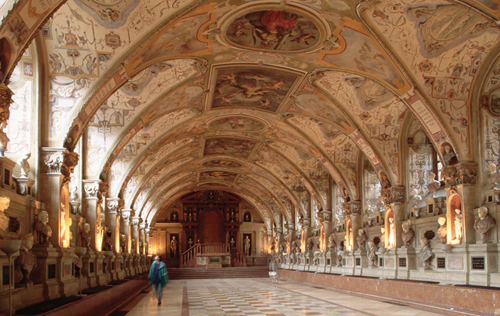
Antiquarium
Commissioned
by Albrecht V, this Renaissance jewel was built between 1568 and 1571.
Allegoric frescoes, grotesques, and Bavarian landscape scenes embellish
the 69-m- (225-ft-) long barrel vault. The Antiquarium was restored
between 1995 and 2000.

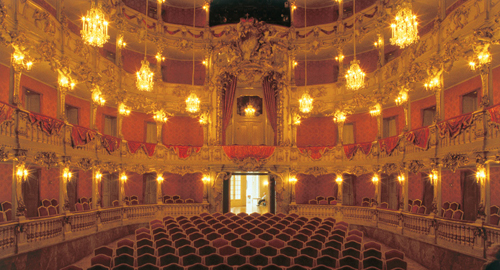
Cuvilliés Theater
Built between 1751and 1755, this beautiful Rococo theatre by Cuvilliés the Elder is widely regarded as Europe’s finest.

Schatzkammer
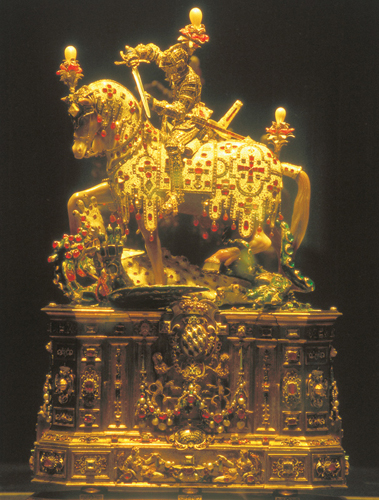
The 16th-century Schatzkammer contains worked gold, porcelain, the Wittelsbach dynasty’s crown jewels, and many other treasures.

Hofkapelle
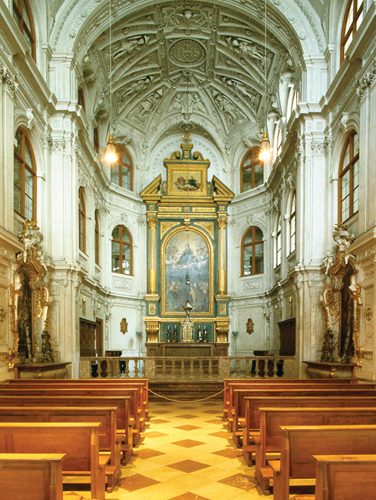
This elaborately stuccoed chapel was built by Krumpper in 1601–14.

Courtyards
You
enter Kaiserhof through the northern Renaissance doorway; the southern
doorway leads into the Mannerist Grottenhof. Brunnenhof has an octagonal
shape. Apothekenhof is the largest courtyard, the Cuvilliés Theater
courtyard the smallest.

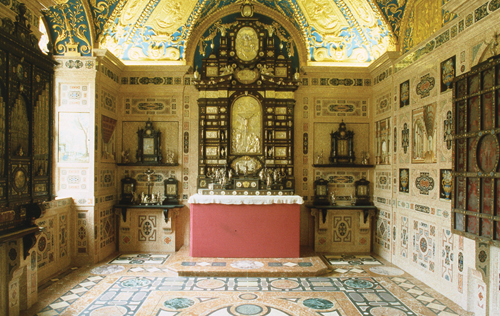
Reiche Kapelle
With its ebony altar and silver bas-reliefs, Maximilian I’s private chapel (1607) is a prime example of Mannerist architecture.
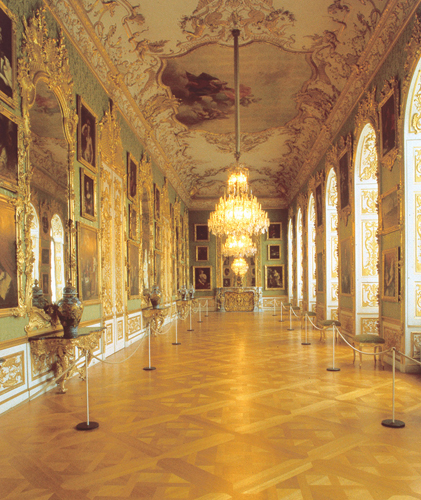
Reiche Zimmer
Walk
through the Rittersaal to reach this series of rooms done in the early
Rococo style. The Reiche Zimmer, designed in 1730 by François Cuvilliés,
and the Grüne Gallerie, are but two of the stunning rooms.

Egyptian Art Museum
This
museum, opened in 1970 in a wing of the Residenz alongside the
Hofgarten, houses a fine collection of pieces from ancient Egypt and the
Coptic period.
Coin Collection
Here the largest coin collection in the world can be found, along with exhibits of weights and measures.
Hofgarten
Bordered
by formal flowerbeds and hedges, and shaded by linden trees, this
Renaissance garden on the north side of the Residenz has an Italian air.
The Temple of Diana, a small pavilion lined with seashells designed by
Heinrich Schön the Elder, marks the centre of a network of paths, which
criss-crosses the garden. To the east lies the Bavarian State
Chancellery, a much-debated modern structure incorporating the ruin of
the former army museum.