Unfolding languidly just to the east of the old town,
this green, tranquil oasis provides a welcome respite from the city
centre. Built in the late 1860s on the site of a former military
fortress (ciutadella),
the park was artfully designed to offer Barcelona’s citizens an
experience of nature (shady corners, paths and greenhouses), recreation
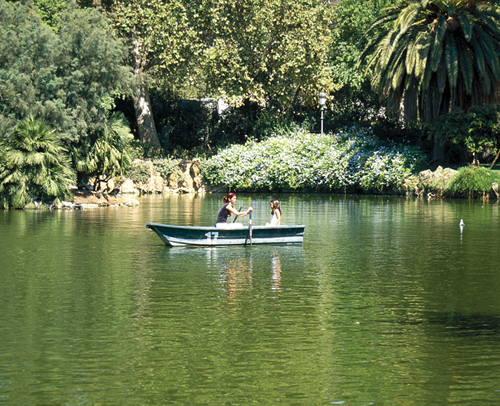
(rowing boats on the lake) and culture (two museums). The 1888 Universal
Exhibition was held here and in preparation the city’s great Modernista
architects were brought in to work their magic. Lluís Domènech i
Montaner created the eye-catching Castell dels Tres Dragons (today the Zoological Museum) and a young Antoni Gaudí helped design the flamboyant Cascade Fountain.
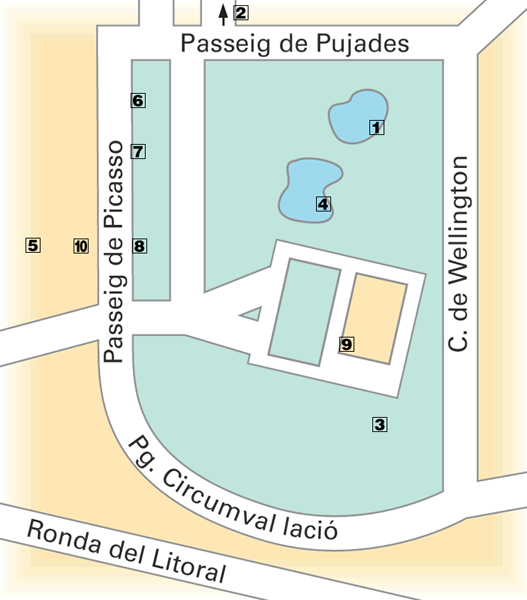
ZooMuseu de Ciències Naturals (Castell dels Tres Dragons) & Museu de Ciències Naturals (Edifici Geologia) |
Two metro stops provide
access to the park: to approach through the grand Arc de Triomf,
disembark at the metro station of the same name. If you’re heading to
the zoo, get off at Barceloneta metro stop, which is within easy walking
distance. |

Park Plan
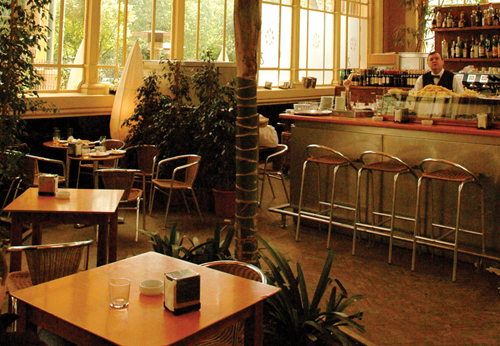
Pick up a picnic at the
bustling Santa Caterina food market (northwest of the park), or have a
drink and a snack within the colonial elegance of the Hivernacle café.
If it’s a hot day, cool down with a bowl of gazpacho. |
|
Top 10 Sights
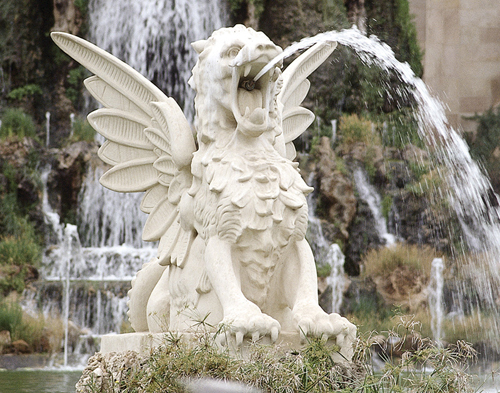
Cascade Fountain
One
glimpse of this Baroque-style fountain and you’ll guess Gaudí had a
hand in its creation. Winged horses with serpent tails rear over a
waterfall and cherubs play amid jets of water.

Statuary on the Cascade Fountain
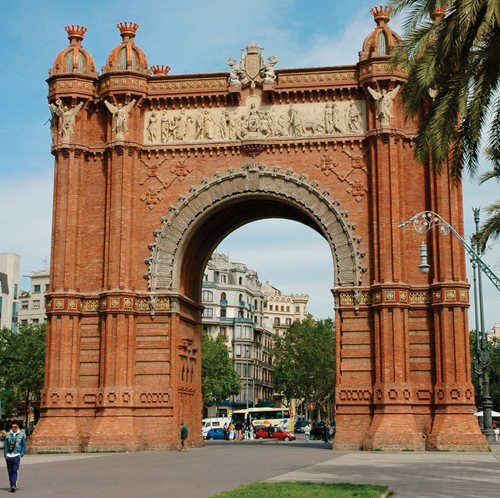
Arc de Triomf
The
grandest entrance to the park is the Arc de Triomf, designed for the
1888 Exhibition by Josep Vilaseca i Casanoves. Topping the arch are
angels tooting horns and offering wreaths.

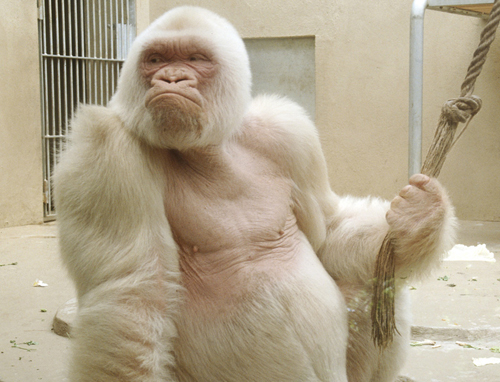
Parc Zoològic
Snowflake,
the albino gorilla is just one of the stars at this child-friendly zoo,
which also has pony rides, electric cars and a train .

Llac
Located in the centre of the park is a placid, man-made lake where it’s possible to rent a boat for half an hour or more.

Antic Mercat del Born
The
outline of Barcelona’s medieval streets, houses, shops and palaces are
revealed below this old market. The foundations date from 1714, the year
Felipe V and his French allies entered the city.
Castell dels Tres Dragons
Domènech
i Montaner’s striking building is now part of the Natural Science
Museum. The centrepiece is a huge whale skeleton, which hangs amid
scores of stuffed animals, including a sabre-toothed tiger.
Edifici Geologia
Roam
to your heart’s content among 15,000 minerals, 14,000 rocks and over
100,000 palaeontological pieces, including a collection of Catalonian
fossils.
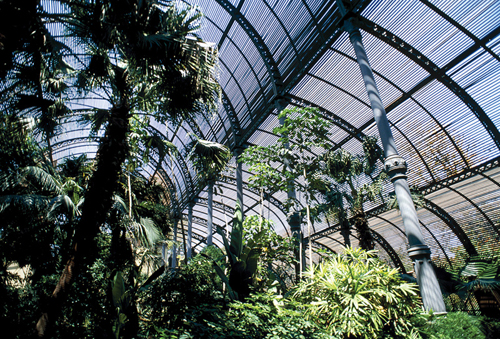
Hivernacle & Umbracle
Palm
trees and other tropical vegetation exude humidity inside the late
19th-century Hivernacle and Umbracle greenhouses. The latter was
designed by architect Josep Fontseré, the former by Josep Amargós.


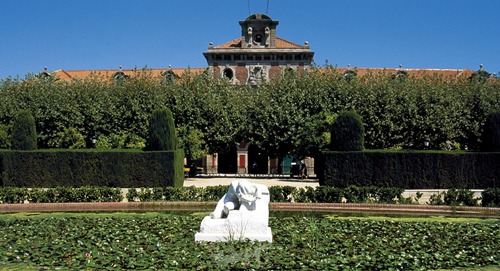
Parlament de Catalunya
Housed
in the lovely Palau de la Ciutadella, 1891, is the Catalonian
Parliament, where José Montilla (the President of Catalonia) and other
political groups meet. In front is the Plaça d’Armes and a graceful
waterlily pond with a sculpture (1907) by Josep Llimona.

Homenatge a Picasso
Antoni Tàpies toasts Picasso’s cubist legacy with an abstract creation of his own. Tàpies’ Homage to Picasso – a large glass cube filled with furnishings and abstract objects – requires some mental gymnastics to decipher its meaning.