America’s most prestigious university – named in
honor of its principal benefactor, John Harvard, in 1638 – has nurtured,
tortured, and tickled some of the greatest minds of the past 350 years.
It has hosted everything from global economic summits to kool-aid acid
tests, and educated everyone from future US presidents to late-night
talk show hosts. Visitors craving contact with the Harvard mystique are
in luck, since much of the university is open to the public.
Harry Widener Memorial LibraryMassachusetts Hall |
Lampooners have made you laugh more than you might ever know. Aside from The Harvard Lampoon
proper being the world’s oldest humor magazine, nearly every successful
contemporary American comedy to reach a TV or movie screen boasts an
ex-Lampooner on its writing staff. One well known ex-Lampooner is Conan
O’Brien of The Simpsons fame. |

Students refuel at the Harvard Coop bookstore café ( 1400 Massachusetts Ave , 617 499 2000)
|
|
Harvard Film Archive, Carpenter Center, screens art and documentary films most nights ( Quincy St , 617 495 4700).
|
|
Pick up a copy of the student-run newspaper The Crimson to see what issues are exercising some of the world’s greatest minds. |
|
Share your travel recommendations on traveldk.com |
|
Top 10 Features
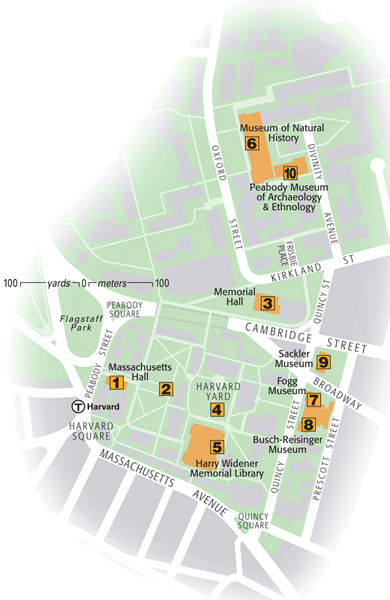
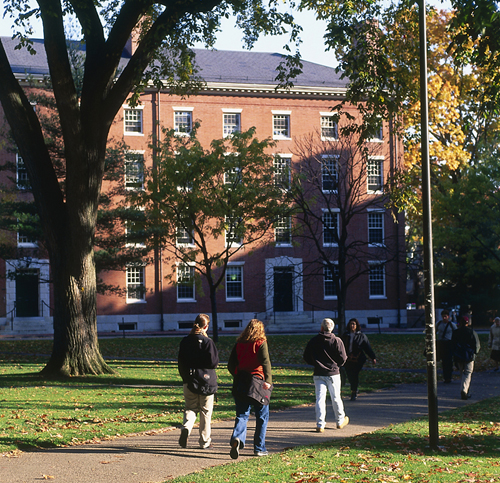
Massachusetts Hall
The
university’s oldest building, constructed in 1720, acted as a meeting
place for revolutionary soldiers. It continues to be a focal point of
resistance movements, most recently in 2001, when students occupied the
hall’s administrative offices in an effort to secure a fair wage for the
university’s employees.
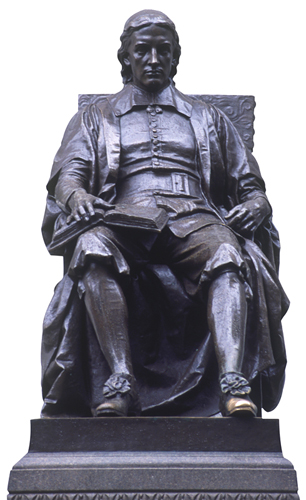
John Harvard Statue
The
statue’s inscription “John Harvard, Founder 1638” conceals three
deceptions, hence its nickname “The Statue of Three Lies”. First, there
is no known portrait of John Harvard, so the sculptor, Daniel French,
used a model; second, John Harvard did not found the university – rather
it was named after him; and last, the university was not founded in
1638, but in 1636.

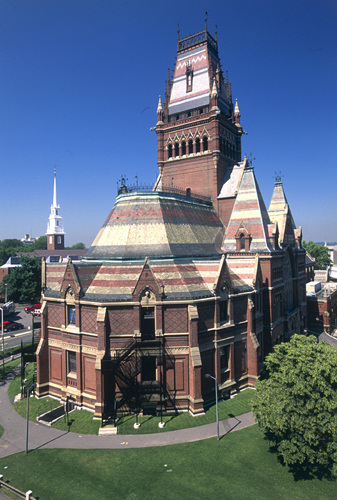
Memorial Hall
Built
over 14 years, Harvard’s memorial to its fallen union army alumni was
officially opened in 1878. Conceived as a multipurpose building, it has
hosted graduation exercises, theatrical performances, and assemblies of
all kinds.

Memorial Hall
Harvard Yard
Harvard’s
mixed residential and academic yard became the standard by which most
American institutions of higher learning modeled their campuses.

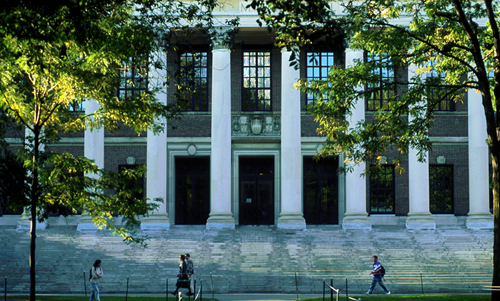
Harry Widener Memorial Library
The
Widener is the largest university library in the US. It houses a
special collection of rare books, including a Gutenberg bible and early
editions of Shakespeare’s collected works.

Museum of Natural History
Never
mind George Washington’s taxidermied pheasants, the enormous Brazilian
amethyst geode, or the world’s only mounted Kronosaurus skeleton. Check
out the glass flowers: 830 species of plants, painstakingly replicated
in brilliant, colorful glass.
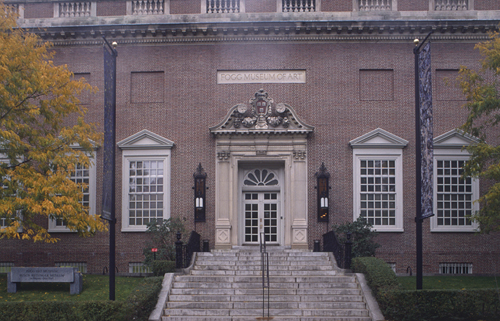
Fogg Museum
During
renovation of its building, until 2013, highlights of the Fogg’s
collection of Western art from the Middle Ages to the present, including
Impressionist works, will be on display at the Sackler Museum.

Busch-Reisinger Museum
This
museum shares space with the Fogg Museum and will also be closed until
2013. Selections of its German expressionism and Bauhaus-related
exhibits will be on display at the Sackler.
Sackler Museum
Until
2013, the Sackler will display a selection of the best pieces from the
Fogg and Busch-Reisinger museums, as well as continuing to exhibit
works from its own collections of Asian, Egyptian, Islamic, and Indian
art.
Peabody Museum of Archaeology & Ethnology
Housing
one of the world’s most comprehensive records of human cultural
history, the Peabody caters for the Indiana Jones in all of us.
Highlights include The Hall of the North American Indian, a permanent
Mesoamerica exhibit, and a new gallery devoted to frequently rotating
temporary exhibits.