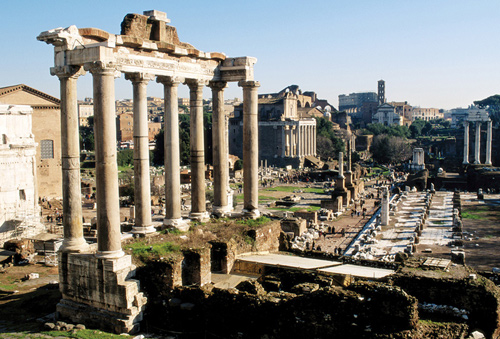
Gazing on it today, a picturesque shambles of ruins
and weeds, you would hardly guess that the Forum was the symbol of civic
pride for 1,000 years. Its humble beginning, more than 3,000 years ago,
was as a swampy cemetery for the original village on Palatine Hill.
Gradually it rose, ever more glorified, as Rome’s power grew. After the
marsh was finally drained off in the 6th century BC, it took on its
central role in the life of the Republic. The Forum showed its most
elegant face starting with the reign of Augustus, the first Roman
emperor, who is said to have turned the city from brick to marble.
Via dei Fori Imperiali 06 3996 7700 Open
1 Nov–15 Feb: 8:30am–4:30pm daily; 16 Feb–15 Mar: 8:30am–5pm daily; 16
Mar–1 May: 8:30am–5:30pm daily; May–Sep: 8:30am–7pm daily; Oct:
8:30am–6:30pm daily closed 1 Jan, 25 Dec Forum: Adm €11.00 (includes Palatine and Museum and Colosseum)
|
You can access the Forum
from Via Dei Fori Imperiali. However, for a great view of the whole
site, enter from one of the high points at either end. From the
north-west end, begin on the Capitoline (to the right and behind the
huge, white Victor Emmanuel Monument) and take the stairs down from
Largo Romolo e Remo. From the southeast end, start at the Colosseum and climb the small hill just to the northwest. Enter by the Arch of
Titus, which is also near the main entry gate to the Palatine. |

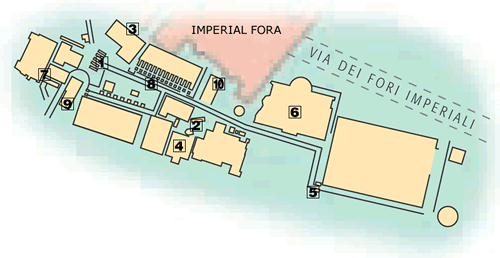
Original Plan of the Roman Forum

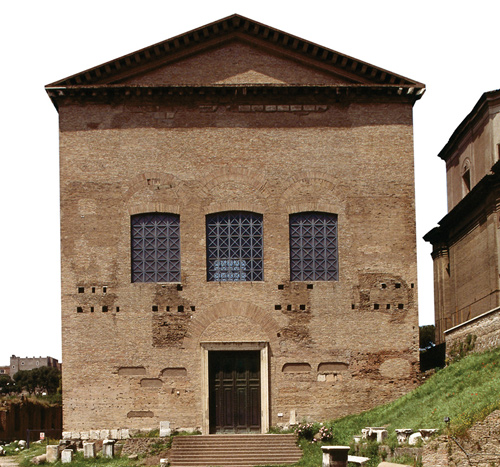
The Curia
The only option in
the immediate area for drinks and snacks is one of the mobile
refreshment vendors. For something more substantial, there are plenty of
cafés and restaurants on Via Cavour. |
|
In summer, it’s best to visit the Forum either early or late in the day, to avoid the intense heat. |
|
Top 10 Features
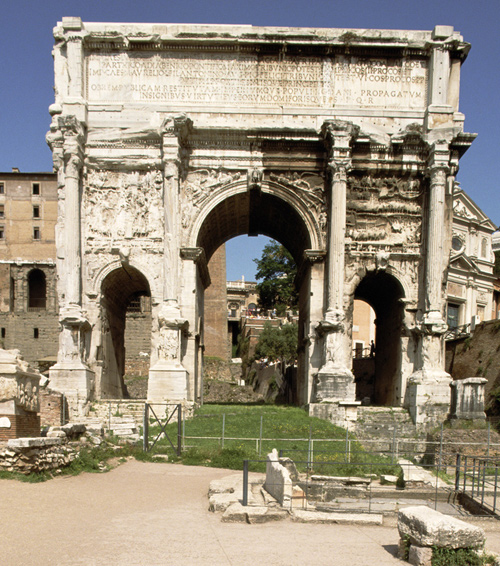
Arch of Septimius Severus
This
well-preserved triumphal arch celebrates the emperor’s Middle Eastern
victories. It was erected in AD 203 by his sons, Geta and Caracalla,
then co-emperors.

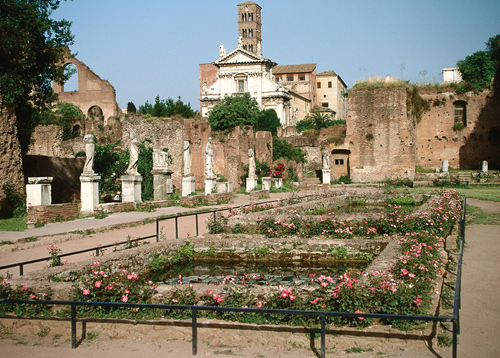
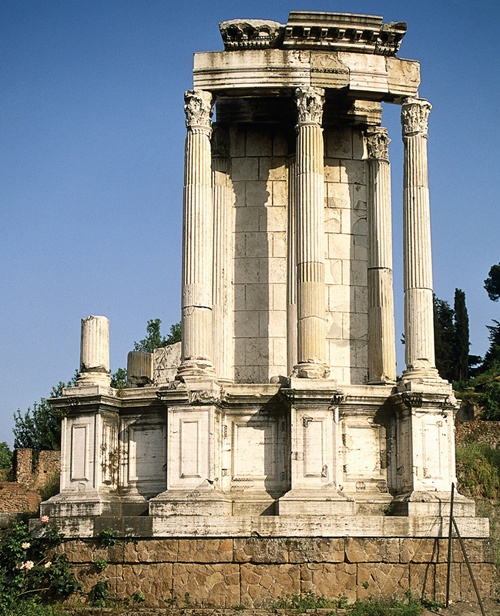
Temple of Vesta and House of the Vestal Virgins
A
graceful round temple and its adjacent palace were the centre for one
of Rome’s most revered cults. Noble priestesses tended the sacred flame
and enjoyed the greatest privileges.

Curia
The
3rd-century-AD Senate retains its original polychrome inlaid floor, its
risers, where the 300 senators sat in deliberation, and the speaker’s
platform. For 2nd-century views of the Forum, examine the large marble
reliefs, showing Emperor Trajan’s good works.
Temple of Castor and Pollux
Three Corinthian columns remain of this temple to the Dioscuri
– twin brothers of Helen of Troy and sons of Jupiter and Leda. The
shrine marked the spot where they miraculously appeared in 499 BC to
announce a crucial Roman victory.

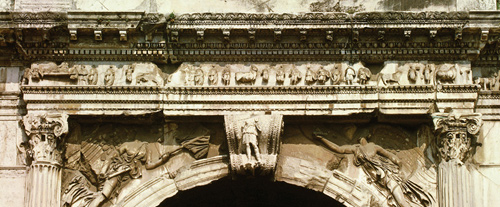
Arch of Titus
The
oldest extant arch in Rome was erected in AD 81 by Emperor Domitian to
honour his brother, Titus, and his father, Vespasian, for putting down
the Jewish Revolt. Reliefs show soldiers sacking Jerusalem’s Holy of
Holies and taking sacred objects, such as a golden menorah.

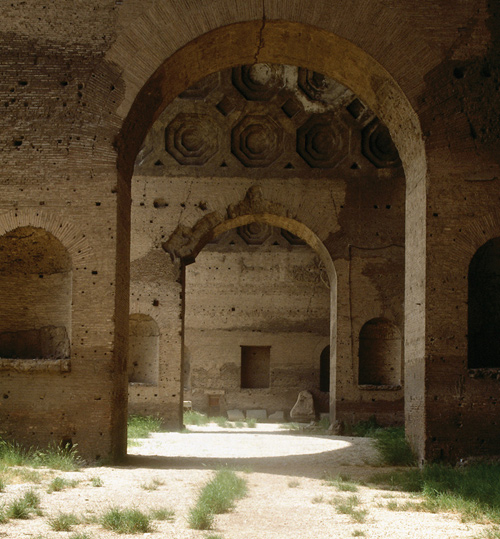
Basilica of Maxentius and Constantine
Three
vast, coffered barrel vaults proclaim the Forum’s largest structure,
built around AD 315 and used as the legal and financial centre of the
Empire.

Temple of Vespasian
Until
18th-century excavations were undertaken, these graceful corner columns
(AD 79) of the temple to a former emperor stood mostly buried beneath
centuries of detritus.
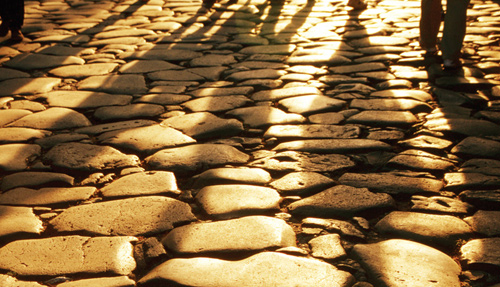
Via Sacra
Paved
with broad, flat, black basalt stones, Rome’s oldest road wound from
the Arch of Titus through the Forum and up to the Capitoline. Republican
heroes staged triumphal processions here, but it degenerated into a
hangout for gossips, pickpockets and other idlers.

Temple of Saturn
Eight
grey-and-red Ionic columns constitute what’s left of this temple (also
the state treasury) to the ruler of agriculture and of a mythic “Golden
Age.” Saturnalia, celebrated each December, was very similar to
modern-day Christmas.

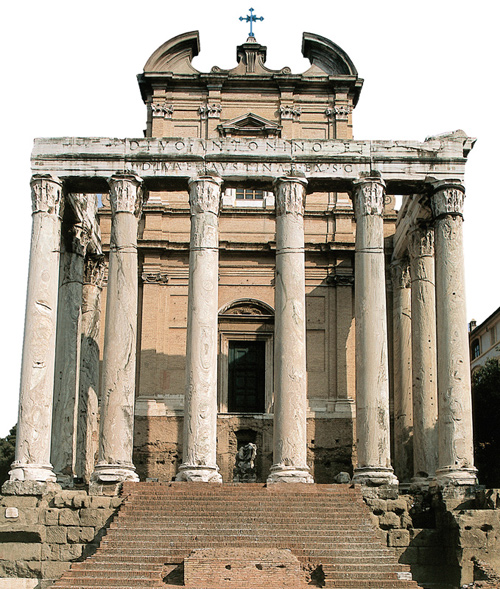
Temple of Antoninus and Faustina
Dedicated
by Antoninus Pius in AD 41 to his deified wife Faustina, this is one of
the best preserved temples. With its Baroque-style top-knot, it is also
one of the oddest. Note the carvings of griffins along the side frieze.