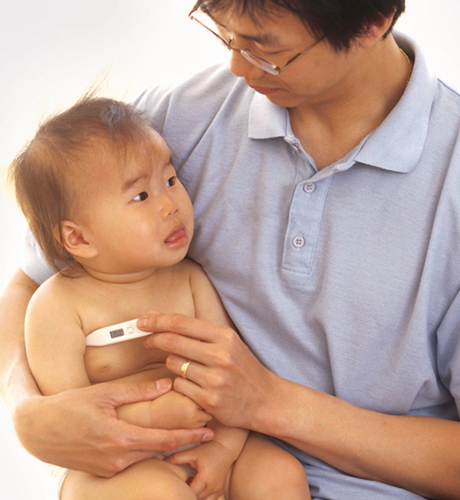
Even minor illnesses
can be alarming for new parents, but knowing what to look out for will
make you much more confident and help you to remain calm when symptoms
appear.
Symptoms to look out for include:
Fever
Weak or excessive crying
Irritability
Be prepared
Keep your doctor’s phone number by the phone, and in your mobile phone
Take your baby’s temperature
Be aware that body temperatures vary throughout the day; as a rule of thumb, 100.4°F (38°C) is considered hot for a baby under three months
Any baby under the age of three months with a fever should be seen by a doctor; if your baby is older than this, use your judgment
Do not use mercury thermometers
Buy a digital thermometer: they are fast, accurate, and inexpensive
Rectal thermometers are most accurate for babies and are quick to use
Underarm thermometers are comfortable and accurate, but can take up to 10 minutes to give a reading—use for babies older than three months
Oral thermometers are reliable but, because they take up to two minutes to give a reading, you can end up struggling with a fidgety baby
Temporal scanner (strip) thermometers are placed on your baby’s forehead and allow you to take her temperature when she is asleep
Check for signs of dehydration
Vomiting and diarrhea are common causes of dehydration—watch
out for these symptoms: listlessness; sunken eyes; dry eyes, mouth, and
lips; pallor; fewer wet diapers; darker urine; and a depressed
fontanelleBreastfed babies will need increased feeds, and possibly some additional oral rehydration solution (ORS)
Bottle-fed babies will need ORS with a little formula in between; you may need to continue to offer water and ORS for a few days
And don’t forget…
To keep your baby warm, but not overheated—layers are a good idea
Keep a close eye on her—a baby’s condition can deteriorate quickly
When in doubt, call your doctor