Steeped in tradition, with
its own language and an enormous sense of pride in its separate
identity, Catalonia is immensely rich in both cultural heritage and
physical geography. It is no exaggeration to say that Catalonia really
does have everything. To the north are the 3,000-m (9840-ft) peaks of
the Pyrenees. The coastline is dotted with hundreds of beautiful sandy
beaches and intimate rocky coves with crystal-clear waters. These
staggering natural treasures are complemented by a wealth of fabulous
churches and monasteries, many set in stunning, isolated mountain
scenery. For the gourmet, the regional cuisine is particularly
rewarding, while the locally produced cava easily holds its own against
its French champagne counterparts.
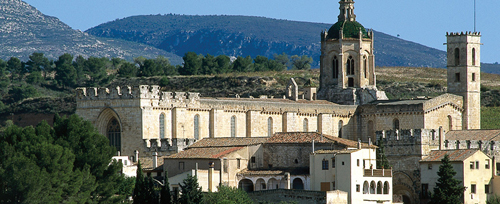
Monestir de Santes Creus
|
NOTE
Sights & Attractions
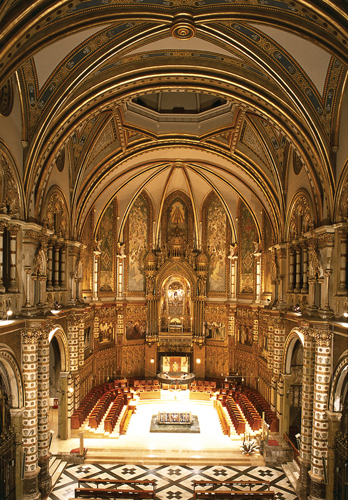
Montserrat
The
dramatic mount of Montserrat, with its remote Benedictine monastery
(dating from 1025), is a religious symbol and a place of pilgrimage for
the Catalan people. The Basilica houses a statue of Catalonia’s patron
virgin, La Moreneta, also know as the “Black Virgin”. Some legends date
the statue to AD 50, but research suggests it was carved in the 12th
century. The monastery itself was largely destroyed in 1811 during the
War of Independence, and rebuilt some 30 years later. Montserrat forms
part of a ridge of mountains that rise suddenly from the plains. Take
the funicular to the mountain’s unspoilt peaks, where paths run
alongside spectacular gorges to numerous hermitages.Tourist Info
Pl de la Creu
93 877 77 77

Basilica, Monestir de Montserrat
Teatre-Museu Dalí, Figueres
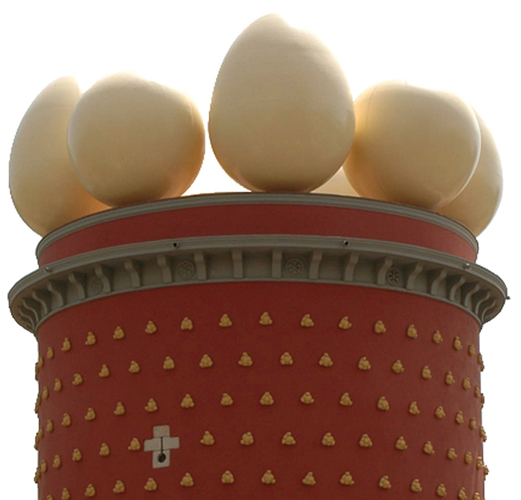
Salvador
Dalí was born in the town of Figueres in 1904. Paying tribute to the
artist is the fantastic Teatre-Museu Dalí, which is full of his
eccentric works. Housed in a former theatre, the country’s
second-most-visited museum (after the Prado in Madrid) provides a unique
insight into the artist’s extraordinary creations, from La Cesta de Pan (1926) to El Torero Alucinogeno
(1970). Thirty minutes’ drive away, near the beach town of Cadaqués,
the Dalí connection continues. Here you can visit the Casa-Museu
Salvador Dalí, the artist’s summer house for nearly 60 years until his
death in 1989.Pl Gala-Salvador Dalí, Figueres
972 67 75 00
Open Mar–Jun, Oct 9:30am–6pm Tue–Sun (daily in Jun); Jul–Sep 9am–8pm daily; Nov–Feb 10:30am–6pm Tue–Sun
Adm
Casa-Museu Salvador Dalí
Port Lligat
972 25 10 15
Closed early Jan to mid-Mar
Guided visits only, Tue–Sun (15 Jun–15 Sep daily) by reservation
Adm

Teatre-Museu Dalí
Vall de Núria
This
enchanting Pyrenean hideaway, surrounded by crests reaching as high as
3,000-m (9,840-ft), is a ski resort in winter and a green, peaceful
oasis attracting hikers and nature-lovers in summer. The mountain resort
centres on a religious sanctuary and has a youth hostel and apartments
for rent. The
valley is only accessible via a silent cog railway, which
trundles above the clouds through breathtaking mountain scenery.Tourist Info
Railway Station, Vall de Núria
97 273 20 20
Rack railway train from Ribes de Freser, 10 km N Ripoll
Alt Penedès
Catalonia’s most famous wine region is the cava-producing area of the Penedès. The cava
brands of Cordoníu and Freixenet have become household names worldwide.
Many of the area’s wineries and bodegas are open to the public. One of
the most spectacular is the Cordoníu bodega, housed in a Modernista building designed by Puig i Cadafalch, with a phenomenal 26 km (16 miles) of cellars on five floors.Tourist Info
C/Cort 14, Vilafranca del Penedès
93 818 12 54
The tourist office has details on all winery visits in the region, including the Cordoníu winery
Begur & Around
The
elegant hilltop town of Begur, with its ruined 14th-century castle,
looks down on the nature reserve of Aiguamolla and some of the prettiest
coves on the Costa Brava. The town’s population quadruples in summer as
visitors make this their base for exploring nearby beaches and small,
isolated coves. Many of the area’s beaches stage jazz concerts
throughout the summer. This is perhaps the best stretch of coastline in
Catalonia.Tourist Info
Av Onze de Setembre 5
972 62 45 20
Tarragona
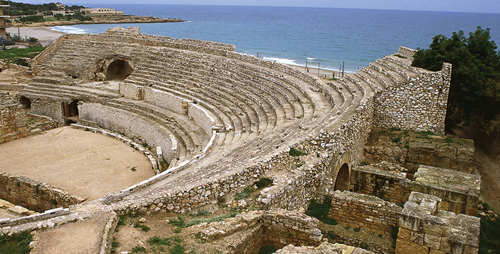
Entering
the city of Tarragona, past the oil refineries and its huge industrial
port, it’s hard to envisage the astounding archaeological treasures that
await. Once the capital of Roman Catalonia, the city’s main attractions
today are from this era. Highlights include an impressive amphitheatre
and the well-kept Roman walls that lead past the Museu Nacional
Arqueològic and the Torre de Pilatos, a tower where Christians were
supposedly imprisoned before being thrown to the lions. Also in
Tarragona is the Catedral de Santa Tecla.Tourist Info
C/Fortuny 4
977 23 34 15

Girona
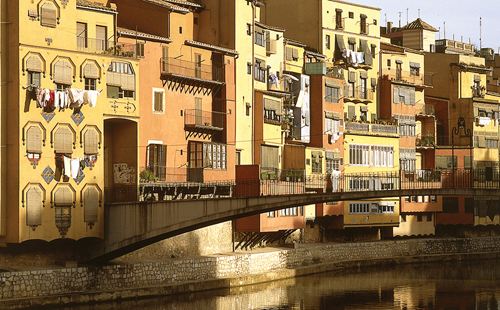
Said
to have the highest living standards in Catalonia, Girona is a pleasant
town surrounded by lush green hills. Hidden away in the old town, the
atmospheric Jewish quarter (known as El Call) is one of the
best-preserved medieval enclaves in Europe. Girona’s cathedral is a must
(see Catedral de Santa Maria).Tourist Info
Rambla de la Llibertat 1
972 22 65 75

Riu Onyar, Girona
Empúries
After
Tarragona, Empúries is Catalonia’s second most important Roman site.
Occupying an impressive position by the sea, it includes more than 40
hectares (99 acres) scattered with Greek and Roman ruins, the highlights
of which are the remains of a market street, various temples and part
of a Roman amphitheatre. Coupled with lovely nearby beaches, it’s an
ideal spot for those looking to mix a bit of history with a dip in the
sea.Empúries
972 77 02 08
Open Jun–Sep: 10am–8pm daily; Oct–May: 10am–6pm daily
Adm
Port Aventura
Universal
Studios’ theme park is divided up into five areas: China, Far West,
Mediterranean, Polynesia and Mexico, each offering rides and
attractions. Thrill-junkies will appreciate one of Europe’s biggest
roller coasters, Dragon Kahn (China). There are also shows, and the
entire experience is like being on a film set.Av Pere Molas, Vilaseca, Tarragona
902 20 22 20
Open mid-Mar–Oct daily, call for seasonal hours
Adm
DA
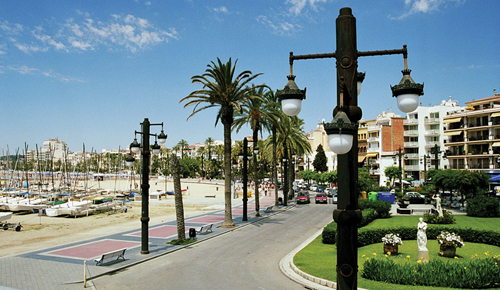
Costa Daurada & Sitges
With
its wide sandy beaches and shallow waters, the Costa Daurada differs
from the northern Catalonian coastline. The sleepy town of Torredembarra
is a pleasant and rarely busy family resort, but the jewel in the crown
is undoubtedly Sitges. It’s the summer home to Barcelona’s chic crowd,
as well as being a popular gay resort .
All this gives it a cosmopolitan, frenetic feel, but the town never
reaches the tacky excesses of some of the Costa Brava’s resorts.Tourist Info
C/Sínia Morera
938 10 93 40

Waterfront, Sitges